
From the mouths of maniacs


Play
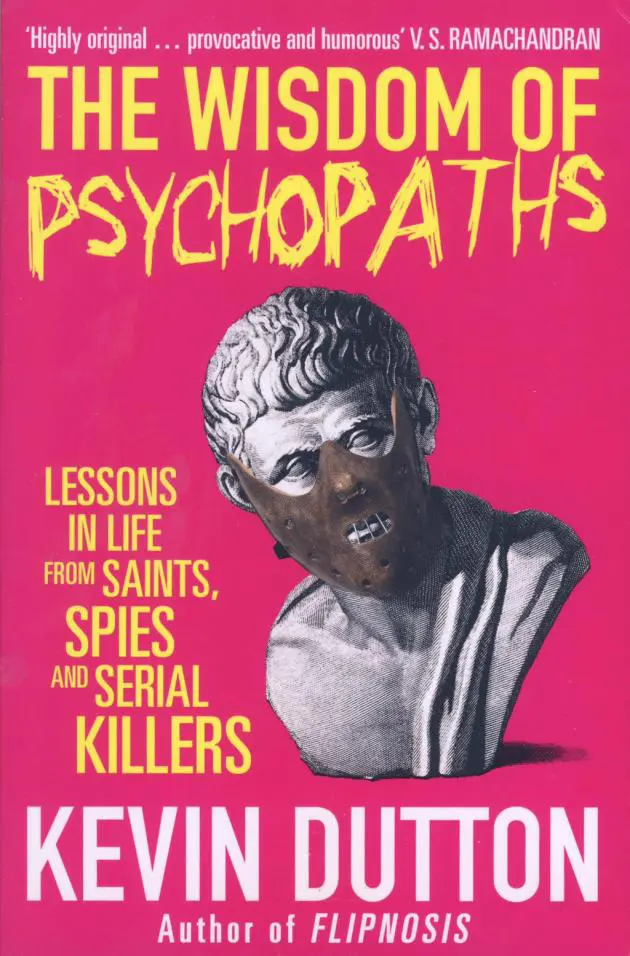
Presumably Kevin Dutton spent the years since his last book, "Flipnosis", scouring magazines, the Internet and medical journals for more anecdotes to stitch together into another bestseller.
It’s the New Age self-help industry’s template for making books, and plenty of lost souls and other gullible people love this sort of thing. Whip up a bowl of common sense and pop psychology, add a few teaspoons of humour and bake till it’s as crisp as a Jay Leno monologue. Serve with some delightful sleight-of-hand, the secrets of which you then happily share, and everyone gets fat (as opposed to healthy).
Malcolm Gladwell of “Blink” fame is the genre’s other outstanding chef, but Dutton, to his “credit” of a sorts this time, reveals that his dad was a conniving hawker in London’s Petticoat Lane who thrived thanks to his wily salesmanship, which might explain (like an oak makes acorns) how the son got to be a research psychologist at Oxford University. Dutton talks often about putting his students through amusing ordeals to test one theory or another. Hopefully their experiences are more enjoyable than this book, because their professor slips up this time by getting too professorial. The scholarship is genuine – and tedious.
By the “wisdom” of psychopaths, Dutton’s title refers to the “darker” traits many of us share that can be put to better use in life. He pushes the mass murderers to one side, leaving us in the company of the highly focused, unemotional, ruthless people who run corporations, defuse bombs, sell cars, do brain surgery and practise law by scorning justice.
Sometimes it pays to be hard-hearted and individualistic. Often it’s smart to shun “groupthink” of the sort that led Nasa scientists into the Challenger space-shuttle tragedy. What Dutton doesn’t come right out and say but frequently implies is that being a psychopath can help a businessperson succeed. No, that’s not much of a bombshell, is it?
Dutton’s modus is to travel the world attending psychology conventions and interviewing the big guns over lunch or drinks. What he shares from these conversations is invariably punctuated by someone taking a bite or ordering another round. The inanity with which Dutton shares his findings is maddening, and of course detracts from their usefulness.
Mired in anecdotes, Dutton misses the big picture. He does ask whether people are truly to blame if their early biological and genetic development made them more prone to violence or more likely to commit crime. And, if they’re not, how should they be punished? But he stops there, ignoring the biggest issue of all. Since research has established beyond doubt that brain scans can reveal a propensity for anti-social behaviour (a smaller amygdala is a giveaway), can crime be prevented, albeit at the cost of social engineering?
