
'Give us another decade'
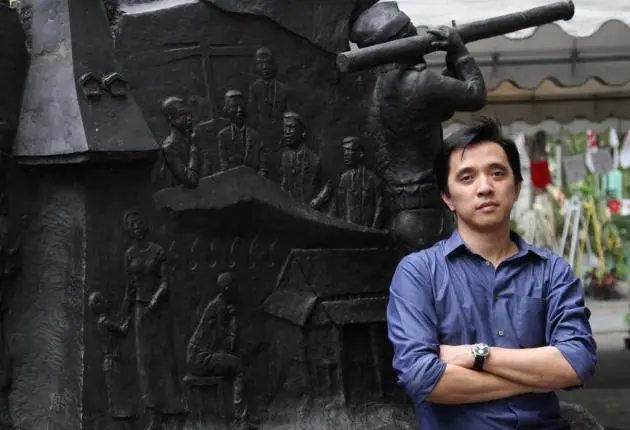


The depth of political reform that Thailand still needs - 40 years after the student uprising in the name of democracy - could take another decade to achieve, prominent political scientist Prajak Kongkirati tells The Nation.
“To establish a truly democratic society, Thailand needs to reform all of its key political pillars, including the monarchy, the military, politicians, independent organisations like the Supreme Court and the news media,” says the author of the award-winning book “And Then the Movement Emerged: Cultural Politics of Thai Students and Intellectuals Movements before the October 14 Uprising”.
The Thammasat University lecturer urges that Article 112 of the Criminal Code, the lese majeste law, be addressed first. But reform of the military, an issue far less discussed, is urgent as well, he says.
“The Thai military really needs to change. We can learn from out neighbouring countries like Indonesia, where the reformed military has led the country’s democratisation.”
The former student activist earned his PhD at Australian National University’s School of International Political and Strategic Studies. His doctoral dissertation examined patterns of political violence in Thailand and sought to identify factors that cause and mitigate election-based political violence.
“I think it takes about eight to 10 years to be completely changed,” he says. “Traditionally, most of our politicians succeed because of their connections rather than any personal merit. We have to wait for a new era of Thai politicians.”
The common lament, however, is that Thai youth today lacks the intellect and the social responsibility to pursue reform. Cynics suggest that the gains won by the student activists of 1973 have been largely lost.
“Today’s social and political context is different,” Prajak says. “We still have student activists, but rather than pursuing political change, many of them focus more on shaping society so that life is more sustainable.”
BEST-SELLER
n Prajak Kongkirati’s “And Then the Movement Emerged” (Thammasat University Press, 2005) will be on sale at Book Expo Thailand at the Queen Sirikit National Convention Centre from Wednesday through October 27. It can also be found in most bookstores.
