
Banging back the Samhaeju


Play
The classic Korean tipple has never lost its fans - or its devoted family of master distillers
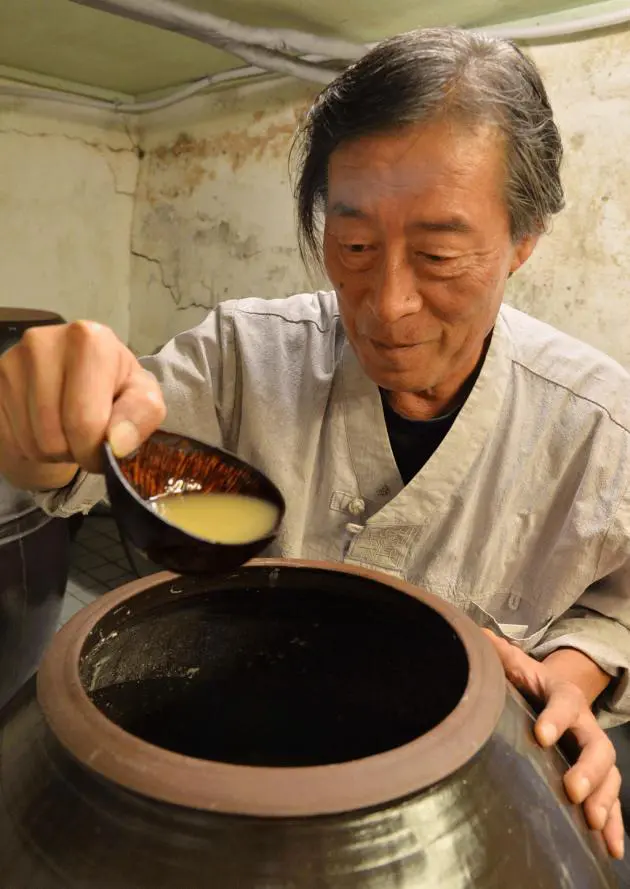
In Seoul’s historic neighbourhood of Bukchon, visitors can experience a centuries-old tradition. Artisan Kim Taek-sang continues his family’s legacy of brewing the capital’s storied Samhaeju, an alcoholic beverage whose history goes as far back as the Goryeo Kingdom.
At Bukchon Heritage Studio, which opened in April, visitors can sample Kim’s brews and learn about Samhaeju. According to Kim, it was during the Joseon period that the art of Samhaeju developed by leaps and bounds and the drink became one of the most famed alcoholic beverages of the time.
“It was popular in Hanyang,” says Kim, 62, referring to the old name for Seoul, where the royal court, high-ranking officials and nobles resided. Because rice was then a prized commodity, “Samhaeju was enjoyed by aristocrats,” he says, and because it was a lengthy, three-step process requiring a relatively large quantity of rice, it was considered a high-end drink.
Kim’s ancestors have been making Samhaeju since the Joseon era, handing the recipe down through the generations until his mother took over the Seoul Intangible Cultural Asset No 8 title for Samhae Soju in the 1990s. To ensure the continuance of his family’s longstanding mastery of Samhaeju, Kim became an initiate for the title three decades ago.
As the future holder of the Samhae Soju master title, Kim knows how to make all three varieties, including makgeolli and yakju, which form the foundation for soju. “It’s made from only three ingredients; rice, whole wheat nuruk [yeast] and water,” he says.
It takes 120 days to complete the process of making Samhae makgeolli, yakju and soju. The practice of fermenting in the cold winter continues, and that’s what gives Samhaeju its definitive characteristics. “Fermenting alcohol at low temperatures gives the liquor a depth of flavour and a long-lingering aftertaste,” says Kim.
Kim explains that, once the alcohol has aged an appropriate amount of time, the cloudy wine at the bottom becomes makgeolli while the clear alcohol on top becomes yakju. The yakju is then distilled to make soju. “Only one-fifth of the original amount remains after it has been distilled.” Samhae Soju is precious because it can only be produced in small quantities at a time, he explains.
As clear as water, Kim’s Samhae Soju is redolent of liquorice. One sip unearths its fiery heat and the sweet aftertaste of rice. It is delicate yet potent liquor, elegant and fragrant.
Kim also uses his Samhae makgeolli to craft another traditional Korean beverage, Moju. He says the concoction began as a pragmatic way to use up the remaining bits of rice from winemaking. Now it enjoys a reputation as a healthy beverage that includes medicinal herbs.
Kim makes his Moju with ginseng, jujubes, cinnamon, arrowroot, liquorice, ginger and Samhae makgeolli. “One feels energised after drinking it,” he says.
Spiced and rich with the scent of cinnamon and ginger and sweet from the jujubes, the Samhae Moju is neither a tea nor a libation but somewhere in the middle. It’s a drink that combines all the fragrant sweetness found in traditional Korean beverages along with the slightly malty tang characteristic of makgeolli. Visitors can taste Samhae makgeolli, yakju and soju and also purchase them at the Bukchon Heritage Studio’s small cafe. Kim is also conducting classes on Samhaeju. The studio, which is housed in a renovated hanok built in 1935, hosts a monthly Food Artisan Programme.
Sip here
_ Bukchon Heritage Studio is at 31-14 Gahoe-dong, Jongno-gu, Seoul.
_ It’s open daily from 9 to 6.
_ Samhae Moju costs 5,000 won (Bt147) and a Samhaeju Tasting Set of makgeolli, yakju and soju 10,000 won.
