
Tomorrow's world today


Play
The Thailand creative and design center looks at how we can fuse existing assets with new wisdom to improve our lives
FROM BERLIN’S record stores to a London burger vendor and a Santa Monica flower shop, the digital currency known as the Bitcoin is increasingly being accepted as valid payment by the world’s retailers. And as unappetising as it might appear on paper, in-vitro meat, or the manufacturing of meat products through tissue-engineering technology, could very well substitute the consumption of real meat in the years to come.
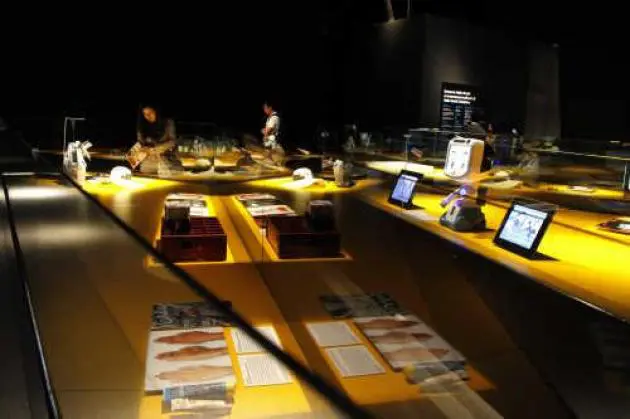
These two items are among the 60 trends with the potential to shape and shake the world being showcased in the Thailand Creative and Design Centre’s latest exhibition. “Hello World!” invites us to find the right balance between the dichotomy of technology-powered excess and natural resource deficiency.
“Do we have to choose to step forward or backward, turn left or right, or opt for technology rather than old-fashioned methods? The integration can be an alternative choice. The future isn’t about choosing between sameness and difference, but rather about both things working together to generate new spaces for all of us,” says Pichit Virankabutra, TCDC’s events and exhibition director.
In the exhibition’s “The Same, but Different” zone, New York City serves as a model for the sum of individualistic conditions and personal elements, which keep the city unique in an increasingly homogeneous world. The 9/11 tragedy pulled New York into a whirlpool of grief, yet the city subsequently succeeded in reawakening its spirit.
Milton Glaser’s “I Love NY More Than Ever” poster, featuring a modified version of the designer’s iconic 1977 logo “I Love NY”, represents a defiant pledge from New Yorkers to the world that no matter what happens, the city will always retain its sprit.
“New York is a good example of an ever-transforming and creative city. After 9/11, New Yorkers of diverse cultures connected to drive the city forward. The spirit that is different in a world that looks increasingly alike is still sellable. That’s why the “I Love NY” logo continues to appear on memorabilia and has brought in more than US$1.83 million (Bt60.2 million) in licensing fees for the State of New York,” Pichit says.
Japan too is bursting with spirit and creativity as evidenced by fast food chain Freshness Burger’s launch last year of its “liberation wrapper”. This special burger paper, on show in the “Adopting with Adaptation” zone, seeks to help ladies too scared to order a large burger out of concern that it will force them to open their mouths wider than culturally acceptable simply to take a bite.
The wrapper, which is printed with a picture of a woman’s closed, smiling mouth, allows ladies to open their mouths as wide as they please with no one being any the wiser.
Here in Thailand, merchandise at 7-Eleven convenience stores provides a good indicator of the local consumption behaviour. Sticky rice and spiced minced meat burgers, soft-boiled eggs, mini-packets of chilli paste and gift-wrapped packs of offerings for monks are among the items that represent the ability to adapt and offer merchandise that suits the Thai taste and their changing lifestyles.
The “New Value from Old Things, New Answers to Old Problems” zone showcases how modifying obsolete items from the past can turn them into retro-futuristic marvels. Take the USB Typewriter as an example. American designer Jack Zylkin has successfully modified the vintage typewriter to serve as the computer keyboard for a Mac or PC as well as the dock for an iPad or other tablet. You can also type with ink-on-paper whilst electronically recording your keystrokes.
“It can produce both soft and hard copies simultaneously, proving that machines from the analog past can co-exist with the digital technology of today,” says Pichit.
Tokyo’s consignment shop Pass the Baton not only sells used objects, but also the stories of their past and often-cherished lives. People who bring in items are requested to also give their pictures and profiles, the backstory of the item and the reason why they want to sell it. Attached to each item is a label describing its history giving it added value to the new owner.
Other innovative products on display in this zone are the Instant Lab Camera by the Impossible Project that can turn your iPhone photos into real polaroid pictures instantly through a mobile phone app, the home edition of the 3-D printer, and a digital camera whose power is generated by a solar cell.
The last zone, “A Unified Word”, offers an opportunity to shape our own identity thanks to equitable distribution of resources and advanced technology.
Crowd-funding website Kickstarter allows small investors from all over the world to help make dreams, big or small, come true. Among the interesting projects is the “Emoji Dick Book” by Fred Benenson, who successfully raised $3,500 from 87 investors to translate, collate and publish Herman Melville’s classic Moby Dick in emoji icons. The translation of more than 10,000 sentences in the novel into emoji icons book was done collectively by a team of translators through the Amazon’s crowdsourcing website - the Mechanical Turk.
The public can already transform famous artworks like Van Gogh’s “Self-Portrait”, Rembrandt’s “Night Watch, Vermeer’s “Milkmaid” and “Children of the Sea” by Israels into anything from prints to wallpaper, furniture and clothing without fear of copyright infringement.
Through its Rijkstudio project, the Rijksmuseum in Amsterdam allows the public to download their high-resolution files of more than 130,000 artworks in its collection. The project aims to encourage people to get creative and become artists in their own right by using the downloaded images to create something new.
With Coca-Cola able to access any remote area thanks to its effective logistics, then surely the transportation of basic health care kits should get the equal access. Diarrhoea is still a leading cause of death of infants in Zambia so Simon and Jane Berry of the ColaLife Foundation in the UK have invented an anti-diarrhoea kit called Kit Yamoyo (“Kit of Life”). Comprising a small bar of soap, sachets of oral rehydration salts, and zinc sulfate tablets for mineral deficiency in children, the kit comes in a reusable plastic container - which also serves as a cup for measuring, mixing and drinking the solution – and has been designed to fit snugly into the available space inside Coca-Cola crates so as to enjoy the support from the Coca-Cola companies in transporting these kits to shops in remote villages.
“Kit of Life is a design for a better life that best represents the ‘one world’ concept while the Rijkstudio project illustrates that in the future, free and open-source software will be shared widely so that people are encouraged to improve the design of the software,” says Pichit.3
A BETTER PLANET
>>“Hello World!” exhibition continues until March 23 at the Thailand Creative and Design Centre on the sixth floor of the Emporium mall.
>>It’s open Tuesday to Sunday from 10.30am to 9pm. Admission is free. Call (02) 664 8448 extension 213 or 214 or visit www.TCDC.or.th.
