
Art forgery under attack


Play
Concerned collectors produce a guide to spotting fake Indonesian masterpieces
A group of art enthusiasts has released a book on identifying fake paintings in an effort to provide reference for fellow collectors to avoid buying forgeries while encouraging discussion about finding solutions.
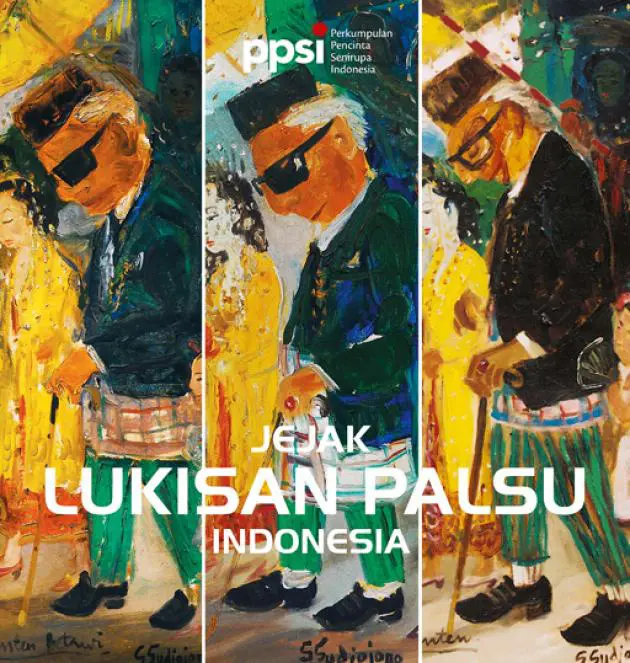
The Indonesian Art Lovers Association (PPSI) recently launched “Jejak Lukisan Palsu Indonesia” (“Tracing Fake Indonesian Paintings”) at the National Gallery in Central Jakarta.
The 382-page book, which targets art collectors, contains articles by prominent collectors, curators, academics and police officials. It covers the practice of forgery and offers recommendations for identifying fakes.
PPSI chairman Budi Setiadharma notes that forgeries of paintings by prominent Indonesian artists have surfaced in recent years. “It came to a head in 2012 when collector Oei Hong Djien opened a museum and we questioned the authenticity of his collection,” says Budi, who is also president-commissioner of PT Astra International.
In April that year the Oei Hong Djien Museum opened its third wing, in Magelang, Central Java, to house several thousand pieces spanning a century of work by Indonesian artists.
The museum has been a target of numerous allegations of forgery regarding many pieces by late masters such as Raden Saleh, Affandi, Hendra Gunawan and S Sudjojono. Oei remains adamant that his collection contains only originals, offering to let independent curators inspect it and remove any fakes found.
That same year Tempo magazine published an investigative report about the accusations, interviewing heirs of the masters, other collectors and historical “witnesses”. The writers concluded that it was difficult to ascertain whether the Oei collection was entirely original.
For the book, PPSI formed a team to investigate fake paintings in Indonesia and discovered that most forgers were well organised, the majority of them residing in Java.
The group says there are at least three types of painting forgeries. The first is an exact copy of an existing painting. The second is painted in the same style and passed off as an original. The third fuses parts of a painting by another artist. In all cases the artist’s signature is forged.
Syakieb Sungkar, one of the book’s authors, says it represents an in-depth study of painting forgeries in Indonesia. “The book offers studies from the first page to the last. It’s about investigation, about who the painters were, what paintings were forged, why they were forged and many other things,” says Syakieb, who is also a collector.
Syakieb adds that the book suggests preliminary solutions to countering forgeries. “A painting should be analysed visually in terms of the painter’s style, including colours and strokes. Buyers should be able to ascertain its provenance – its sales record and previous owners – to learn whether it is truly the work of the claimed artist.
“A forensic test can also be done to help determine originality.”
Syakieb says the group hopes the book will prod the government to improve Indonesian copyright laws. “Our current law covers very little on painting forgeries – it focuses more on trademark and photo reproduction. Nowadays forging paintings and signatures isn’t considered art forgery, but rather autograph forgery,” he says.
“The law needs to be revised so we can stop forgery and arrest the forgers.”
