
Private screenings, Public Domain


Play
Cinematic treasures come to youtube, thanks to the Thai Film Archive
A clip from the first Thai movie ever made as well as newsreels recording important events in the country’s history have become surprise YouTube hits in recent months and given a stronger sense of reason to the Thai Film Archive than it has previously enjoyed.
The archive, which has hundreds of thousands of well-preserved films in its vault, has been busy uploading a selection of its treasures to the video-sharing site since last year and while none have gone viral, the images from the past nonetheless have attracted attention.
The uploads include all that survives of the 1927 feature “Choke Song Chan” (“Double Luck”), the first Thai production, about a minute.
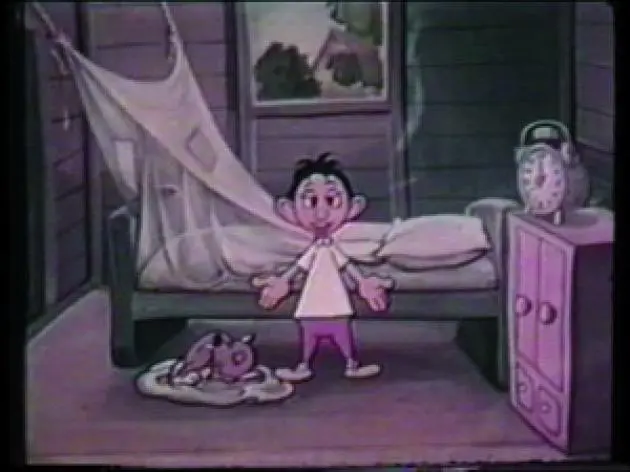
There’s also the first Thai animated film, 1955’s “Het Mahatsajan” by Payut Ngaokrachang. Made in the era when live-dubbing of films was all the rage, the cartoon has no sound, but the lively action leaves nothing to the imagination.
Other finds include newsreels portraying His Majesty the King’s activities, the 1947 coup d’etat, which features former prime minister General Chatchai Choonhavan in his youth, and the Bangkok floods of1942.
Chalida Uabumrungjit, deputy director of the Thai Film Archive, feels vindicated by the response, noting that the archive has been criticised for spending time and money on preserving “useless” home videos and newsreels.
One of the surprise hits, she says, is “Lum Sop Thee Lue Site”, a 1962 TV documentary about the archaeological site of pre-historical tombs in Kanchanaburi.
“‘Lue Site’ has generated around 1,000 views and underlines that some people, particularly archaeological students, are interested in this type of documentary and have shared that knowledge with others through their comments,” she says.
The TV documentary is an example of movies that don’t easily fit into any category and therefore usually fail to qualify for special screenings and film festivals. Their value only becomes evident out when uploaded to YouTube, demonstrating that they are far more useful online than stored in a vault.
Most of the films so far uploaded run for no longer than 30 minutes. “We feel it’s better to keep them short so as to catch to attract attention,” Chalida says.
In the coming months, the Archive will be uploading a series of interviews as well as some of its masterclass workshops that feature renowned guests from all over the world.
While the archive would like to showcase as many films as possible online, Chalida says that copyright, film quality and manpower are just some of the limitations faced. She’s also aware that movie buffs have uploaded a range of Thai films to YouTube even though this is against the law.
“Copyright is a major problem, especially in Thailand where we have to obtain rights from film companies, DVD and cable TV producers and even international distributors because once it’s on YouTube, this invades any copyright they have already sold. Some rights owners are still confused about their rights, which is why we need to stress to them that once its online, it’s in the public domain.”
Before a film can be uploaded to YouTube, it has to be transferred from spool to digital. This process involves the use of projection tools and there is thus potential for damage as well as loss of quality.
Restoration is another problem faced by the archive though Chalida says this problem will be solved next year when they take delivery of a state-of-the-art film restoration machine.
Right now though, all the archive can do is collect old films, clean them and store them in the vault at the recommended temperature of 5 degrees Celsius.
“Many people think that the process for transferring film from spool to digital is the same as restoration but they are very different,” Chalida says.
The new equipment, she adds, will restore the negative and bring the image, colour, sharpness and clarity closer to the original. Transferring original film to digital format first requires cleaning up of the film then recording it in digital format.
The archive has so far transformed more than 4,000 into DVD format and these are kept in its library, which is open to the public.
“As our archive is located way out of town making it too far for casual visits, watching the films we have in stock on YouTube will help to introduce the archive’s work to the public. We think of YouTube as a gateway that introduces us to film fans and it’s also instructive for us as we learn about audiences’ interests,” Chalida says, adding that the archive stocks far more than just old features and documentaries.
In fact, a large part of the vault is devoted to newsreels and home videos, many of them from the early days of Thai television when news and programmes were shot in film format.
Unlike leading world film archives like those in South Korea and the private Pathe film archive in England, where hundreds of thousands of films have been uploaded in high-definition, the Thai archive simply doesn’t have the time or the manpower to do the job.
“But we are doing everything we are capable of doing and we hope it will attract more interest in film,” says Chalida.
On the Web:
www.Fapot.org
YouTube.com/user/FilmArchiveThailand
