
Walking on an untravelled road


Play
Singaporean photographer Sim Chi Yin becomes the first Asian to join VII photo agency
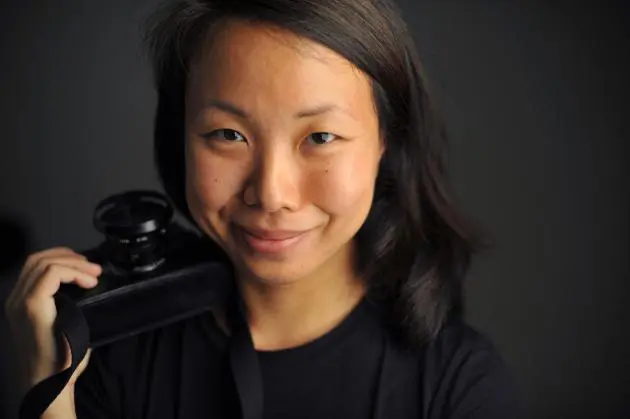
At just 1.52M tall, Sim Chi Yin is petite by any standards. But the 35-year-old photojournalist is about to stand tall, going shoulder to shoulder with the giants of the photo world.
Sim is the first Singaporean and Asian to join the ranks of the exclusive VII photo agency this month first as an interim member, then with full membership on the cards, subject to voting by other members, two years later.
The VII photo agency, so named because of the number of its founding members, was established in 2001. The founding members are famed photographers Ron Haviv, Gary Knight, Antonin Kratochvil, Christopher Morris, John Stanmeyer, James Nachtwey and the late Alexandra Boulat.
Though new members have joined and others have left over the years, the agency, with 21 members now, remains one of the most recognised in the world.
Based in Beijing for the past seven years, Sim got the phone call informing her of the news from her mentor and VII photographer Marcus Bleasdale on a Saturday night about three weeks ago.
“I answered and he said, ‘Congrats, you’re in – if you want it’,” she says.
“It’s a great honour to be in an agency with living legends in the field, with photographers whose life’s work sit on my bookshelves. So I’m excited and, at the same time, a little scared. I’m still growing in my craft and have a lot to do to work at the top of the league,” adds Sim, who has been in the VII mentor programme for the last three years.
It is a professional development programme where senior VII members handpick and mentor emerging talents.
VII photographer Ed Kashi says via e-mail that he is excited at having the Singaporean in the cooperative and calls her “a hard worker, great journalist, team player, smart and good person”.
A history and international relations graduate from the London School of Economics and Political Science, Sim is a former Singapore Press Holdings scholar and Beijing correspondent at The Straits Times.
In 2010, she quit her reporting job to return to what she calls her “long-neglected mistress” – documentary photography.
In the few short years since becoming a freelance photographer, she has muscled her way to international recognition in the competitive world of photojournalism.
Though based in Beijing, she also takes up assignments outside of China.
“I’ve long had an intellectual interest in China and studied Chinese history at university, and I’m working to document slices of what the country is today and where it’s heading,” says Sim, who has no long-term plans to move out of the country.
“There are many stories to tell here and I can go local – working on my own to get close to people and deep inside situations,” she adds,
Joining VII and having the agency represent and distribute her works is a major milestone in her career, but Sim is not about to take her foot off the pedal.
She currently has her plate full, working on personal long-term documentary projects about her ancestral roots in Guangdong, the urbanisation of China and the issue of silicosis – a deadly occupational disease that afflicts miners when they breathe in silica dust.
A film version of the silicosis story, which Sim is co-directing, is also in the works.
The former reporter is not new to standing up for the underdog.
She was prolific in producing stories about migrant worker issues as a journalist at The Straits Times and spent her days off travelling to Indonesia to document the lives of domestic workers headed for Singapore.
The award-winning body of work was published as a book, “The Long Road Home”, in 2011.
In that same year, Sim also produced the Rat Tribe series of photographs, shot between 2010 and 2012, which documents the lives of migrant workers who have made their homes in the basements and underground air raid shelters of Beijing.
Sim’s membership at VII comes at a trying time for the industry as print publications, hit by declining circulation globally, are cutting back on their photo budgets.
VII photo agency has not been spared from the state of flux. It closed its physical office in Paris and its gallery in New York earlier this year and employs a skeletal staff to keep itself nimble.
Members pay a monthly fee and work with the agency on pricing for their images, while the agency takes a commission.
But Sim remains unperturbed by these trends. She says: “I want to try to look under the hood and learn how things work in the agency and industry and do what I can to contribute to the agency.”
Mercurial market conditions are not the only challenges she has to contend with.
“The move from a cushy staff job to becoming a freelancer is a major transition that I still grapple with,” admits Sim.
“I was naive in thinking that I just want to take pictures when I started out freelancing. I didn’t realise it also means running your own business. The constant worry about money is actually very taxing.”
She hopes that becoming the first Asian to join VII will help more Asian photojournalists get a footing on the international stage.
“My dad used to tell me: ‘don’t take the road that no one has travelled on’. But how can I do that? I’m a journalist.”
