
The mind within
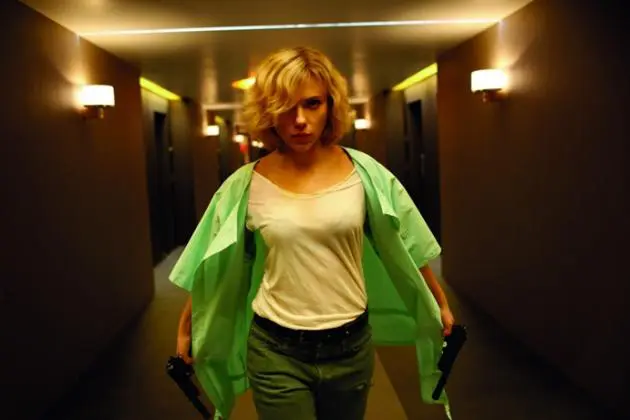


Luc Besson explores the limits of the human brains in his latest film, "Lucy"
FRENCH DIRECTOR and screenwriter Luc Besson explores the possibilities of human capacity in his latest film, “Lucy”, in which a woman is given full access to her own brain.
Besson, who has directed and produced several hit action movies over the years including “Nikita” in 1990, the “Taxi” series, “Taken”, “District 13” and “The Transporter” franchise, and also bought the rights for outside Asia for our very own “Ong Bak”, takes a turn into science fiction with “Lucy”, which tackles the age-old issue of human existence through a refreshing and thought-provoking approach.
Lucy, played by Scarlett Johansson, is a simple girl who foolishly gets herself involved in a drug cartel. She is forcefully used as a mule to transport an experimental drug in her stomach. But when the pouch accidentally raptures and the substance runs through her veins, she awaken with enhanced abilities and starts to pursue a different course in life – with lots of butt kicking along the way.
We had a chance to chat with Besson on the phone earlier this week during his promotional tour of Taipei.
HOW DID THE PLOT COME ABOUT?
I was talking to some scientists almost 10 years ago and they told me that every cell in our body sends 1,000 messages per second, and we have billions of cells. What amazed me the most is that we have no access to this information. So we’re not masters of our own bodies.
SO YOU’VE HAD THIS IDEA FOR 10 YEARS?
It took me awhile. I’m one of the founders of an institution in France, ICM [l’Institut du cerveau et de la moelle epiniere – the Brain and Spine Institute] and I see these professors every month. I knew I wanted to do something based around that idea, but I didn’t want to do a documentary about the brain. I took my time because it’s a serious matter. And I was not so sure if we could do a thriller that was fun but also had some philosophical content. Usually films are either fun or intelligent, and it’s difficult to put the two into one.
DID YOU HAVE TO DO A LOT OF RESEARCH FOR THE SCRIPT?
I didn’t need to because there are five or six Nobel Prize professors at ICM and these guys are great. What I had to do was check my facts with them because this film is after all a work of fiction and it was important to be careful about going too far and keeping the story within acceptable limits. Sometimes they said ‘no you can’t do that; that’s too absurd” and other times they said, ‘well that’s not the truth but it’s acceptable.” In the film when we say we use only 10 per cent of our brain, which is wrong. It’s just a theory. And the 60 per cent accessibility has never been proved, but it’s a movie so it’s okay to say that. Anyway we know for sure that we’re not using 100 per cent of our brain.
THE DRUG CALLED CPH4 PLAYS AN IMPORTANT ROLE IN THE FILM. IS THERE REALLY SUCH A SUBSTANCE?
The name is fake but the molecule is totally right. Pregnant women produce this substance during the first six weeks of pregnancy. I don’t give the real name of the substance because I don’t want people to have bad ideas!
WHY DID YOU CHOOSE SCARLETT JOHANSSON TO PLAY LUCY?
Like most directors, I always ask myself when I meet an actor or actress, “do we like each other?” and “do I want to spend eight months with this person?” That’s the first thing. It’s like two dogs sniffing each other. The first meeting with Scarlett was really nice and she’s very professional. She comes to the set with no makeup and she arrives on time – that’s what I want. I need someone who understands the film, who realises that it’s going to be difficult to do. Scarlett is a hard worker.
WHY DID YOU CHOOSE TAIPEI TO FILM THE FIRST PART OF “LUCY”?
I want to show that Lucy is totally lost. She’s far from home. She’s not very intelligent. She’s a woman in a tight dress who doesn’t know how to fight. I needed an exotic place far from New York where she lives. I knew that it had to be in Asia somewhere and my memories of Taipei from 20 years ago told me the city was right. So Taipei it was.
AND HOW DID YOU LIKE THE CITY AFTER 20 YEARS?
I like the ambience and the city is very photogenic; it’s easy to film here. Taipei has changed surprisingly little. It’s funny because in Europe, the big cities were bombed during World War II so there’s a mix of very modern and very old buildings. But when you come to a city that has never been in a war, you can see the difference. There are several cities in Asia like this; the buildings change gradually and it’s more of a natural evolution.
WHICH SCENE WAS THE MOST DIFFICULT TO SHOOT?
The one where Lucy phones her mother, because I was a metre away from her face for three minutes. That delicate emotion is difficult to catch. That kind of thing is very challenging in fact. The car chase was very technical and took us five days. And there were a lot of security issues involved. It’s fun to watch, but not so much fun when you’re filming.
“LUCY” HAS A LOT OF SHOOTINGS FOR A SCI-FI THRILLER. WAS IT NECESSARY FOR THAT MANY PEOPLE TO DIE?
It’s not about the thrills, but more about on the sense of life. At a certain point Lucy says, “you never really die”, so it’s about the relativity of time. The minute you’re born, you’re dying. In a way the biggest killer on earth is birth. It’s also about knowledge. Look at the news everyday – it seems there’s nothing but violence around the world. So I don’t see the point of making a film with flowers and pretending nothing is happening because life is violent. I wanted to show how Lucy is scared. Fear is what drives her and guides her. Everyone is afraid of death. You can see in the film how Lucy was so scared to die but at the end of the day it’s nothing. Fear of death is the essence of life. It makes us alive and fighting.
WILL THERE BE A SEQUEL?
I’ve never thought about it really. I don’t honestly know.
TURN HER LOOSE
“Lucy” opens in cinemas on Thursday. For more details, see www.LucyMovieIntl.com.
