
New Japan, old Japan


Play
How domestic silk farms are withering away
This June brought the good news that the Tomioka Silk Mill and related industrial sites in Gunma Prefecture would be added to Unesco’s list of World Cultural Heritage sites.
Established by the Meiji government in 1872 and operated until 1987, the Tomioka facility was Japan’s first state-run silk mill. By making it possible to mass-produce silk through a farming technique it developed, the mill became the base for Japan to join the modern industrialiased world.
The number of visitors to the mill exceeded the previous annual record of 310,000 people from April to July this fiscal year, and in the six months through the end of September, the total reached 700,000.
But although Tomioka is crowded with tourists, the silk farming industry that led and supported Japan’s silk production is on the verge of extinction. There were 2.2 million silk farmers in 1929, compared to less than 500 last fiscal year.
Gunma Prefecture has been the top cocoon producer in the nation for 60 years. According to JA Usui-Annaka agricultural cooperative, which has the largest number of silk farmers in the prefecture, there were about 2,500 silk farmers around 1960 within the jurisdiction of the Usui-Annaka district. However, the figure was only 35 farmers in fiscal 2013 and 26 in fiscal 2014.
The industry is also deeply grey: Silk farmers’ average age is around 75 or 76. It’s difficult to make a living only through silk cultivation, so hardly any silk farmers have someone to inherit their business.
According to the Gunma prefectural government, the domestic silk farming industry declined due to faltering demand for silk, the inflow of cheap silk products from overseas, and improvements in chemical fibres.
The local government is trying to develop new products using silk, prepare a system to accept tourists and support newcomers to silk farming.
There are no signs, however, that this is stemming the decline in silk farmers.
A 78-year-old female silk farmer in Annaka has mixed feeling about the scheme. “Even if the Tomioka Silk Mill is preserved for future generations because it was designated as a World Heritage site, the silk farmers who supported the industry will disappear soon. It takes time to hand down silk farming techniques to a successor. I wish the silk farming industry itself had been designated as a World Heritage before the mill.”
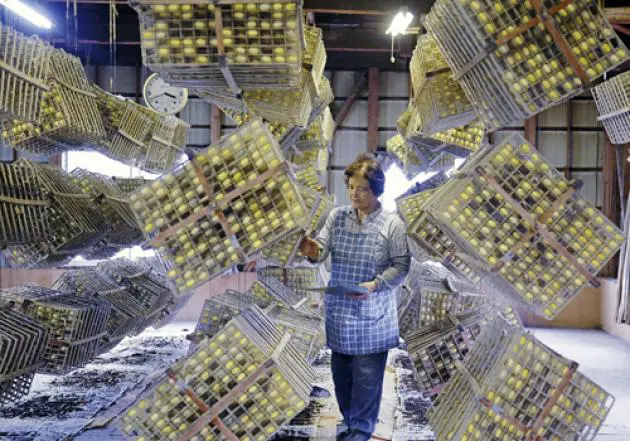
This year, Chiyo Arisaka raised Gunma Kogane silkworms, an original species from the prefecture that produces shiny yellow raw silk. “I have silk farming equipment and I’m accustomed to raising silkworms, so I’d like to continue the job next year if my health allows. But it’s getting harder year after year,” Arisaka says. None of her daughters or sons-in-law plan to take over the job, as it is unprofitable.
“There used to be 28 silk farmers in this district, but only my household does it now. I’ve been working since my parents’ generation, but if I become unable to work, silk farming in this district will end,” adds Kiichi Shiraishi, 82.
Chinami Fujimaki, 89, quit silk farming because his workplace collapsed due to heavy snow in February this year.
“I’m really sad because I’ve raised silkworms since I was a child,” Fujimaki laments.
This year’s work in silk farming ended in October, and next year’s work is scheduled to start in May. Until then, no one knows how many people will continue farming silk.
“I’ll do it again next year. I’ll do it until I die or as long as my health permits,” Toshio Hagiwara, 84 says energetically.
