
A new option in |assisted reproduction
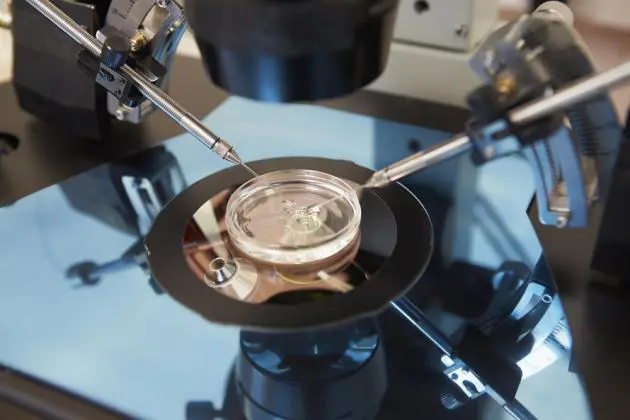


WOMEN wanting to preserve their future ability to have children now have a new option: oocyte cryopreservation
WOMEN wanting to preserve their future ability to have children now have a new option: oocyte cryopreservation – or egg freezing – is a new technology in which a woman’s eggs (oocytes) are extracted, frozen and stored. Later, when she is ready to become pregnant, the eggs can be thawed, fertilised, and transferred to the uterus as embryos.
Oocyte cryopreservation is aimed at women diagnosed with cancer who have not yet begun chemotherapy or radiotherapy; those undergoing treatment with assisted reproductive technologies who do not consider embryo freezing an option and those women who, for the purpose of education, career or other reasons, desire to postpone childbearing.
Additionally, women with a family history of early menopause often have an interest in fertility preservation. With egg freezing, they will have a frozen store of eggs, in the likelihood that their eggs are depleted at an early age.
The egg retrieval process for oocyte cryopreservation is the same as that for in-vitro fertilisation. This includes one to several weeks of hormone injections that stimulate the ovaries to ripen multiple eggs. When the eggs are mature, a medication to trigger ovulation is given and the eggs are removed from the body using an ultrasound-guided needle through the vagina. The procedure is usually conducted under sedation. The eggs are immediately frozen using a new freezing process known as vitrification.
Evidence shows that fertilisation and pregnancy rates are similar to IVF/ICSI with fresh oocytes when vitrified/thawed oocytes are used as part of IVF/ICSI in young infertility patients and oocyte donors. No increases in chromosomal abnormalities, birth defects, or developmental deficits have been noted in the children born from cryopreserved oocytes. This technique is no longer considered experimental.
Approximately 70 per cent of embryos produced either through natural conception or IVF are lost before birth. The vast majority of embryos are lost within the first three months of pregnancy, most of these even before implantation. A major cause of embryo loss, including miscarriage, is a chromosome anomaly (known as “aneuploidy”) where there is either a loss of a chromosome or a gain. Some of these anomalies are compatible with full-term delivery, such as three copies of chromosome 21 (known as Down syndrome) or three copies of chromosome 18 (Edward Syndrome). Some are not compatible with full-term delivery; and others cause the embryo to arrest its development before implantation.
The rate of aneuploidy in eggs also increases with a woman’s age, with Down syndrome being the most commonly known. The incidence of Down syndrome rises from 1 in 900 at age 30, through 1 in 230 at age 37 to 1 in 20 at 46.
Assisted reproduction technology (ART) incorporates genetic tools for genetic testing of pre-implantation embryos and was initially performed to diagnose patients who were known to carry a high risk for monogenic disorders or chromosomal structural abnormalities. It was then applied to treat fertility patients with increased risk for aneuploid embryos.
Pre-implantation genetic screening (PGS) was introduced into clinical practice for screening and discarding aneuploid embryos, thus improving the chance of healthy conceptions after infertility treatment with poor prognoses, such as advanced maternal age, repeated implantation failure, recurrent miscarriage and previous pregnancy with a chromosome abnormality.
In the past, fluorescence in situ hybridisation (FISH) for PGS enabled screening of embryos for chromosome aneuploidies but it has many limitations, among them human error and a limited number of chromosomes tested. Today, the new genetic analysis method aims to increase the number of chromosomal testing from 5 to 23 pairs of chromosomes (22 pairs of autosomes and the sex chromosomes or 24 chromosomes). Array comparative genomic hybridisation (Array-CGH) was the first technology to be widely available for reliable, accurate and relatively fast 24-chromosome copy number analysis and is now used extensively around the world. It is routinely proposed in order to overcome the technical difficulties that beset earlier PGS studies.
Recent data from over the world have confirmed that using array CGH can improve the success rate in IVF patients.
Dr Nutchada Kaewkoet is an Obstetrician-Gynaecologist specialising in Reproductive Medicine at Samitivej Srinakarin Hospital. Call (02) 378 9129-3,
