
Avoiding 'builder's bum'


Play
Why a shop in Germany is specialising in fashion for wheelchair users
CHRISTINE CORNELIUS
DEUTSCHE PRESSE-AGENTUR
EBERBACH
TROUSERS THAT LOOK great when you’re standing often lose their style when you sit down. The legs are too short, pockets and seams put uncomfortable pressure on your behind, and the buttons can be difficult to undo.
Marco Hopp tried leggings for a while. What he hated most about trousers was the potential for “builder’s bum.”
“I think it’s very unsightly when I’m sitting there and half my behind is showing,” he says.
The 43-year-old from the German city of Heidelberg has been paraplegic since a car accident more than 20 years ago.
“Even if I’m in a wheelchair, I still expect my dress style to match my character,” he explains. But that’s easier said than done.
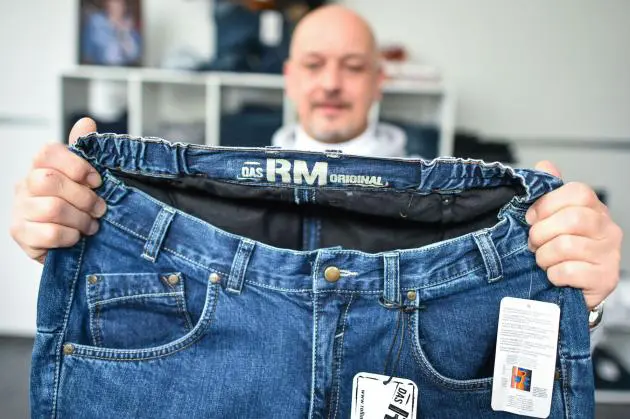
Hopp now buys his trousers from a shop in the south-western German town of Eberbach, Rolli-Moden, which specialises in fashions for wheelchair users. “It’s out of the question for me to buy trousers in a normal shop,” says Hopp.
“The prices are steep [at Rolli-Moden] but I know that they fit me.”
The market for wheelchair fashion is not big. Rolli-Moden claims to be the largest such shop in the world and only has 11 employees.
“Many wheelchair users don’t even know that wheelchair styles exist,” says the shop’s director, Berkay Dogan.
“That’s why you see so many of them wearing baggy trousers.” Even among investors, the business opportunity for wheelchair fashions hasn’t really registered, despite there being 1.6 million wheelchair users in Germany alone.
Shopping for clothes can be frustrating for wheelchair users, confirms Dunja Fuhrmann of the German Society for Self-help for the Disabled.
They usually buy the same clothes as able-bodied people do, but the garments often look terrible when they have been sat in all day. On the sitting body, pants have to be pulled up frequently. It’s no accident that fashion models are photographed standing up.
In the specialised shops, Fuhrmann, who is herself in a wheelchair, admits she misses the selection of colours, cuts and fabrics offered on the high street. “You don’t always find fashionable things,” she says.
Fashions for wheelchair users could also interest people who don’t have disabilities, believes Ilja Seifert, chair of the General Disability Association in Germany.
If trouser flies were to be longer, going down and under the crotch, many able-bodied men who struggle in toilets with tight jeans would also benefit, he suggests.
“A solution that works for everyone is difficult,” he admits. “Usually us disabled dislike any kind of separate treatment, but in relation to clothes, it’s okay.”
Up till now, including clothes for wheelchair users in ranges at high-street stores has not seemed to be an option for clothing chains.
The fashion association GermanFashion, which states that it represents 97 per cent of business in the German fashion market, says it does not know of any such offerings among its member companies.
Rolli-Moden was founded at the end of the 1980s.
It has remained a niche market, though the business now has two competitors, Rollitex and Rolling Elephants.
A young new team took over the Rolli-Moden management recently and wants to do lots of things differently.
“Our fashions are practical, but will be getting more stylish,” says director and designer Julia Schulz.
Trousers shouldn’t look like they were designed especially for wheelchair users, she says.
The trick is in the detail: cut pants higher at the back so the kidneys aren’t exposed and builder’s bum is avoided; make the zip longer to leave more room for a catheter and to make it easier to get changed.
The legs are often cut thinner, since wheelchair users often lose bulk in their leg muscles, and longer, so they don’t expose the ankles. There should be no back pockets, since they create pressure points. Buttons should be easy to undo.
Designer Vivien Schlueter from the northern German city of Oldenburg specialises in party clothes for wheelchair users.
“Disabled people definitely also have a sense of fashion,” she says. In regular shops “they simply buy whatever fits them, and not what they like – and that’s not ideal.”
