
The crafts that bind Tohoku


Play
Chiang Mai gets a loving look at the astonishing talents of craftsmen in the quakestruck Japanese region
Extraordinary sake bottles, a 60-year-old print by a Japanese woodblock master and lacquerware from the resort city of Appi are among the highlights of the Chiang Mai exhibition “Beautiful Handicrafts of Tohoku, Japan” |opening this Saturday.
The Japan Foundation’s Thai office and Japanese Consulate in Chiang Mai are bringing 70 examples of traditional craft to the northern branch of the Thailand Creative and Design Centre.
The exhibition will mark the anniversary on March 11 of the earthquake and tsunami that devastated much of the Tohoku peninsula in 2011. The region, known for its beautiful scenery, rich local culture and history, continues to rebuild four years later. Normality is gradually returning to people’s everyday lives.
Ryuichi Matsubara and his curator team are mounting a display of works in ceramic, lacquer, textiles, metal, bamboo and other wood to demonstrate the folk crafts rooted in ancient times that continue to thrive.
Tohoku is best known for its metal casting, as seen in iron teapots and wind chimes – Nambu-Tekki (Nambu ironware) and Yamagata-Imono (Yamagata casting). Nambu refers to an area of Tohoku ruled by a powerful samurai clan in the Edo Period.
The “arare-gama” style of cast-iron teapot that will be displayed in Chiang Mai takes its name from the pattern of evenly spaced protrusions in the surface, which resemble hailstones (a rare in Japanese). The “habiro” iron teapot with an expanding flange near the bottom is produced in Dou-machi, in Yamagata Prefecture. Both works are noted for their distinct shapes.
“Bent woodwork” is admired for its beautiful straight grain and the aroma of the natural, resilient Akita cedar used. Kaba-zaiku is a famous product of Kakunodate in Akita Prefecture, where the bark of the mountain cherry tree is applied to a wood substrate (mokutai).
The Kokeshi dolls, ceremonial dolls, kites and decorated candles |(e-rosoku) that will be shown are unique to the Tohoku region. Both their shapes and decorative painting – as in depictions of Kisshoten, goddess of beauty, on some of the kites – represent prayers for safety, happiness and prosperity.
Japan’s rich pottery culture is characterised by myriad kilns scattered from north to south, each producing its distinctive models. There are relatively fewer production sites in Tohoku, but the region has its own unique pottery and applications.
Aiza-Hongo-ware (from Aiza Hongo-cho in Fukushima Prefecture), Naraoka-ware (from Nangai-mura in Akita) and Tsutsumi-ware (from Sendaricity in Miyagi) will also be on show. These range from antique pieces from the Edo Period to original works by individual artists in more recent times.
Each piece has a specific intended purpose, such as preserving food through the winter, but it is the exquisite balance between the shape and glaze that distinguishes the pottery of Tohoku.
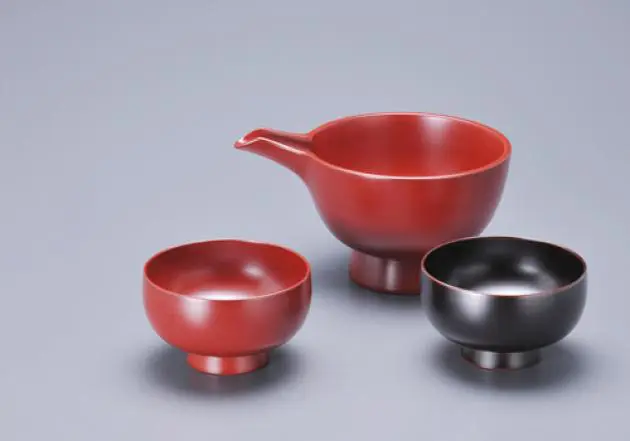
The Joboji lacquerware featured in the exhibition was crafted at Joboji, a well-known origin of “raw lacquer” in the region. The method of collecting lacquer sap, known as urushi-kaki, has been passed down across the generations. It entails slashing the tree trunk in such a way that no lasting damage is done. The characteristics of the lacquerware differ among production sites in Tohoku, and the exhibition offers a chance to compare the subtle shifts.
Like agricultural people across Asia, those in Tohoku make baskets for use in the harvesting of crops. There they use bamboo, grapevines and akebi (Akebia quinata) vines. When the region is snowbound in winter, they’re indoors making baskets and boxes, highly functional containers for their daily use, but a great deal of artistic invention goes into them.
For utilitarian objects, they have an undeniable beauty.
Artists such as Kanjiro Kawai, Shoji Hamada, Keisike Serizawa and Shiko Munakata were deeply involved in the “mingei” movement. Its chief proponent, Soetsu Yanagi, pointed out the beauty in handicrafts created by unknown craftsmen. The movement’s intent was to seek out such pieces and bring them the level of appreciation they deserved. Kawai and the others joined Yanagi on his tours, collecting handicrafts throughout the country.
The artists of the mingei movement were in turn influenced, both spiritually and artistically, in their own creations.
While giving guidance to the artisans of Tohoku in preserving their heritage, they also conceived new designs that added modern appeal to the products and breathed new life into the trade.
Ironically, though, the noble gesture served to distil the important aspect of the “unknown craftsman”, instead giving the artisans and their locales national prominence. Nevertheless, the mingei movement enabled the beautiful handicrafts of Tohoku to be passed down to future generations.
