
Our past, their future


Play
Designers from the Asean member states discuss how art and crafts can empower women and the unprivileged
Women's empowerment was very much in the air last week as designers from Asean member countries gathered to discuss the grouping’s craft heritage at “Crafts Trends in Asean 2015”, a prestigious arts and crafts fair held last Friday in Bangkok.
The three-day event – organised by the Support Arts and Crafts International Centre of Thailand (Saccict) – featured an exhibition of first-class innovative arts and crafts from across Thailand and other Asean countries along with a seminar titled “Weaving the Past, Creating the Future”. The latter brought together graphic and fashion designers, a magazine editor, architects and an artist from all 10 member countries to share their views on design trends in their homes.
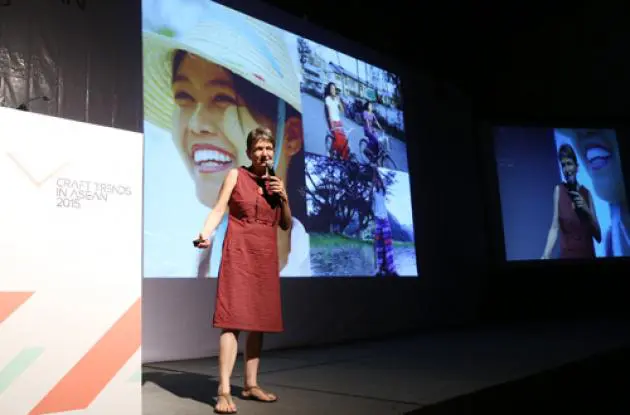
Though a multimillion-dollar industry in countries like Thailand, Malaysia, Indonesia and the Philippines, traditional crafts are |largely untapped reserves of creativity and opportunity and a rare source of empowerment for women in Myanmar and Laos. Ulla Kroeber, a German designer representing Myanmar at the seminar, said that through her souvenir shop, Pomelo, in Yangon, she’s been able to help HIV/Aids-infected women, marginalised producers, community groups and individuals to overcome social and economic marginalisation.
“When we started Pomelo in 2012, there were only three groups of handicraft producers. Now we have 39 groups. Most of them are women including traditional artisans, Aids victims, street youths, the mentally and physically disabled and small family businesses fighting poverty. Of course there are men too. All of them are poor. But by selling their handicrafts at my store, they earn about KS100,000 [Bt3,000) a month. That’s a lot for them, considering that a university lecturer in Myanmar earns just KS85,000 a month,” she said.
Kroeber is the lead designer of Pomelo, a handicrafts centre that provides a fair trade marketplace for Myanmar producers, artisans and designers.
A non-profit enterprise, Pomelo aims to improve the quality of traditional handicrafts by introducing contemporary twists to give them more appeal to international consumers.
On sale at Pomelo on Thein Pyu Road in Yangon is a vast array of products, among them longyi bags, teddy bears, wine bags made from recycled materials, lightweight padded cases for tablet computers, handmade papier mache dolls, home decor items, handwoven textiles and children’s clothing.
Kroeber insists that these products help improve the livelihood of the marginalised and destitute.
“By making the handcrafts, these poor women can support themselves and improve their circumstances. They come from nothing but now receive recognition,” she said, adding that Pomelo targets foreign tourists and international consumers in Myanmar.
As in Myanmar, the traditional crafts sector struggles to survive in Laos where textile weaving in particular contributes significantly to women’s empowerment, said Veomanee Douangdala.
The Laotian weaver, together with the Englishwoman Joanna Smith, co-founded “Ock Pop Tok” (East meets West) in 2000 as a living crafts and resource centre for learning about textiles, crafts and culture in Luang Prabang, Laos’s former capital.
The centre spreads and shares |the arts of local textiles and |dyeing techniques through the arrangement of cultural activities and events.
“There are about 40 ethnic minority groups in Laos, but there are fewer craftsmen and artisans these days. My centre aims to empower women through textiles and promote traditional designs to the younger generation. Over the past three years, more youngsters have opted for traditional dresses in a mix-and-match fashion,” said Veomanee.
All the speakers were in favour of mutual cooperation to preserve and develop crafting skills in Asean. Designers and craftsmen in the region also need to turn local wisdom into practical ideas and value so that handicraft products of the region are marketable globally.
