
What Sage Patanjali knew best about yoga


Play
Today is International Yoga Day but, in ignoring the deeper aspects of the science, most of the world's practitioners fail to enjoy the full benefit
SEVENTEEN HUNDRED years ago a wise man in India known as Sage Patanjali offered a precise and, many believe, perfect explanation of yoga. His emphasis was on managing the mind. “Yoga is to stop the dissipation of mind,” he said, “stilling the natural turbulence of thoughts” and “resolving the conflicts of the mind”.
Patanjali’s approach to the practice was scientific in adapting its technique to transform the whole being. Yoga is not a philosophy, nor a religion, or even a way of thinking, he said, but rather a path to the ultimate truth within each individual, the hidden treasure.
Yoga is an inward journey to understand our own abilities, qualities and potential to enjoy and live our lives in health and happiness. But the journey requires discipline. Yoga must be practised regularly and with full faith and conviction. Patanjali believed that each individual is a masterpiece waiting only to be cleansed of its impurities.
One of his scientific methods is known as ashtanga yoga – the “eight limbs” or “eight steps” of yoga. The steps are yama (social conduct), niyama (personal conduct), asana (physical posture), pranayama (breath control), pratyahar (the withdrawal of senses), dharana (concentration), dhyan (contemplation) and samadhi (trance).
These eight words embrace the whole science of yoga. Patanjali referred to them as “limbs” because each is related to and dependent on the others, and none can be discarded. Each limb has its own internal, organic unity. And they are “steps” because there is specific sequential growth involved. Each step is followed by another, from first to last.
Yama is a form of self-restraint, a way of conducting oneself so that one’s energy is channelled toward positive outcomes. By giving direction to our life force, we can conserve energy and thus find it easy to achieve our goals. There are five yamas – truth, non-violence, honesty, non-possessiveness and celibacy.
Whereas religions lean heavily on words and instructions, Patanjali emphasised the importance of practice.
Upon finding direction in our lives, and by maintaining discipline and regularity, we can move on to the second step, niyama, which means “fixed observance”. The five niyamas are cleanliness, austerity, contentment, self-study and prayer.
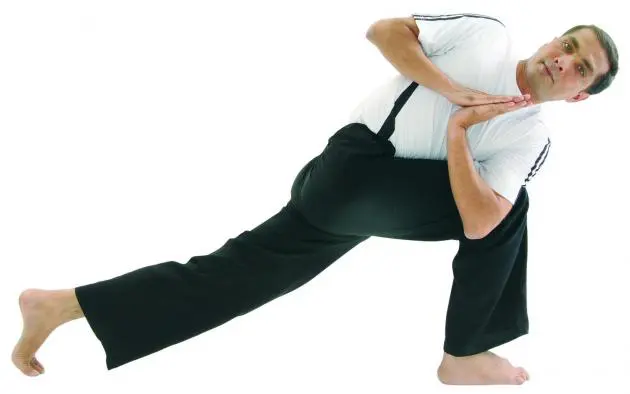
Again, discipline and regularity lead us to the next step, physical posture. Asana refers to the ability to sit in comfort and stillness. Due to the modern sedentary lifestyle, our bodies become restless, and this has to be overcome.
Once we develop the ability to sit still, we can move to the fourth step, pranayama, regulation of the breath. Breathing is the bridge between body and mind, body and soul. When our mind shifts course, the rhythm of our breathing also changes. By regulating the breath we gain control over the mind and, since our physical, mental and emotional activities depend on the rhythm of breathing, we can actually regulate our personalities.
The fifth step, pratyahar, is the withdrawal of the sense organs. This brings deep physical and mental relaxation and the ability to focus, so that we can proceed to the sixth limb, dharana, which means “single-pointed focus”. And once we achieve perfection in this, we can enter into dhyana easily.
Dhyana is meditation, but on no particular subject, as if there were no mind, no thought, but instead thoughtlessness, the contemplation of nothingness.
The final step, samadhi, is a transcendental state that only comes with individual effort. Yoga teachers cannot guide you to the last two steps. They rely on solo effort, great discipline and a higher level of evolution.
Yoga is in fact 100 per cent experiential, even though it is backed 100 per cent by theory, concept and philosophy. If the theory were to be even 1 per cent wrong, 99 per cent of the practice would be rendered useless.
Seventeen hundred years ago Patanjali regarded all of the eight steps equally, but unfortunately much of modern yoga is devoted wholly to asana, the physical aspect. The exercises are globally popular, but without the use of the other “limbs”, people are not getting a proper understanding of yoga.
Nevertheless, there are some great teachers who can show how to integrate all of the limbs simply, in a way that still meets the demands of modern society. Whatever yoga system we follow, it is essential to adopt this holistic approach for better and safer results, instead of practising only selectively. Yoga is not about perfecting physical posture, but rather managing the subtle qualities of each individual.
SANJIV CHATURVEDI is a leading yoga practitioner and director of Divine Yoga at Home Place on Soi Thonglor. He can be contacted at [email protected].
