
Playthings of the past


Play
Cute toys made in days of poverty radiate love and German ingenuity
Toys helped frightened children on both sides of World War II endure frightening nights in bomb shelters, even if the playthings were primitive and made of scrap metal and rags.
In Germany, self-made toys also sustained children’s self-esteem after 1945 when the Nazis had been defeated and their parents were picking up the pieces of lives.
A selection of playthings |made in the darkest years has just gone on display in a museum in Nuremberg. Visitors can see some basic wartime toys along with those fashioned lovingly during post-war austerity, which lasted well into the 1950s.
For today’s generation weaned on shiny diecast model cars, Barbie dolls and computer consoles, the toys may seem sad and dreary. But they were hotly loved once.
An entire set of doll’s house furniture was made using matchsticks by little Lioba Pilgram in 1956.
It would put many mass-produced toys, in the shade. There are tiny books on a shelf, while miniature pots and plates decorate the tiny kitchen table.
Lioba was aged only 8 years old when she embarked on the project and she remembers it well.
“Cutting and gluing together the matches was a tiresome task, but I had small hands, a lot of time and plenty of patience to help me,” she recalls.
The delicate work is just one of the exhibits at Nuremberg’s Toy Museum in an exhibition of austerity toys which runs until February 1.
Ranging from the crude to the highly accomplished, the self-made toys on display were put together from 1943 – when World War II was raging – until the end of the 1950s, when Germany’s economic miracle brought renewed prosperity.
Back in January, the Nuremberg museum called on local citizens to come forward with old wartime and early post-war toys that may have been lying dormant for years in attics and cellars. Around 170 people got in touch and donated or lent their playthings for the display.
“Following a decree in Germany in 1943, factories were prohibited from making any more toys,” says museum director Karin Falkenberg. All efforts were focussed on producing armaments for the Nazi war effort.
This did little to stifle the creativity of mothers and fathers, who spent hours working on toys to keep their children occupied.
A whistle made from a spent bullet cartridge, dolls crafted from rags or even a “warplane” parlour game fashioned from pieces of a gas mask filter are in the show.
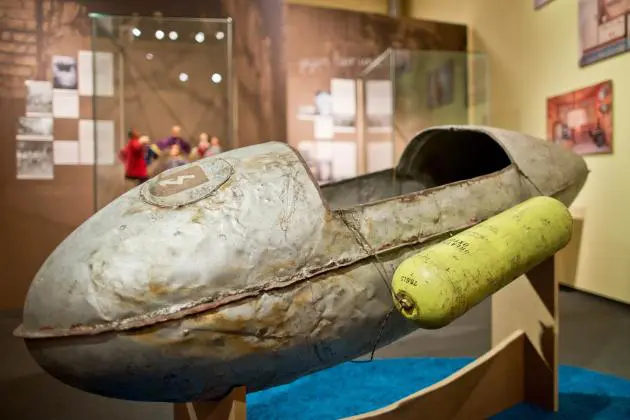
One of the most eye-catching exhibits is a paddle boat measuring almost 2 metres in length. The dinghy was made from a battered auxiliary fuel tank jettisoned by a military aircraft to reduce weight.
“These boats were common at the time,” Falkenberg explains.
Photographs show children on local river boat trips with the ungainly vessels.
“They were really wobbly and tended to roll like a log,” says the museum’s director. Kids certainly had a lot of fun with them.
The ultimate cast-off of the show in Nuremberg has to be a 1946 teddy bear that goes by the name of Brummhilde, Falkenberg says.
The ted wears a blue and white chequered dress fashioned from a pair of US Army underpants that a soldier removed and never got back again, according to the present owner. Nuremberg was full of American soldiers during the post-war Allied occupation.
Some children and parents were inseparable from their hand-made playthings. Included in the display is a charming doll’s house built by a single mother for her daughter in 1944.
When the sirens wailed to warn of an impending air attack, the little girl would snatch the doll’s house and hurry down with it into the air-raid shelter, leaving many more valuable household items to an uncertain fate.
