
Spider veins: a tell-tale sign of ageing


Play
Sixty is the new 40, according to a recent survey by scientists who say longer, healthier lives and improved access to healthcare mean people now hit middle age later.
What the study fails to point out, though, is that our bodies have not agreed to stop ageing. And there are a few tell-tale signs of ageing that alert us to that undeniable fact. It can be a wrinkle, sun spots on the back of a hand, hair going completely grey or varicose and spider veins that you swear were not there the day before!
Not everyone will develop varicose or spider veins. |And people who do develop them will do so to different degrees. For some, varicose and spider veins will be a |simple cosmetic inconvenience. Individuals may dread or refuse to wear shorts, skirts, or bathing suits due to the varicose and/or spider veins on their legs; considering them to be their “tell tale” sign of ageing. However, for others, varicose veins will develop beyond being a simple cosmetic inconvenience and will become a significant health concern.
The job of the veins is to carry blood from the body back to the heart and lungs. Unlike the arteries that have the heart to push blood forward through them, the veins rely on valves whose job it is to ensure blood flows one way. Surrounding muscles help move blood forward by squeezing or compressing the veins. If the valves are not working properly then blood has the opportunity to flow backwards and the affected veins swell in order to |accommodate for the extra blood volume.
Many things may cause these valves to fail, with age and family history being the biggest predictors. By the time individuals reach their 60s, approximately 41 per cent will have varicose veins. Moreover, if both parents have or were known to have varicose veins than the likelihood that their children will develop varicose veins is 90 per cent. Likewise, family history is a contributing factor in 80 per cent of spider veins cases.
Pregnancy, a history of deep vein thrombosis (DVT), and trauma are also believed to be strong contributing factors for varicose and spider veins. During pregnancy the hormones oestrogen and progesterone are elevated causing the veins to relax in order to compensate for the added blood volume created during pregnancy. The extra pressure caused by the added blood volume and a growing uterus can build up in the veins to the extent that the valves in the lower limbs are damaged. DVT’ and trauma can cause direct damage to valves within a specific area or limb. Regardless of how the damage to the valves is caused, blood from the lower limbs is no longer returning to the heart as efficiently as it was before.
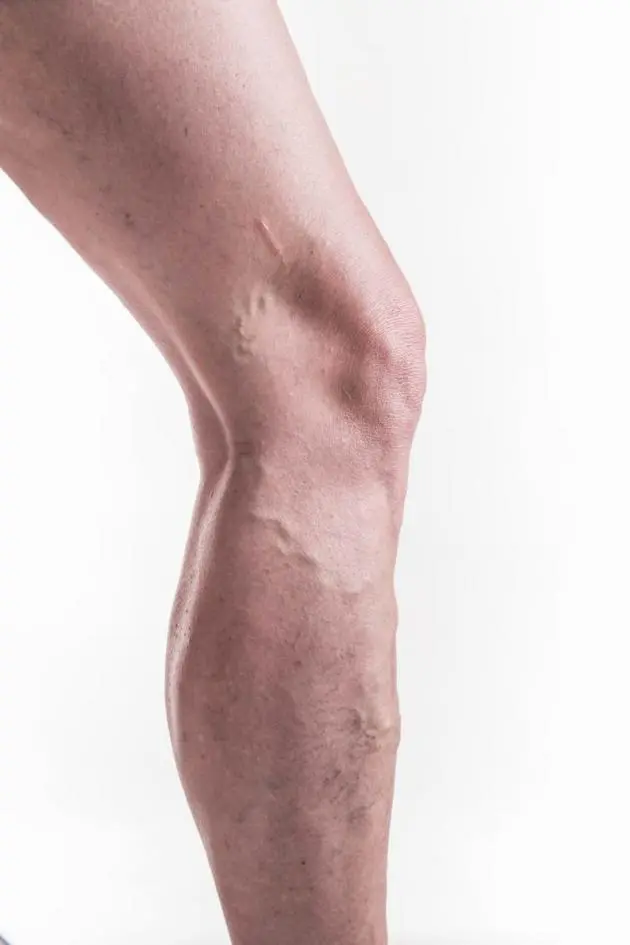
Even though varicose veins and spider veins share the same underlying causes they appear differently and the health implications differ. Varicose veins are thicker, can appear bulgy, and are often described as rope-like. Depending on how significantly the circulation is compromised, the veins may become painful, itchy, and may even lead to open sores on the skin. Moreover, the affected leg can become swollen, feel heavy, and the nearby muscles may suffer from cramping pain at night.
Alternatively, spider veins look more like purplish threads located close to the skins surface. They generally aren’t painful or itchy, and their presence doesn’t lead to any swelling or cramping in the affected leg.
If an individual is experiencing the uncomfortable symptoms of varicose veins or wishes to have varicose and/or spider veins removed for cosmetic reasons, he or she should see a physician with experience in this area. Vascular surgeons or plastic surgeons are two types of |specialists who are trained in this area.
The physician will first perform a physical exam and ask many questions. Then, depending on the severity of the varicose vein(s), the physician may recommend a duplex ultrasound be performed. This ultrasound assesses blood flow and will therefore show which valves are and are not functioning.
Treatment options should be discussed thoroughly as recommendations can vary widely depending on the wishes of the patient as well as the severity and location of the varicose or spider vein(s). If the varicose or spider vein(s) are not a cosmetic concern or physically bothersome, one may be advised to begin wearing pressure stockings and to frequently elevate his or her legs. This will prevent blood from pooling in the lower extremities, encouraging it to flow towards the heart. If one wishes to have his or her smaller varicose or spider veins removed for primarily cosmetic reasons, this can be accomplished by injecting the vein with a substance that will destroy it. The remnants will then be safely reabsorbed by the body. However, if one wishes to have larger veins removed due to cosmetic and/or the negative signs and symptoms associated with varicose veins the recommendation is generally surgical removal, with or without the aid of laser or radiofrequency.
Definitive treatment works 95 per cent of the time. However, one needs to be aware that new varicose or |spider veins can develop with time.
Varicose and s pider veins don’t need to be the “tell tale” sign of ageing. A physician can advise you on the treatment options that will target the painful and/or |cosmetic symptoms associated with varicose and spider veins. A visit to the physician can potentially take that 10 years off your legs and improve your circulation.
DR KHAMIN CHINSAKCHAI is a Vascular Surgeon at Samitivej Sukhumvit Hospital.
