
Frieda the miracle girl


Play
Europe's youngest premature baby turns five
Frieda's birthday is always a cause for especial celebration – because it’s a time when her family remember how lucky they are to have the little girl at all. For a while, Frieda held the record as Europe’s most premature baby to have survived. Now she is flourishing at the age of five.
“She has developed really well, we’re really happy about it,” says Frieda’s mother Yvonne, 38. “The relief is enormous.”
And Frieda? She was delighted about her birthday party on November 7, 2015, which she celebrated with lots of friends and a chocolate cake covered in Smarties.
“I’d like a doll’s house,” she said, before the big day.
According to doctors, Frieda’s case is amazing. She was born in 2010 in the central German city of Fulda at 21 weeks and five days – a normal pregnancy lasts 40 weeks – just 26 centimetres long and weighing just 460 grams.
Such premature babies usually have little chance of survival.
But Frieda is a phenomenon, defying all negative predictions about her future.
She still appears delicate at just under a metre tall and weighing just 12.5 kilograms, but she’s otherwise full of life, cheerful and outgoing.
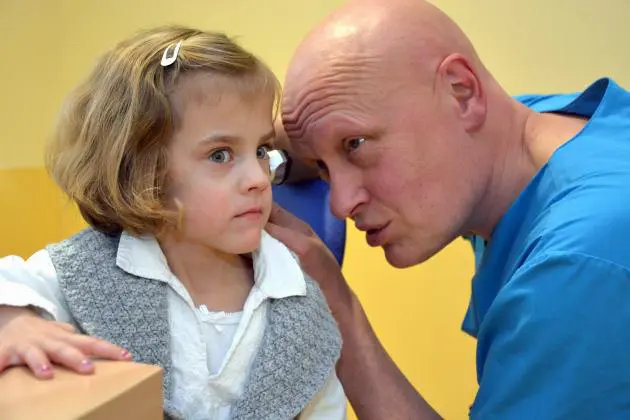
When she plays board games with her mother she’s engaged and competitive, when she paints during a check-up at Fulda Hospital, she concentrates, totally engrossed.
Her mother’s relief at her normal development is clear.
Premature babies – if they survive – often suffer permanent health problems. Their lungs, intestines, hearing and retinas are often severely underdeveloped and they can suffer brain haemorrhages and disabilities.
Not Frieda though. She’s been going to a playgroup at a local kindergarten for a year now.
“She’s even taking a course, English for Kids, and she’s very musical,” says Yvonne with a smile.
She’s not completely without her concerns though. Frieda sometimes throws up due to an eating disorder.
“She doesn’t notice when she’s had enough,” says her mother. “Her motor function isn’t that smooth either. When she runs or jumps she looks a bit clumsy. And she isn’t strong enough to ride a bike yet. For all that though, she’s cognitively very advanced, she’s very quick to learn.”
The director of Fulda’s clinic for children and young people, Reinald Repp, agrees.
“Frieda’s a little miracle. We can be very pleased with her progress,” he says.
“Physically she has some catching up to do, but she’s always improving. She’s developed appropriately for her age and doesn’t have any problems that go beyond individual characteristics. She can keep up with other children her age in tests, she’s interested in everything and talks very well.”
But it’s difficult to say whether her astonishingly positive development will continue, says Dr Repp, because there’s too little research about the lives of extremely premature babies.
“However at the moment there’s no signs of any particular problems developing. She has a good prognosis, but no guarantees.”
Professor Wolfgang Goepel of the Association of Neonatology and Pediatric Intensive Care also finds it difficult to make a prediction.
“You can’t often predict their development in the long term or reliably forecast how they might do at school.”
But knowledge about premature babies is increasing all the time in Germany, says Repp.
“The children’s chances are improving every year and complications are decreasing.”
Extremely premature babies are surviving more and more often in Germany. Paulina Emily was born in Greifswald at 23 weeks in 2011, weighing 490 grams and measuring 27 centimetres. In the same year in Rostock, another baby was born weighing 650 grams and measuring 33 centimetres.
And in Dortmund a baby weighing only 280 grams, little more than a packet of butter, survived.
Although Frieda’s birthday was a time of celebration for her family, it was also a time of remembrance for her twin brother Kilian, who didn’t make it.
He died six weeks after their birth from heart and intestinal problems.
