
Fighting back against cancer
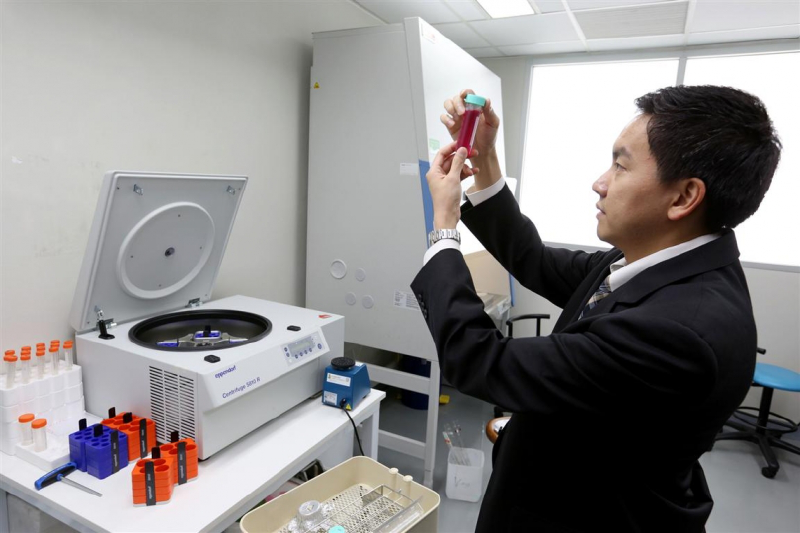


With immunology showing increasingly important results in treating cancer, the Siriraj Foundation launches a public donation campaign to help fund the research
CANCER KILLS thousands of Thais every year. For patients in the later stages of the disease, treatment usually involves surgery, followed by weeks of chemotherapy or radiotherapy that might prolong their lives but inevitably come with some nasty side effects. Indeed, sometimes the side effects are so debilitating that treatment has to be stopped.
Scientists and researchers around the world are constantly working on ways to more efficiently treat this potentially fatal illness while simultaneously reducing the nasty side effects and one of the most promising to date is immunotherapy, which uses the body’s own immune system to help fight cancer cells.
Research into immunotherapy, specifically Cytokine-induced killer (CIK) cells therapy, is also underway in Thailand. Like all other research, it costs a lot of money and a cell therapy research fund for cancer treatment has recently been launched under the umbrella of the Siriraj Foundation. It will support of efforts of Dr Kittipong Soontrapa who is working on CIK Cells research at the hospital’s Department of Pharmacology, part of Mahidol University.
Since Cytokine-induced killer cells were first discovered in the 1990s by Prof Robert Negrin at Standford University, research into their efficacy, along with that of Natural Killer Cells, TIL cells and CAR-T cells, in curing disease has been ongoing in many corners of the world.
Cytokines are chemicals crucial to controlling the growth and activity of other immune system cells and blood cells. White cells, it will be remembered, are involved in protecting the body against both infectious disease and foreign invaders including cancer.
Dr Kittipong chose to focus on CIK Cells because of earlier work undertaken by respected doctors Dr Suradej Hongeng and Dr Adisak Wongkajornsilp, which focused on healing cholangiocarcinoma, malignancies of the biliary duct, which are commonly found in South East Asia.
The CIK Cells are prepared by taking blood from the patient and then culturing it in the control lab to avoid infection. After being cultured with the cytokines chemical for around three weeks, the cells are strong enough to be reintroduced to the patient's body. By this time, the cells are capable of detecting alien invasions of cancer cells and killing them.
While it is acknowledged that CIK Cells probably benefit early-stage cancer patients rather than late-stage tumours, the Thai team is working on healing final-stage cancer and also opting to use blood from siblings or the patient's children instead of the patient's blood.
“As they are sick, their blood cells are obviously not as strong as those of healthy and younger people,” Dr Kittipong says.
He adds that theoretically, the therapy should help heal every type of cancer, but as each cancer has a different strength, the level of response varies.
However, what’s clear from the team’s discoveries so far is that cell therapy has a positive response with only very minor side effects compared to the traditional treatments of surgery, chemotherapy or radiotherapy.
“But this is an expensive process and we only have the capacity to work with one or two patients at a time. If even one minor mistake is made during the culturing process, we are throwing away hundreds of thousands of Baht and have to begin all over again,” Dr Kittipong says.
The CIK Cells are cultured in the sterile lab for about three weeks – the same cycle age of white blood cells in the human body – then injected into patient's body. Patients need between three and six injections per course of treatment.
While many countries have already approved cell therapy, here it remains in the research stage. Dr Kittipong and his team are working in clinical research with selected patients joining the project.
A graduate of the Faculty of Medicine, Ramathibodhi Hospital, Mahidol University, the Thai-Japanese doctor chose to pursue his dream by going on to study pharmacology at Kyoto University. He has so far been unable to devote all his time to his research and is also teaching in the hospital’s Pharmacology Department at the medical faculty.
To date the CIK Cells research centre at Siriraj Hospital is small and working with just one or two patients.
“Our dream is to be a cell therapy centre that gathers all parts of the process together. For that reason, we are in need of financial support not only to purchase the equipment we need but also the chemicals. We can’t afford any mistakes if we are to avoid infection in the cultured cells that are injected back into the patient,” he says.
Donations from the public are now being invited so that this important work can continue.
The fund code is D-003658 – and must be quoted to differentiate it from the Siriraj Foundation’s other funds, which are used for different purposes.
To donate or receive more information, visit Dr Kittipong's Facebook page at www.facebook.com/Dr.Aki, call the foundation at (02) 419 7658-60 extensions 101 and 104 or email [email protected].
