
The farang who knows Thais best


Play
Scholars gather in praise of Craig Reynolds, who's made Southeast Asian studies his life’s work
Craid Reynolds is earning due praise for charting important aspects of Thai culture. Now 74, the American professor is well known among students of local history. He has for decades been an inspiring teacher whose writings are a rich resource for their own papers.
Reynolds was back in Bangkok recently, at Jim Thompson House, for the launch of the book “A Sarong for Clio – Essays on the Intellectual and Cultural History of Thailand Inspired by Craig J Reynolds”.
The event was packed with respected Thai and foreign scholars. A panel discussion featured social activist Sulak Sivaraksa, Waruni Osatharom, Professors Charnvit Kasetsiri, Thanet Arpornsuwan and Saichol Sattayanurak of Chiang Mai University, Dr Tyrell Haberkorn of Australian National University, Dr Patrick Jory of the University of Queensland, and Associate Professor Villa Vilaithong.
Independent scholar Chris Baker offered the closing remarks along with Reynolds himself.
More famous names were in the audience, including Professors Chatthip Nartsupha and Pasuk Phongpaijit, Dr Attachak Sattayanurak, Thanet Wongyannawa, Associate Professor Viengrat Netipho, Chalong Soontravanich, Dr Thanapol Limapichart and Rasmi Paoluengthong.
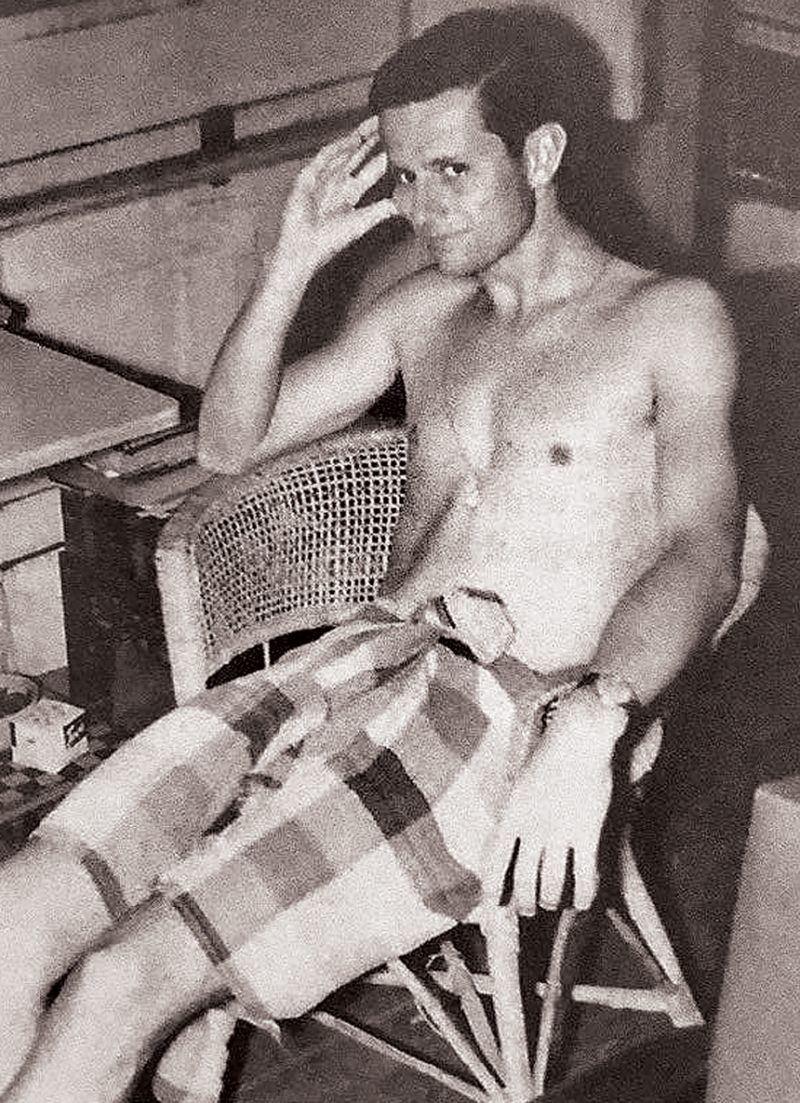
No one was distracted by the word “sarong” in the title of the book. It’s only other reference is in a 1964 photo of Reynolds wearing the cloth draped from the hip. He was in Thailand with the Peace Corps at the time and teaching English in Krabi.
Seen as a “wrap-around”, though, the sarong affords an apt metaphor for the influence of Reynolds’ writings, which have played a vital role in shaping our understanding of Thai social history. His famous studies include “The Case of KSR Kulap: A Challenge to Royal Historical Writing in Late Nineteenth-century Siam” and “Thai Radical Discourse: The Real Face of Thai Feudalism Today”.
Reynolds preferred to joke about the old snapshot, accusing the book’s editor, Maurizio Peleggi, is forging a conspiracy. “It’s a picture of someone I don’t know anymore,” he said to appreciative laughter.
The Clio of the title is the muse of Greek myth who “conveyed the idea that history offers maternal sustenance, as well as stern example”, as Peleggi writes in the introduction.
Reynolds remains academically active and continues to inspire Thai scholars and students with his scholarship and his famously sharp criticisms of their papers, Peleggi notes. For three generations he’s been in this position among “peers, his former students and increasingly their students”.
“A Sarong for Clio” contains nine commentaries by 10 scholars – Baker and Pasuk, Thongchai Winichakul, Villa, Peleggi, Jory, Tamara Loos, James Ockey, Yoshinori Nishizaki and Kasian Tejapira.
Reynolds told The Nation that, of necessity, the language first held his interest in Thailand. He studied linguistics in graduate school with Professor Oliver Wolters, who taught early Southeast Asian history at Cornell University.
“That’s when I converted to history, and almost immediately,” Reynold said. “And ever since I stayed in Krabi I’ve had great affection for Thailand and the language.
“I became pretty good at some of the difficult terms in Thai, so when I went back to the US I wanted to keep using the language. That’s why I went into linguistics, but then I met this inspiring teacher, so the two things came together and I become a historian – actually of all of Southeast Asia. I’ve also taught about Indonesian, Malaysian and Cambodian history.”
Asked to comment on one panellist’s insistence that Thailand has “no social history”, Reynolds suggested it might be construed as true since academic work “can’t touch on some of the important conflicts that had to do with the structure of society, including the monarchy”.
Other aspects of social history are amply documented, though, he pointed out. “There’s a young man studying the use of leisure time in Thai society from the reign of King Rama V to 1932, and others have written about sport and film history. So I wouldn’t say social history is totally neglected.”
Still, the politics and hierarchy of Thai society limit public discourse, Reynolds said.
“People outside, the country have to understand that being inside the country is different. Up until the coup in May 2014 it seemed that, if you spoke in English, you could say things you couldn’t say in Thai. Now even that’s changed. Some subjects are too difficult to work on even for Westerners.
“But that doesn’t mean you can’t study things. Some of the young historians’ projects are very inspiring. There are many things to study that don’t necessarily involve the social structure at the present moment.”
Reynolds said he was impressed by Varunee’s comments on one of his favourite but least-discussed pieces, “Tycoon and Warlord: Modern Thai Social Formations and Chinese Historical Romance”, which deals with the Thai-Chinese community leader Sam Kok.
“She made a point about how Sam Kok has been reproduced online in games, cartoons and so forth. Thailand is now saturated with mobile phones and Thais use the social media more than most other people. The present historical circumstances require people to find other means to express their opinions, not to protest but to exchange ideas. In the West people actually study the social media – it’s not surprising because they’re an important source of information, and in fact there’s so much information that it’s impossible to read everything.”
There is much anticipation at the moment over the publication of Reynolds’ conclusions on Khun Phan, the formidable authority figure of the South regarded as both nakhleng (a tough guy) and kru (a guru). Peleggi points out that the subject entails “several strands of Reynolds’ scholarship – Buddhism, magic, local knowledge and power”.
“I’m pretty sure it will be a perfect piece,” Sulak said. “Khun Phan was on the police force, a part of the bureaucracy, an oppressor, and an expert on southern amulets, so superstition is now mixing into the national subconscious.”
Thanet recalled meeting Reynolds in the US in 1967 and was struck by his distinctive smile, “a kind of mix between a smile and a laugh”.
“What Craig has been doing for the last 40 years is pushing for Thailand to have a social history. The way Thais think about society forms the thinking of the nation. We can switch between sangkhom [society] and chart [nation] with no trouble at all. No contradiction was noticed until Craig pointed it out, and then we began asking questions about the society and nation. Sometimes crossing the language barrier allows us better understanding.
“This is Craig’s contribution to Thai studies. I see some young faces among the historians here, and surely they will pick it up and do more.”
- "A Sarong for Clio: Essays on the Intellectural and Cultural History of Thailand, Inspired by Craig j. Reynolds" is available at Asia Books for Bt925
