
Nepal’s holy sites spending big


Play
Pashupati, Lumbini and Janakpur are slated for major development
Three key heritage sites in Nepal – Pashupati, Lumbini and Janakpur – have been slated for major structural development this fiscal year in a bid to pump up religious and cultural tourism after poor budget expenditure in the last fiscal year.
Officials of the Pashupati Area Development Trust, Lumbini Development Trust, and Greater Janakpur Area Development Council told the parliamentary International Relations and Labour Committee on July 31 that the earthquake, Tarai unrest and shortages of fuel and construction materials had affected their progress.
But they plan a major structural push this fiscal year.
The Pashupati trust was able to spend only 90 million Nepali rupees (Bt29 million) of its allocated budget of Rs350 million last fiscal year.
Govinda Tandan of the trust said they had begun building a 400-room luxury dharmashala (pilgrims’ rest house), expected to cost Rs220 million and be completed in 18 months.
“Once the facility is ready we will be able to develop tourist packages targeting the Indian market,” he said. The trust has also been working on a master plan to conserve the area and promote religious and cultural sites.
The Tourism Ministry says Pashupati received 78,680 foreign tourists (excluding Indians) last year, a sharp drop from 166,173 the previous year. The decrease severely dented the trust’s revenues.
Tandan said income from foreign tourists plunged to Rs90 million last year from Rs170 million the previous year. The Pashupati area, which contains a plethora of shrines, temples and burning ghats, with the Pashupati Temple forming the centrepiece, is one of the holiest sites for Hindus. Pashupati was listed as a Unesco World Heritage Site in 1979.
The Lumbini trust is planning to implement a 10-year master plan to become a pilgrimage hub. The objective is to increase tourists’ lengths of stay and spending and aid local communities.
The plan envisages integrating Lumbini, the birthplace of the Buddha; Tilaurakot, his childhood home; Devdaha, his maternal and in-laws hometown; and Ramgram in Nawalparasi, which contains one of the relics of the Buddha, into a 157-square-kilometre Greater Lumbini Development Area.
Ven Nigrodha (Siddhartha Maharjan), vice-chairman of the trust, said they would require Rs9 billion to implement the master plan. The trust had begun erecting an auditorium with a capacity to hold 5,000 people.
“The immediate implementation of the master plan has become urgent because we estimate that, after Gautam Buddha International Airport comes into operation, the existing infrastructure will be inadequate to handle the growth in arrivals,” he said.
Currently, due to lack of infrastructure and effective tour packages, visitors hardly spend a day at the birthplace of the Buddha. Yet Lumbini is seen as a potential world-class tourist destination for the 500 million Buddhists in Asia. It’s also home to more than 100 related archaeological sites scattered within a 50-kilometre radius.
Lumbini received 748,294 visitors last year. Of those, 488,852 were Nepalis, 130,262 Indian and 129,180 from 70 other countries.
The government allocated Rs550 million for infrastructure development in Lumbini in the last fiscal year, but only Rs247 million was spent. Lumbini was placed on the World Heritage List in 1997.
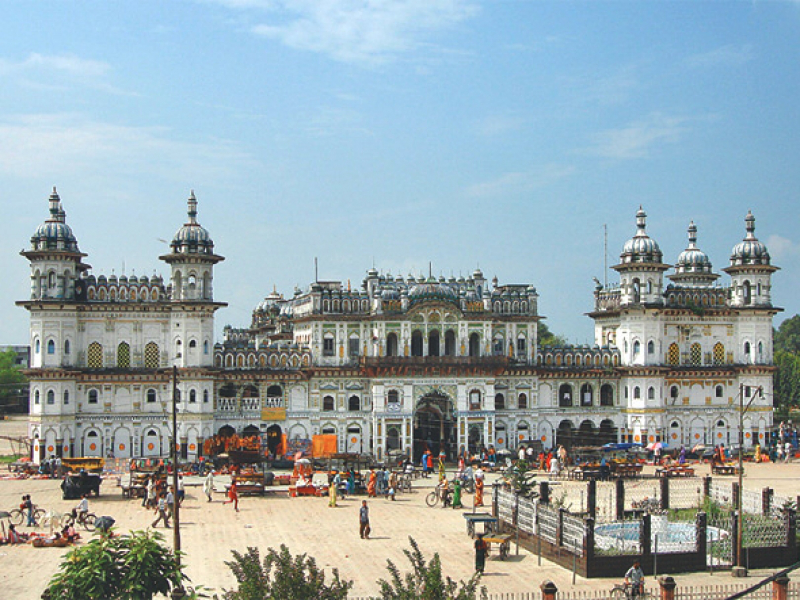
The Greater Janakpur Area Development Council has formulated a master plan that “aims to protect heritage and cultural sites, promote the palace of historical king Janak and establish Janakpur as one of the key cultural tourism sites”, said executive director Umesh Yadav.
The parliamentary committee directed the government to get Janakpur on the World Heritage list. The Ram Janaki Temple is one of the key holy places for Hindus, dedicated to Janaki (Sita), consort of Ram.
There are various potential archaeological sites, but they have not been excavated.
