
Weaving dreams for the future
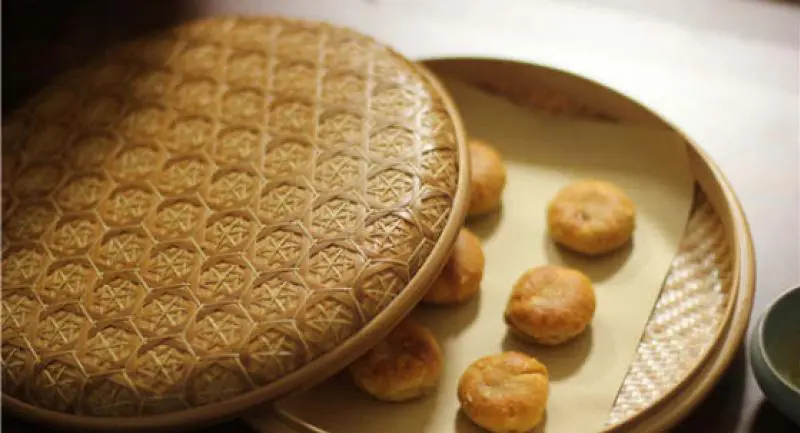


A Young entrepreneur sets out to revive China’s bamboo culture
Eight years ago, 24-year-old Qian Huaili, then a student of industrial design at Zhejiang University of Science and Technology, picked up Sooetsu Yanagi’s book “Culture of Industrial Craft and Handicrafts” and found he couldn’t put it down. That was in direct contrast to his earlier experience with a tome discussing the history of industrial design in the West.
“It was about the West, but we are in the East” Qian recalls with a laugh.
But it was just a few words – “Handicrafts are the most important part of local culture” – from the father of Japanese folk arts and craft that changed Qian’s life forever.
Qian was born in Chenzhuang village in Wuzhen suburbs, which has been famous for bamboo weaving for centuries.
Although located in a flatland where no bamboo grows, the rich waterways in Wuzhen carry bamboo from the mountains in nearby areas, like Anji county in Huzhou.
After the bamboo is made into woven products, the waterways connecting Hangzhou and Beijing transport them to buyers in the Yangtze River Delta and to the capital. Due to the toughness of bamboo, a well-woven product lasts for decades.
Qian grew up watching locals weaving bamboo. So when he read Yanagi’s words, he immediately realised he had found a way out of Western-dominated industrial design.
His realisation coincided with the opening of Wuzhan’s Xizha district as a tourist destination and an invitation from a local developer to Qian’s father, a skilled bamboo artisan, to open a shop in Xizha to promote Wuzhen’s bamboo crafts.
While his father started the shop, Qian travelled to places in Zhejiang like Wenling, Dongyang and Anji, where the few remaining old bamboo-weaving masters live.
Much to their delight, he asked to study with them, thereby breathing new life into a tradition that had almost been lost.
But it wasn’t long before problems started rearing their ugly head.
In late 1980s and early 1990s, when China had just started experiencing high-speed growth, the demand for bamboo products also soared.
But as new materials such as plastic became cheaper and fashionable, people used fewer bamboo products for convenience. A bamboo basket is much heavier than a disposable plastic bag.
“When I went to primary school, fewer people in our village were making bamboo products. Now, very few old people are still doing it because it’s so time consuming,” Qian says.
When the shop first opened, Qian’s father sold small bamboo plaques for 30 yuan (Bt150), which was more expensive than many similar products.
“But my father could only make two plaques a day,” Qian says, pointing to a photo of an elegant bamboo basket.
“It’s priced around 600 and 700 yuan, but selling at this price is like doing charity,” he says.
The basket he’s showing was completely made by hand, a long and sometimes difficult process. After the bamboo stalks are cut down and transported to the workshop, they are boiled in a long metal container to remove the wax-like skin and other substances. The bamboo is then stripped into useful sizes.
“This is almost the most difficult step. The thinnest bamboo strip may be only a quarter of millimetre in diameter – almost as thin as human hair. It's done by hand,” he says.
Sometimes, craftspeople boil the bamboo in dyes before or after the weaving.
“You have to find very experienced people to do all this work if you want to guarantee quality. Their labour is expensive,” he says.
Bamboo products were previously mainly used by ordinary people, especially farmers, and sold at very affordable prices.
“In our village, each family used to weave only one kind of bamboo product. But when you put all the products together, you can see the whole picture of people’s lives in old times,” he says.
“So even if you pour a lot of time and energy into the quality of a bamboo product, people will not pay a high price for it. And people use almost no bamboo products in their daily lives nowadays,” he says.
In addition to mastering skills to develop fashionable products that will appeal to modern tastes, Qian says it’s important task is to promote a “bamboo lifestyle”.
His bamboo products include both traditional styles and items like hairpins and earrings. Besides cooperating with high-end brands, Qian has developed a way to promote bamboo products.
Inspired by the concept of such crafts as cross-stitch, which enable women to make pendant for their sweethearts or make stitched versions of a famous painting, Qian has chosen 24 kinds of useful bamboo products that are easier yet still interesting to make. People can buy semi-finished products and make their own bamboo table mats, fruit trays and small baskets.
These are available at Qian’s online shop on Taobao and through Phoenix Tea, which promotes Qian's products and the online classes through its offices at Peking University and Shandong University. Students can buy a package of bamboo strips and watch the video to learn how to make different pieces.
“Currently, the most important thing for me is to promote the lifestyle of bamboo. It has to be seen as something interesting, something that makes your life more colourful, rather than an old craft that is going to disappear. Only then can the craft survive,” he says.
