
From idea to Script


A new scriptwriting initiative sets out to push local filmmakers onto the international stage
Southeast Asia has plenty of talented filmmakers but has traditionally been thin on the ground when it comes to scriptwriting. Part of the blame must go to the region’s training structures, which have failed to provide adequate training in this specialised field. Now though the gap is being filled by a private scriptwriting lab known as Seafic – the Southeast Asian Fiction Film Lab – and demand for its services is high.
The programme was launched last year and has so far held two sessions in Chiang Mai. The third and final one – an Open Session – takes place in Bangkok this weekend and it is here that an international jury will decide on the three most interesting projects to receive the grand prize.
Founded by renowned producer Raymond Phathanavirangoon and filmmaker Visra Vichit-Vadakan, with the support of the Embassy of France in Thailand, the Goethe Institute, the Japan Foundation and the Embassy of the United States of America in Bangkok, Seafic’s aim is to develop the filmmaking scene in Thailand and Southeast Asia.
“I decided to do this script lab because there’s really a need for it. There’s lots of talent in Southeast Asia but scriptwriting is either neglected or it’s not something filmmakers really pay attention to,” says Raymond, the lab’s executive director and producer of such international hits as Boo Junfeng’s “Apprentice” which was screened at Cannes Film Festival and has enjoyed a global release. He was also behind the success of Kiyoshi Kurosawa’s “Tokyo Sonata” and Pang Ho-cheung’s “Dream Home”.
“One of the biggest problems with Southeast Asian style filmmaking is that there’s a cult of auteurism. Everybody wants to be Apichatpong Weerasethakul or Brillante Mendoza, but the reality is there’s really only one Apichatpong and one Brilliante or Lav Diaz because they are so unique in what they do. It’s extremely hard to copy them. When you try to copy them, it will be very obvious that these are copied.”
Raymond has also served as a consultant for film festivals like Cannes’ International Critics’ Week and the Toronto International Film Festival. Over the years, he says, he has seen many filmmakers who have potential, but suffer from a lack of proper development in scriptwriting and production, with the result that their films are not as successful internationally as they could be.
“Most filmmakers here tend to rush to production without properly developing the script. They have a really good idea, but they’d rather do it with a small budget than work for longer or become involved in co-production. If the filmmakers want to make films for the local market, it’s fine, but our lab is for directors who want their films to travel and be sold overseas. I want Southeast Asian films to be recognised more from outside because it’s been 15 years already since the start of the Southeast Asian new wave. Here in Thailand, we’ve had films like ‘Shutter’, ‘Ong Bak’ or works by Pen-Ek Ratanaruang or Nonzee Nimibutr. It’s time to develop ourselves in a new way so Southeast Asia doesn’t lose out to the rest of the world.”
Among the well-known scriptwriting labs that have risen to the fore in recent years are Torino Filmlab in Italy, Sundance Institute’s International Screenwriters Lab in the US and the Jerusalem International Film Lab in Israel. The concept however remains new to Southeast Asia and even to East Asia in general.
The goal of Seafic is to help Southeast Asia filmmakers find their own way and develop a good script while recognising that they don’t have to spend a lot of money to attend a scriptwriting lab in Europe or America.
“In Europe or in the US, there are lots of good filmmakers but they are not so auteurish. They work with screenwriters, get a really good script and make a really good film without aping the vision of major filmmakers. What we are going to do is help new directors to create their own path and develop their own films with a good script,” says Raymond.
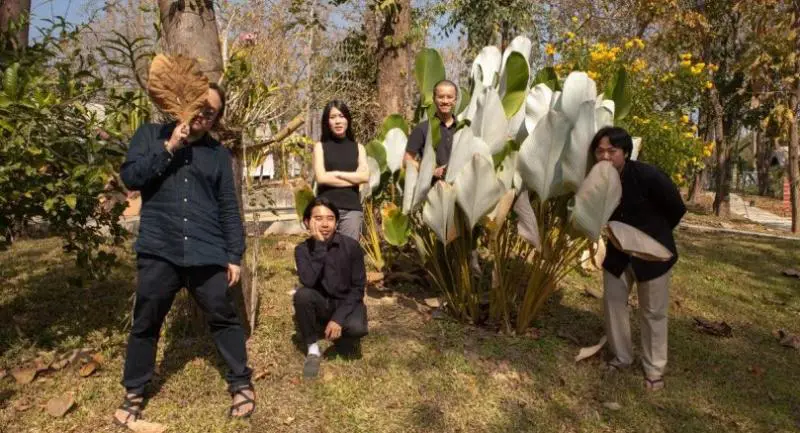
The first and second rounds took place at a resort in Chiang Mai in October and February respectively, with the participation of five Southeast Asian projects. These are Sivaroj Kongsakul’s “Regretfully at Dawn”, Nontawat Numbenchapol’s “Doi Boy”, Pham Ngoc Lan’s “Cu Li Never Cries”, Yeo Siew Hua’s “In the Eyes of a Stranger” and Nicole Woodford’s “You Are There”.
“I decided on Chiang Mai and Bangkok because they are the cheapest places to arrange something like this. We could have held the labs in another country, but it was easier to do it here because I am based here and all major airlines fly to Bangkok and Chiang Mai. And my preference was for Chiang Mai as it is far more secluded than Bangkok and my scriptwriters can really concentrate on what they are doing,” Raymond points out.
“Seafic is helping me in rechecking ideas and rechecking if I really want to make this film,” says director Sivaroj, whose first feature, 2011’s “Eternity” won the Tiger Award from the International Film Festival Rotterdam.
“Regretfully at Dawn” is his second feature and has already earned financial support from the Rotterdam event’s Hubert Bals Fund. Filmmaker Pimpaka Towira is attached as the film’s producer.
“I stepped into this project when Sivaroj was developing it. There were some problems during the development which Seafic has helped Sivaroj to sort out,” says Pimpaka.
“Seafic is very useful as we can focus on our work. In real life, we are always having to work on something else so we can’t really focus on scriptwriting or filmmaking. Seafic helps by reminding us that we have to focus in our film project,” says Sivaroj.
“Scriptwriting is something you normally have to do alone,” adds Pimpaka. “A platform like Seafic allows us to meet experienced film people and means we don’t have to work alone. The intense programme helps the director to focus more on his project.”
“It’s been really great because all five projects have improved enormously. At the beginning the scripts were a little weak but the ideas were interesting and you could see the filmmakers had potential. In the last two re-write stages, the scripts have really improved. And first-time directors who were a little unsure of themselves now have much more confidence.”
“Seafic is a script lab so, by its very nature, it’s an industry thing which the public couldn’t understand. I wanted Seafic to have a public component, so people can come and see what we are trying to do, which is why I introduced the Open House. We will have film screenings and panels led by experts from around the world,” Raymond says.
At this week’s Bangkok session, participants will have to pitch their projects to Christian Jeune, head of the Cannes Film Festival’s Film Department, Namsun Shi, veteran Hong Kong film producer, and Kini Kim, former executive of CJ Entertainment.
They, along with Franz Roden- kirchen, script consultant for Torino Filmlab and Seafic, will host special panels on filmmaking.
The Malaysian film festival hit “Men Who Save the World”, will be screened in the presence of its director and producer Liew Seng Tat and Sharon Gan, and they will also give a talk on making an international co-production.
“Christian is going to talk about his relationship with Southeast Asia and the future of Southeast Asian cinema. Nansun Shi who works with Tsui Hark and John Woo but also supports projects by young directors will talk about her experience. And Kini Kim who has worked with Park Chan-wook or Bong Joon-ho will share his experience of CJ Entertainment’s efforts in making Southeast Asian film such as Thailand’s ‘Suddenly 20’ and Indonesia’s ‘A Copy of My Mind’.”
The Seafic Open House takes place at Alliance Francaise Bangkok from Saturday through next Monday. Admission is free and the programmes are in English only.
