
Institute article discusses MIS-C, ‘Long Covid’ in children
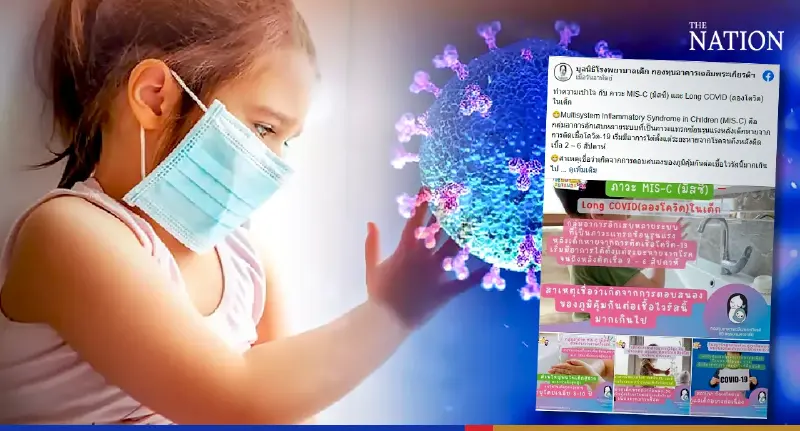


The Queen Sirikit National Institute of Child Health published an article on MIS-C (multisystem inflammatory syndrome in children) and “Long Covid” in young ones, saying MIS-C can occur two to six weeks in children recovering from Covid-19.
The exact cause of the syndrome is not known yet, but it appears to be an excessive immune response related to Covid-19, the article said.
Director Adisai Pattatang said MIS-C was first identified in the UK in April 2020.
It was found more in boys than girls, with children aged eight to ten most susceptible. But it was found in only 0.03 per cent of children who contracted Covid.
Symptoms are high fever, rash, red lips, red eyes, lymphadenopathy, vomiting and liquid stools. Some suffer from fatigue, pneumonia or even shock from cardiac arrhythmia.
Fifteen children have been treated at the Queen Sirikit National Institute of Child Health but there has been no fatality yet. Seven to 14 per cent of them suffered from cardiac arrhythmia.
The institute has launched a project to monitor child patients with Long Covid.
This condition occurs in individuals with a history of probable or confirmed SARS CoV-2 infection, usually three months from the onset of Covid-19 with symptoms that last for at least two months, according to the World Health Organisation on October 6, 2021.
These conditions are usually not severe, but chronic.
Patients are given symptomatic treatment.
Department of Medical Services director-general Somsak Akksilp said doctors currently do not know the cause and pathology of Long Covid. They only have a hypothesis that it might be related to a part of the germ which affects the immune system and causes inflammation.
There were many possible risk factors according to many studies, such as being female, old age, obesity, people with underlying disease, having more than five symptoms in the first week, or having severe symptoms in the first phase. However, these factors were not confirmed.
According to the Department of Medical Services, the top 10 symptoms that are commonly found are:
- Fatigue
- Difficulty in breathing
- Coughing
- Insomnia
- Headache
- Hair loss
- Dizziness
- Anxiety / stress
- Short-term memory loss
- Chest pain.
