
Samurai in Siam and legacy of Ayutthaya’s Japanese Village
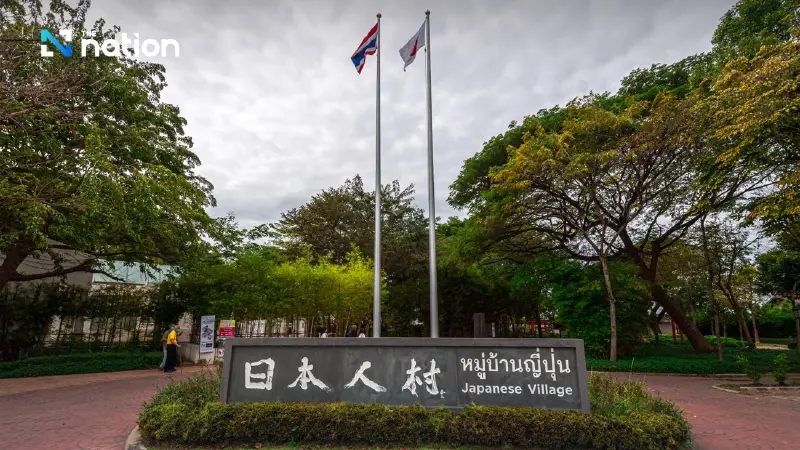


The story of a samurai who rose to power in the Ayutthaya Kingdom and the enduring memory of the Japanese community he once led lasts until today
In the 17th century, Ayutthaya was a thriving cosmopolitan capital. Merchants and adventurers from China, Persia, Europe, and Japan settled along the Chao Phraya River, each contributing to the kingdom’s wealth and power.
Among them were thousands of Japanese, drawn by trade and military service. According to the Fine Arts Department of Thailand, their settlement—Ban Yipun—became one of the most influential foreign enclaves.
From this community emerged Yamada Nagamasa, a samurai who rose to become a noble and military governor under King Songtham.
The rise of a samurai
Yamada Nagamasa was born around 1590 in Japan. His early life coincided with a turbulent era when many samurai, displaced by the Tokugawa shogunate’s consolidation of power, sought new opportunities overseas.
According to the Journal of the Siam Society, Yamada joined the Red Seal ship system, which allowed licensed Japanese merchants and adventurers to travel across Asia.
He eventually reached Ayutthaya, where his martial skills quickly drew attention.
Noble appointment
Ayutthaya was a global trading hub, drawing Europeans, Persians, Chinese, and Japanese. Foreign warriors often served as mercenaries, and Yamada stood out for his discipline and leadership.
By the 1620s, he had earned the confidence of King Songtham. Historical accounts record that he was granted the noble title Ok-ya Senaphimuk and appointed governor of Nakhon Si Thammarat, a strategic southern port city.
According to historians, this appointment reflected not only Yamada’s loyalty but also his ability to command troops and secure maritime trade routes. Few foreigners had achieved such a high rank in Ayutthaya’s bureaucracy.

The Japanese settlement
Yamada’s influence was rooted in Ayutthaya’s Japanese settlement, or Moo Ban Yipun, located on the eastern bank of the Chao Phraya River.
The Fine Arts Department of Thailand notes that the community numbered several thousand residents at its height.
It included traders, mercenaries, and Christian refugees fleeing persecution in Japan. Together, they formed one of Ayutthaya’s largest and most dynamic foreign enclaves.
The settlement maintained its own headmen, warehouses, and trading posts, while remaining loyal to the Siamese crown. The Japanese served both as a military force and as merchants dealing in goods such as deer hides, sappanwood, and silk.

Role in Ayutthaya
Under Yamada’s leadership, the Japanese settlement became a vital asset for Ayutthaya. His warriors were reputed for their discipline, and his traders helped strengthen links with Japan’s economy at a time when the shogunate still permitted overseas trade.
The settlement thus embodied Ayutthaya’s cosmopolitan character, where foreign communities. Each contributed to the kingdom’s strength.
Yamada’s presence ensured that the Japanese stood among the most influential of these groups.
Downfall and death
Yamada’s fortunes changed after King Songtham’s death in 1628. The succession crisis that followed destabilised the court, and Yamada became embroiled in the conflict.
Legend has it that he was wounded in a rebellion and later poisoned in 1630 under the orders of King Prasat Thong, who sought to eliminate rivals.
With his death, Japanese influence in Ayutthaya began to wane.
The Japanese settlement itself suffered in the aftermath. Many of its residents fled, while others were absorbed into Siamese society. By the mid-17th century, the once-thriving community had largely disappeared.
The memory of Yamada and the Japanese village endures in Ayutthaya. The former site of Ban Yipun is now preserved as a heritage park, complete with landscaped gardens, a small museum, and a memorial hall honouring Yamada.
The Tourism Authority of Thailand (TAT) states that the site was restored with support from both Thai and Japanese governments, reflecting the shared value placed on this chapter of history.
Today, it stands as both a tourist destination and a symbol of centuries-old ties, TAT notes.


