
A riversides sanctuary of history
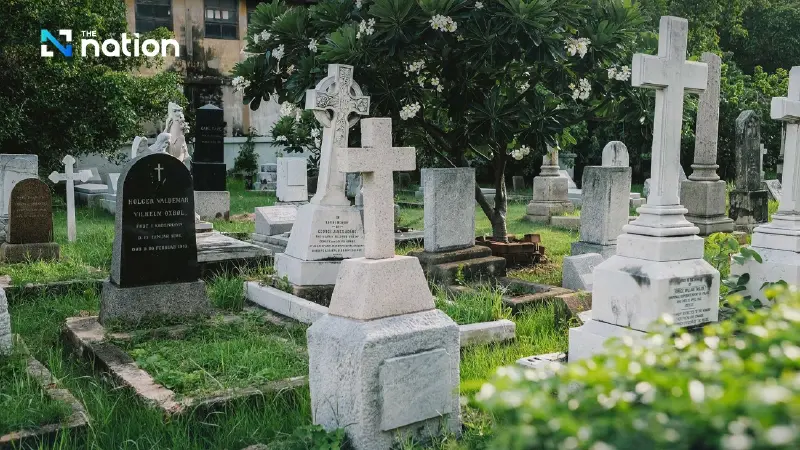


Behind bustle of Charoen Krung Road, just steps from Chao Phraya, lies place few Bangkok residents know well
The Protestant Cemetery, shaded by tamarind and frangipani, is a quiet sanctuary where the stories of foreigners who helped shape Siam are etched in stone.
The cemetery was founded in 1853, when King Mongkut granted land for the growing Protestant community. Until then, non-Catholic Christians had no proper resting place. What began as a practical gift has since become a historic landmark, holding almost two centuries of memory.
Walking among the graves, the city’s noise fades into a hush. The stones tell story of pioneers, merchants, diplomats and doctors who came from faraway lands and tied their lives to Siam.
Here lies Dr Dan Beach Bradley, an American missionary and physician. He introduced the smallpox vaccine, published the kingdom’s first newspaper, and brought the printing press to Siam. His tomb is one of the cemetery’s most visited, a reminder of medicine and modernity taking root.
Not far away stands a striking monument to Henry Alabaster, adviser to King Chulalongkorn. Alabaster played a role in modernising the country’s roads, mapping and postal service. The king himself commissioned the Gothic-style memorial, a rare honour that still draws the eye of passers-by.
There is also Admiral Sir John Bush, remembered fondly as “Captain Bush.” A British seaman who became harbour master to the Siamese court, he helped usher the kingdom into maritime modernity. His modest tomb is matched by the street nearby that still carries his name.

The cemetery’s diversity is part of its quiet charm. In addition to Protestants, early Jewish burials were also made here before their own cemetery was established. Each stone reflects a life lived across cultures, where East and West met in unexpected ways.
Though surrounded by Bangkok’s rapid development, the cemetery endures. Its small chapel, rebuilt in the 1950s, still welcomes mourners and visitors. A trust overseen by church leaders, diplomats and local caretakers maintains the grounds, even as real estate pressures grow around it.
