
Scotsman who framed old Siam
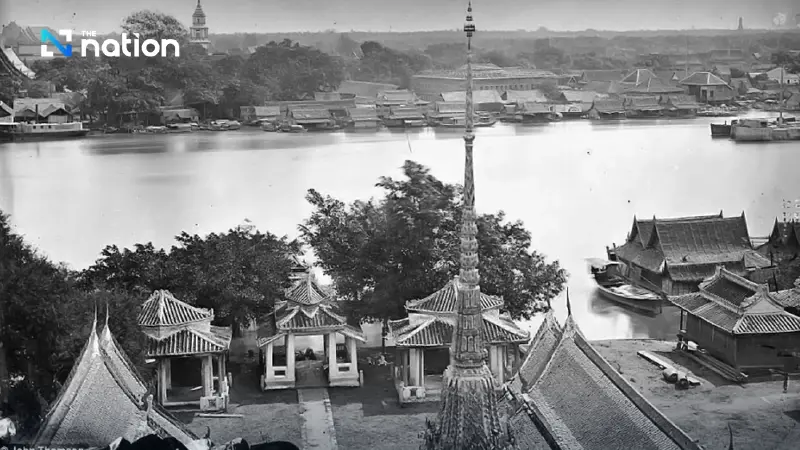


When Scottish photographer John Thomson arrived in Siam in 1865, the art of photography was in its infancy.
He carried heavy glass-plate equipment into the tropics and captured scenes rarely seen beyond the kingdom’s borders. The Angkor Database notes his daring as a pioneer in photographing Angkor in 1866, a first in visual documentation of the monuments.
Thomson’s lens offered more than scenic views. His portraits of King Mongkut and the royal family, taken shortly after his arrival, were among the earliest photographic glimpses of Siamese royalty offered to Europe.
At the same time, he documented everyday life: temple rituals, river commerce, monks, dancers—creating one of the richest visual records of mid-19th-century Bangkok ever made.
The journey to Angkor in 1866 was no small feat. Inspired by explorer Henri Mouhot's accounts, Thomson and translator H.G. Kennedy travelled by river and overland through jungle, completing images of temple reliefs and grand façades.

His captures include one of the earliest clear views of Angkor Wat’s façade and details of its bas-reliefs—images that remain critical sources for historians and restoration scholars.
Upon his return to Britain, Thomson deposited over 600 negatives—now in the Wellcome Collection—providing a durable archive of historic Siam and Cambodia. Scholars cite these as essential visual documents for understanding the region's architecture, culture, and politics during a transformative era.
Critics and researchers also highlight Thomson’s sensitive approach: he recorded subjects with respect rather than exoticising them.
He straddled artistry and ethnography, producing images valued for both composition and cultural dignity.

