
Ban Thap Thai: a unique circular village in Sa Kaeo with a beautiful urban plan
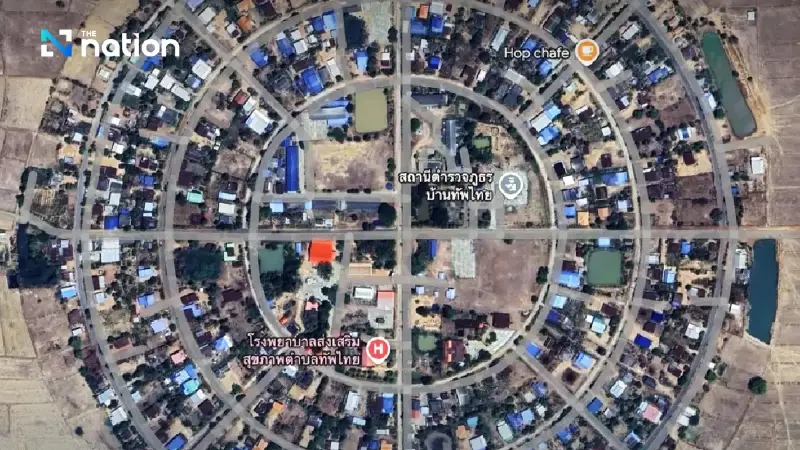


In the heart of the Thailand-Cambodia border, in the Ta Phraya district of Sa Kaeo, lies a village renowned for its beautiful and unique urban design—Ban Thap Thai.
This village stands out due to its well-organised circular layout, with a central space at its core that fosters unity among its residents.
The history of Ban Thap Thai dates back to 1979 when the area was used as a refugee camp (SITE 2) to accommodate those fleeing from the Khmer Rouge regime. In 1980, the Burapha Task Force came in to develop the area into a self-defence and development village, officially naming it "Ban Thap Thai."
The goal was to provide the residents with permanent housing and stability amidst the fragile border situation.
What makes this village truly remarkable is its distinctive "three-tiered circular" urban layout. Designed by the Engineer Department, the plan was meant to serve strategic security purposes.
Each house in the village follows the same design: elevated to make use of the space beneath for communal activities or animal husbandry. The outer circle serves as a protective barrier, once surrounded by landmines, while 16 watchtowers ensure the village’s security.
At the heart of the village, the central area houses vital community resources such as the temple, school, police station, healthcare centre, child development centre, and a public space for activities.
The village is divided into two sub-villages: Ban Thap Thai and Ban Khok Ta Duang, and further split into eight "kums" (clusters), which resemble pieces of a cake. Each kum is managed by a head, ensuring smooth internal management and a cohesive community.
The design promotes a sense of community with all homes facing one another, enabling residents to easily care for and support each other. The central space remains the hub for social connections, where religious ceremonies, festivals, and other important community events are held.
This accessible communal area fosters deep social bonds and encourages active participation from all villagers.

Ban Thap Thai is not only an aesthetically pleasing village but also a model of residential planning that combines security, safety, and social cohesion.
The circular design, conceived over 40 years ago for strategic reasons, has evolved into a symbol of a resilient, tight-knit community. It is a valuable cultural heritage site in Sa Kaeo, offering a unique blend of historical significance and social unity—well worth learning about and visiting.
Thus, the circular urban plan of Ban Thap Thai reflects both strategic military necessity and the philosophy of creating a strong, connected community where people live in harmony and support each other. It is a testament to the resilience and cooperative spirit that emerged from the region’s turbulent past.
