
Wat Phra Sri Mahathat’s enduring political symbolism
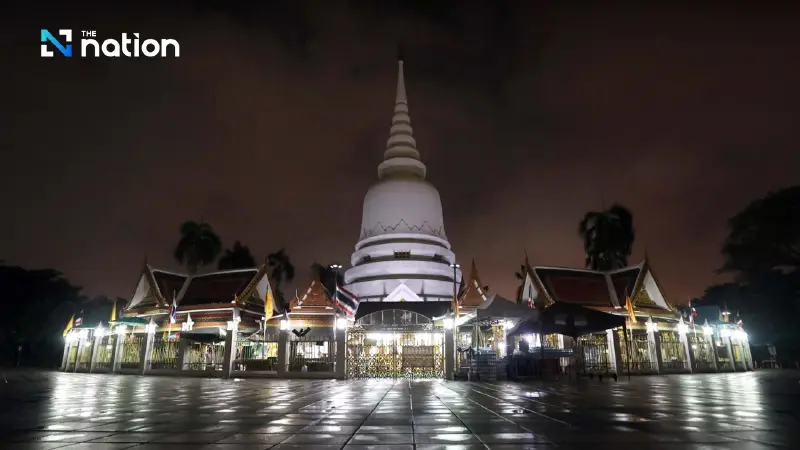


Built to enshrine democracy’s spirit, the Bangkok temple stands as a political symbol
Wat Phra Sri Mahathat Woramahawihan is no ordinary temple. While many Buddhist monasteries in Thailand are revered for their spiritual or architectural significance, this temple in Bangkok's Bang Khen was conceived as a monument to democracy.
Commissioned in 1941 during the government of Field Marshal Plaek Phibunsongkhram, the temple was closely tied to the ideals of the Khana Ratsadon, which had ended absolute monarchy in 1932.
According to the Pridi Banomyong Institute, the temple was built as a physical reminder of the country’s transition to constitutional rule, earning it the moniker “the Democracy temple.”
Sri Mahathat refers to relics of the Buddha, which were brought from India and enshrined here. Yet alongside its spiritual role, the temple was intended as a political statement. Some historians said the Khana Ratsadon sought to demonstrate that democracy was not foreign to Thai culture, but could be harmoniously integrated with Buddhism.

Wat Phra Sri Mahathat was also designed as a memorial to those who died in the Boworadet Rebellion of 1933, an armed royalist uprising against the new constitutional government.
Architecturally, the temple reflects the modernist spirit of the period, fusing traditional Thai forms with influences from contemporary design. The main stupa, or chedi, was constructed not only as a sacred reliquary but also as a symbol of political progress.
According to scholars, its clean lines and geometric simplicity represented a break from the ornate grandeur of royal temples, aligning instead with the Khana Ratsadon’s vision of a modern nation.
Over the decades, the temple’s political symbolism has faded from public consciousness, overshadowed by Thailand’s tumultuous shifts in power.
Yet for historians and activists, Wat Phra Sri Mahathat remains a landmark where religion and democracy intersect. It is still the only Buddhist temple in the country deliberately established to commemorate a political revolution.
Today, as debates over Thailand’s democratic trajectory continue, the temple stands quietly as both a spiritual sanctuary and a reminder of an unfinished political journey.

