
The pen behind Thailand’s 'Ghost' of social conscience
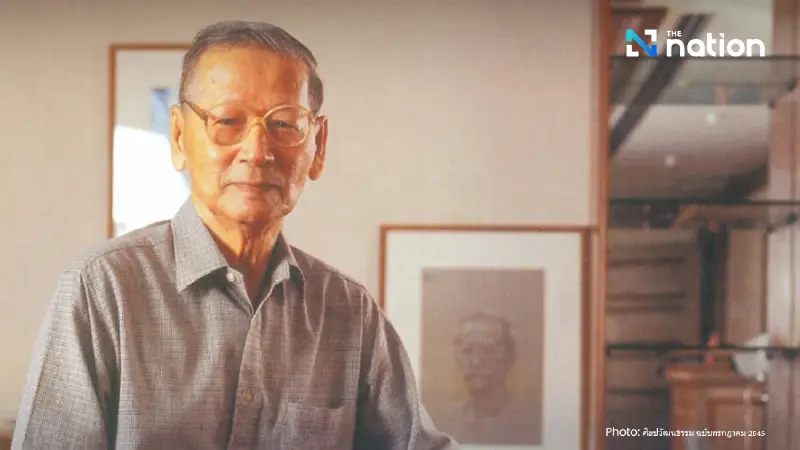


Sakchai Bamrungpong, known by his pen name Seni Saowapong, wrote Pheesart in the 1950s, a story that goes beyond class divides to question fate, gender, and the courage to stand up for what’s right
He spoke for Thailand abroad, yet his deepest conversations were with the country itself—through fiction. Seni Saowapong, the man behind Ghosts, wrote not of spectres, but of the invisible forces that haunted a nation’s soul.
Born 12 July 1918 in Samut Prakan, Sakchai Bamrungpong grew up the youngest of six siblings. His father’s early death changed the course of his life as he left Chulalongkorn University’s architecture faculty and found himself drawn to journalism. He later earned a law degree from Thammasat University in 1941.
Before Seni became his pen name, he published under several aliases, “Bo Bang Bo”, “Sujarit Phromchanya,” testing his voice in Bangkok’s literary circles.
His first widely recognised story, Acacia at the End of Summer, revealed a writer attuned to the quiet heartbreak of ordinary life.
After the war, Sakchai entered the Ministry of Foreign Affairs, embarking on a life that would take him across continents, to Moscow, Buenos Aires, Vienna, and London.
Yet even as he stood in grand halls and diplomatic banquets, his imagination stayed anchored in Thailand’s fields and classrooms, among people forgotten by power.
That empathy crystallised in his defining novel, Pheesart (Ghosts), written in 1953. Initially met with quiet reception, it later found its moment during Thailand’s democratic awakening in the 1970s. At its heart stands Sai Seema, a young lawyer torn between love and duty, privilege and poverty. Through him, Seni examined a society shackled by invisible “ghosts”—class, karma, and conformity. The novel’s haunting question was simple but daring: must Thais accept the world as it is, or can they change it?

Beyond Ghosts, his works like Wanlaya’s Love and Good Man of Ayutthaya continued to blur the line between moral introspection and social critique. His prose, elegant but unflinching, helped shape a generation of writers who saw literature not as escape, but as engagement.
Recognition came late but fittingly as he earned the Sriburapha Award in 1988 and designation as a National Artist for Literature two years later.
Seni Saowapong passed away on 29 November 2014, aged 96, leaving behind pages that still breathe. His Ghosts remain not in the afterlife, but among the living, lingering in every conversation Thailand has with its conscience.
