
Why Thais sell flower garlands at red lights
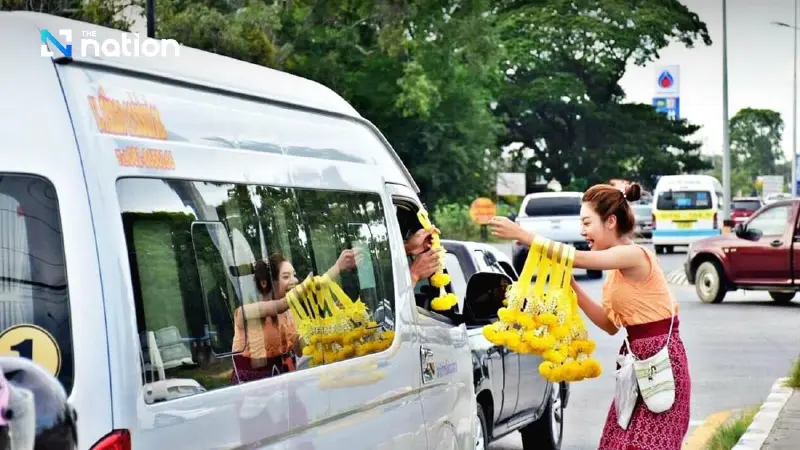


If you’ve ever driven in Bangkok, you may have noticed something curious at stoplights. Street vendors appear seemingly out of nowhere, selling fried bananas, doughnuts, green mango, or offering to clean your car’s mirrors. Among these offerings, the most ubiquitous item is the Thai flower garland, or phuang malai.
But why do vendors sell these garlands at red lights? The answer lies in Thai culture and belief systems. Many Thais hold a strong faith in Mae Yanang, a protective spirit believed to safeguard vehicles and their passengers. The garlands sold by street vendors are actually offerings to Mae Yanang, intended to ensure safe travels and protection from accidents.
This tradition isn’t limited to cars alone. In Thailand, boats were historically made of wood, which Thais believed housed tree spirits. To honour these spirits and seek protection, garlands or colourful cloths were tied to the boat’s bow, ensuring safe journeys on the water. Over time, this belief extended to vehicles on land, creating the practice of offering garlands to Mae Yanang for safety.

The garlands themselves are often vibrantly coloured and intricately crafted, reflecting the care and devotion that goes into their preparation. They are usually made of jasmine, marigold, and roses, carefully strung together to form a symbol of respect and spiritual protection. By offering a garland, the driver acknowledges the presence of unseen guardians and pays homage to the forces believed to keep them safe.
Interestingly, the practice also highlights the unique role of street vendors in Thai daily life. Many of these vendors have operated for decades, patiently waiting at busy intersections to sell their garlands, fruits, or small services. For drivers, buying a garland is not only a spiritual gesture but also a way to support the livelihoods of these small entrepreneurs.


So, next time you see a garland being sold at a red light, remember: it’s not just a souvenir or decoration, it’s an offering for protection, a cultural gesture steeped in centuries of tradition. Whether you’re a local or a visitor, understanding this practice offers a fascinating glimpse into the way spiritual beliefs intersect with everyday life in Thailand.
From boats to cars, from river journeys to city streets, garlands continue to serve as a symbol of safety, devotion, and respect. They remind us that in Thailand, even a simple flower can carry deep cultural and spiritual meaning.
