
The Last Plunge: Jeju's Iconic Sea Women Fight Against Time
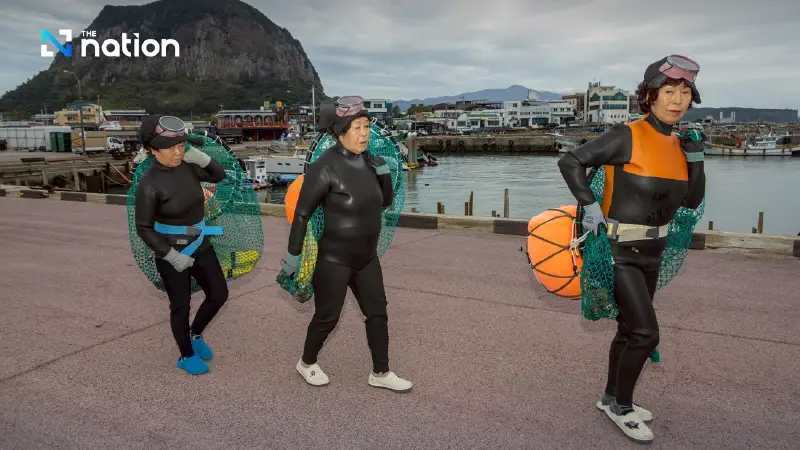


Netflix drama sparks global interest in Korea's ancient free-diving tradition, but chronic pain and ageing threaten its survival.
- The tradition of Jeju's Haenyeo (sea women) is threatened by an aging population, with most divers over 65 and their children unwilling to take up the physically punishing profession.
- The practice of free-diving causes severe, chronic health problems, including constant pain and back issues, which deters younger generations from continuing the tradition.
- A recent surge in global interest, sparked by a Netflix drama and UNESCO recognition, has brought renewed attention, tourism, and government support to the Haenyeo.
- Despite this new interest and a small influx of non-local divers, the tradition's future remains uncertain as the extreme physical demands of the work create a high barrier for newcomers.
Netflix drama sparks global interest in Korea's ancient free-diving tradition, but chronic pain and ageing threaten its survival.
At 71, Lee Bok-soo can still hold her breath for 90 seconds underwater, but her body tells the story of five decades spent plunging into the depths of the Korean Strait.
As head of her local Haenyeo Association, she represents a dying breed: South Korea's legendary sea women, whose ancient tradition of free-diving for seafood has captivated the world yet struggles to survive into the next generation.
"If I were born again, I wouldn't do it," Lee says bluntly, her words carrying the weight of a lifetime spent battling water pressure, chronic pain, and physical exhaustion. "Thinking now that my body is ruined, I would choose to study and work in an office."

A Tradition Forged by Necessity
Lee's journey into the depths began out of necessity rather than choice. Unable to receive much formal education, she took her first professional plunge at 17 or 18, following the path laid by her mother and countless generations before her.
The skills she learned became the foundation of her family's survival, enabling her to raise her children, send them to school and university, and see them married.
Today, she typically harvests conch from the seabed, though she recalls when valuable abalone was her most prized catch.
In her younger years, she frequently travelled to Japan for work, part of a tradition that saw Jeju's haenyeo diving in waters far from home.
The haenyeo are non-extractive divers, relying solely on their lungs rather than breathing apparatus. But this ancient technique comes at a devastating physical cost.
The pressure of deep water, combined with the heavy lead plates the women must wear to descend—sometimes more than ten when wearing thicker diving suits—leaves virtually every diver chronically ailing.

The Heavy Price of the Deep
"Because of the water pressure, haenyeo get headaches," Lee explains. "They always have to take medicine when they go in."
Dental pain afflicts nearly every diver, whilst the lead plates cause such severe back problems that regular hospital visits for physiotherapy have become routine.
This punishing reality underpins a looming succession crisis. In Lee's village, which has 35 haenyeo—including two men—the vast majority are over 65. The youngest members born and raised locally are in their mid-sixties.
Despite the income the profession generates, none of the existing haenyeo's children, including Lee's two daughters, wish to pursue the career.
"From what we see, it looks like it will disappear," she says. "Our generation has no successors."

An Unexpected Cultural Revival
Yet against this grim demographic reality, an unlikely saviour has emerged: popular culture.
A recent Netflix drama series set on Jeju has significantly boosted public awareness and tourism, drawing international visitors and mainland Koreans to witness the haenyeo tradition first-hand.
The global streaming platform has effectively showcased this unique cultural heritage to millions of viewers worldwide.
The international recognition of the haenyeo tradition extends beyond popular entertainment.
In 2016, UNESCO inscribed the "Culture of Jeju Haenyeo (women divers)" on its Representative List of the Intangible Cultural Heritage of Humanity, acknowledging the practice's unique cultural identity, eco-friendly harvesting methods, and role in preserving community-based knowledge transmission.
UNESCO's recognition highlighted the haenyeo as representatives of Jeju Island's distinctive character and spirit, particularly noting their promotion of environmental sustainability and the crucial role of women in maintaining this centuries-old tradition.
The designation brought international prestige, yet it could not reverse the demographic crisis threatening the practice's survival.
The surge in interest has transformed the economic landscape for Lee's community.
From early May through late October, visitors flock to the village for experiential tourism, donning diving suits, entering the water with experienced haenyeo guides, and harvesting marine products they can crack open and eat on the spot.
Simultaneously, the South Korean government has increased its support for preserving the tradition, covering medical expenses for the haenyeo and providing one new diving suit annually—a significant investment given the profession's toll on practitioners' health.

New Blood, Uncertain Future
This heightened visibility appears to be bearing fruit. Lee confirms that three new haenyeo—two women and one man, all in their 40s and 50s—have moved to the area from elsewhere to take up the demanding trade.
Their arrival represents the first influx of new divers in years, offering a glimmer of hope for continuity.
Yet Lee's optimism remains cautious and complicated. Whilst she notes that one of the new female divers is "doing the job well," she observes that another seems to be struggling and "won't last long."
Her assessment reflects a deep, protective understanding of just how high the entry barrier remains for this punishing profession.
Modern equipment has made some aspects easier—fins and the strategic inclusion of water to ease pressure when donning the suit—but the fundamental challenges remain unchanged.
The physical demands are as unforgiving as ever, and Lee's wariness about the newcomers' prospects speaks to her intimate knowledge of what this work requires.

A Legacy in the Balance
Despite declaring she has "no concrete plans for retirement," Lee's future is uncertain.
At 71, she estimates she might continue for another five to ten years, "as long as I am able to." Her determination reflects a complex mixture of pride in her heritage and concern for its survival.
"It is a very complicated combination of different feelings," she admits. "Although I know the struggles and difficulties of the job are immense, I do hope that the tradition goes forward and is transferred to the next generations."
For Lee and her fellow haenyeo, the recent cultural renaissance offers both opportunity and irony.
The same global interest that now celebrates their tradition comes too late to spare their bodies the decades of punishment and perhaps too late to ensure a sustainable future for the practice itself.
As she continues to make her daily descents into the Korean Strait, Lee embodies a profound paradox: a guardian of cultural heritage so physically destructive that she would never choose it again, yet so deeply meaningful that she cannot bear to see it disappear.
Whether the spark ignited by popular culture and government support can overcome the harsh realities of the profession remains to be seen.
For now, the haenyeo continue their ancient dance with the sea, knowing that each plunge might bring them closer to being the last generation to do so.
