
Thai New Year 2026: Seeking Auspicious Blessings through Ancient Relics and Celestial Guardians


Celebrate Songkran 2026 at Bangkok’s National Museum with a rare ritual bathing of 23 Buddha relics and the nine deities governing human destiny
- The National Museum Bangkok will host a special Songkran (Thai New Year) event from April 12–14, 2026, for the public to receive auspicious blessings.
- The celebration features a rare ritual bathing of 23 sacred Buddha relics, a practice believed to bring prosperity and peace for the new year.
- Attendees can venerate the Devata Nobhakraha, nine celestial guardian deities from Brahmin-Buddhist tradition who are believed to govern human destiny.
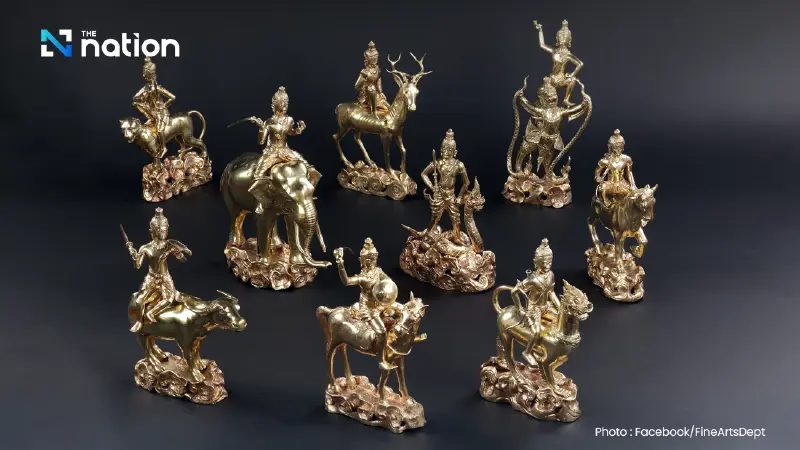
- A rare set of bronze sculptures of the nine deities, noted for their unique blend of Thai and Western artistic styles, will be on display.
Celebrate Songkran 2026 at Bangkok’s National Museum with a rare ritual bathing of 23 Buddha relics and the nine deities governing human destiny.
As the sweltering heat of April descends upon Bangkok, marking the arrival of the traditional Thai New Year, the Fine Arts Department is inviting the public to look beyond modern "water fights" and reconnect with the spiritual soul of the Songkran Festival.
Reporting for Krungthep Turakij, Walan Supakorn highlights a concerted effort by the Ministry of Culture to preserve the country's cultural foundations.
From 12–14 April 2026, the National Museum Bangkok will transform the Siwamokhaphiman Hall into a sanctuary of ancient tradition.
This year’s centrepiece is the "Bathing of Buddha Relics and the Nine Guardian Deities," a ritual designed to bestow Siri Mongkhon—or auspicious blessings—upon visitors as they enter the new year.

Sacred Relics and Enamelled Artistry
At the heart of the festivities are 23 Buddha relics. These sacred remains are housed in an exquisite Rattanakosin-period gold-enamelled casket, a masterpiece of Thai craftsmanship.
Historically, this tiny urn—measuring just 3.5cm in height—was enshrined within the radiant halo of the Phra Phuttha Sihing, one of Thailand’s most revered Buddha images.
Bathing these relics is a ritual of profound significance. In Thai Buddhist tradition, the act is akin to being in the presence of the Lord Buddha himself. For the faithful, it is a gesture believed to cultivate prosperity and mental peace.

The Nine Guardians of Fate
Parallel to the Buddhist rites is the veneration of the Devata Nobhakraha, the nine celestial deities who, according to ancient Brahmin-Buddhist belief, govern human destiny from the moment of birth until death.
While these deities have roots in Hindu astrology, the Thai interpretation—credited to Lord Shiva (Phra Isuan)—possesses a distinct character.
On display is a rare set of bronze sculptures, likely cast during the reign of King Chulalongkorn (Rama V). These figures are celebrated for their "round-relief" realism, blending traditional Thai iconography with subtle Western anatomical influences.
To help visitors navigate this celestial pantheon, the museum highlights the unique attributes of each guardian:
Phra Athit (The Sun): The leader of the deities, riding a lion. He represents those who are decisive and honest, yet quick-tempered.
Phra Chan (The Moon): Mounted on a horse, this deity embodies gentleness and dreaminess, reflecting a more sensitive nature.
Phra Angkhan (Mars): Seated upon a buffalo, he represents the bold, energetic, and sometimes impulsive side of the human spirit.
Phra Phut (Mercury): Riding an elephant, he is the guardian of communication, known for eloquence and caution.
Phra Phruehat (Jupiter): Mounted on a deer, he is the "Teacher of the Gods," symbolising wisdom, mercy, and discipline.
Phra Suk (Venus): Riding an ox, he governs the arts and beauty, representing a charming and sweet disposition.
Phra Sao (Saturn): Atop a tiger, he is a figure of strength and solemnity, associated with resilience and hard work.
Phra Rahu: The shadow deity who rides a Garuda; he is often associated with passion and the warding off of misfortune.
Phra Ketu (Neptune): Riding a Naga, he is a unique guardian who acts as a protector, mitigating bad luck and enhancing the good.
Each deity also carries a "Celestial Power Number," a spiritual code often used by Thais to determine the number of prayers to recite or to select auspicious names for newborn children.

Culture Beyond the Water Gun
The Fine Arts Department notes that the true meaning of Songkran is often obscured today by the singular focus on water play. Instead, the festival is rooted in the concept of chum-chuen—the cooling and refreshment of the spirit through gratitude and merit-making.
Beyond the rituals, the museum is hosting the "MU X CRAFTS" market. Embracing the Year of the Horse, the market features contemporary artisans reimagining legendary steeds from Thai literature.
Visitors can find art toys and postcards inspired by Ma Nil Mangkorn, the mythical dragon-horse of Phra Aphai Mani, and Ma Srimok, the loyal companion of the folk hero Khun Phaen.
For those seeking a more contemplative start to 2026, the National Museum offers a rare bridge between Bangkok’s high-octane modern life and the quiet, enduring grace of its ancestral heritage.
