
Behind the real cases that inspired Netflix’s The Evil Lawyer
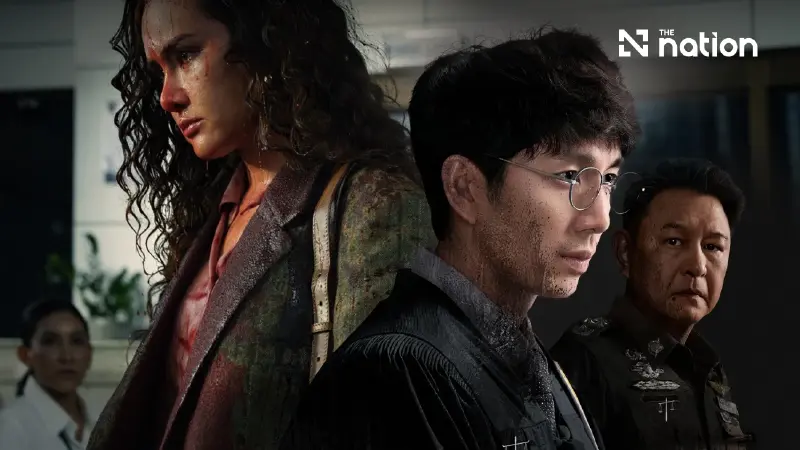


Netflix’s Thai hit The Evil Lawyer draws on years of legal research and real criminal cases, exploring corruption, ritual crime, sexual violence and courtroom justice.
Netflix’s Thai legal drama The Evil Lawyer has quickly become a global talking point, praised for its sharp writing, complex courtroom storytelling and socially charged themes. The series reportedly took six to seven years to research and develop.
According to the creative team, every case featured in the series is based on extensive legal research, real judicial processes and real-world social issues, reinterpreted through fictional narratives that are both distinctly Thai and universally relatable.
Case 1: The “child spirit” case (Episode 1)

The opening episode introduces the legal concept of “legal personhood” under Thailand’s Civil and Commercial Code. It is used to frame the character of attorney Jittri, establishing her as a highly strategic and morally ambiguous lawyer.
The central case involves the illegal trade of infant remains linked to beliefs in protective “child spirit” rituals, a subject that has appeared in Thai news in connection with superstition-driven criminal activity.
The writers said the storyline also explores belief systems among those in power, highlighting how influence, fear and spirituality intersect. It contrasts characters who rely on legal justice with those who depend on faith or supernatural protection.
The writing team said:
“We wanted to explore belief in things that cannot be seen. Those in power have their own beliefs, just as law and justice are intangible. The question we want to raise is what people choose to believe in — law, justice, faith, humanity, or themselves.”
Case 2: Industrial fire and miscarriage of justice (Episode 1)

Another major storyline follows lawyer Mek as he uncovers a suspected miscarriage of justice in a factory fire case, where a security guard is allegedly used as a scapegoat instead of the real perpetrator.
The storyline was inspired by research involving a former judge who left the profession due to moral conflict over questionable verdicts.
It also reflects broader issues such as electronic waste imports, environmental harm and the influence of powerful business networks.
The writers said:
“We choose cases that remain relevant at the time of broadcast. This storyline reflects the struggle against power and asks what justice should do when the system is unbalanced.”
Case 3: Night-time temple shooting (Episode 3)

This case centres on a shooting during a religious ceremony, where there are multiple eyewitnesses but limited physical evidence. The storyline focuses on the credibility of witnesses and how testimony is evaluated in court.
Inspired by real cases involving shootings at public events and festivals, the episode explores how social status can affect the weight given to testimony.
The writers also drew inspiration from courtroom observations in which monks were called as witnesses, highlighting unusual legal procedures and cultural dynamics within the justice system.
The storyline follows how truth is reconstructed through conflicting testimonies, and how authority and status can shape judicial outcomes.
Case 4: Sexual assault case (Episode 4)

One of the most widely discussed episodes follows Puay, a woman who does not fit conventional beauty standards, who is sexually assaulted by a respected doctor.
The case explores power imbalance, victim credibility and emotional pressure in the courtroom, raising questions about how justice systems respond to sexual violence.
The writing team said the storyline was based on real cases where victims took years to come forward due to trauma, manipulation and uncertainty about whether what they experienced constituted abuse.
They added:
“Anyone can be a victim, regardless of appearance or identity. Very few victims report sexual assault because the legal process does not fully support emotional recovery. Many cases are judged in the public sphere before the truth is established.”
The team also highlighted the influence of social media in shaping public perception before legal facts are fully examined.
“In today’s world, whoever tells the story first often gains the advantage. People tend to believe the first version they see, while the justice system requires time to verify the truth,” they said.

The series also examines how legal systems prioritise proving guilt over supporting victims, particularly in sexual violence cases, and how public judgment often precedes formal verdicts.
The Evil Lawyer, directed by Nottapon Boonprakob, with collaboration from creators including Jakkarin Thepvong and Songpol Chansom, aims to explore Thailand’s justice system in all its complexity.
The 8-episode investigative courtroom drama series has gained strong attention for its storytelling style, acting performances, and courtroom legal themes.

In mid-June 2026, The Evil Lawyer rose to become the No. 1 most-watched series on Netflix Thailand and ranked No. 5 globally, also entering the Top 10 in more than 34 countries.
The series has sparked wide debate over multiple themes and perspectives, and is widely seen as a proud original production by Thai creators. The script took more than six years to develop, written by a team of four writers.
