
Cambodian mango sticky rice post reignites Thai soft-power debate
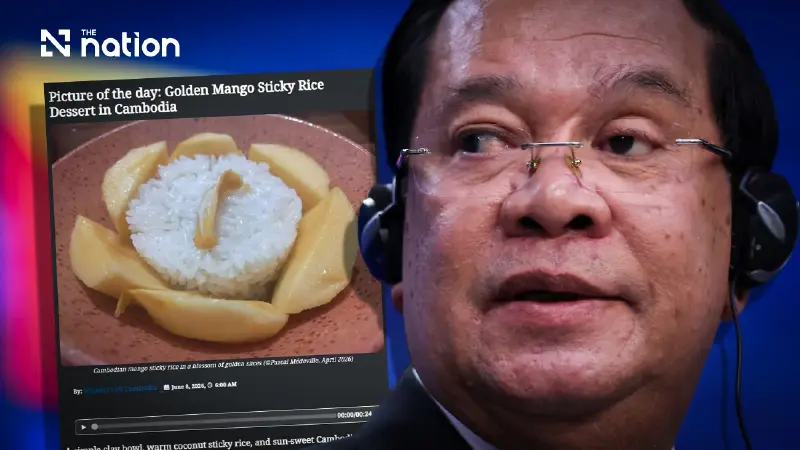


A Cambodian cultural post featuring mango sticky rice has sparked debate among Thai social media users over food heritage, regional roots and Thailand’s culinary soft power.
Cambodian post sparks food-identity debate
A Cambodian cultural post describing mango sticky rice as a Cambodian-style dessert has reignited debate in Thailand over the origins, identity and soft-power value of the dish, which is widely recognised internationally as part of Thai culinary culture.
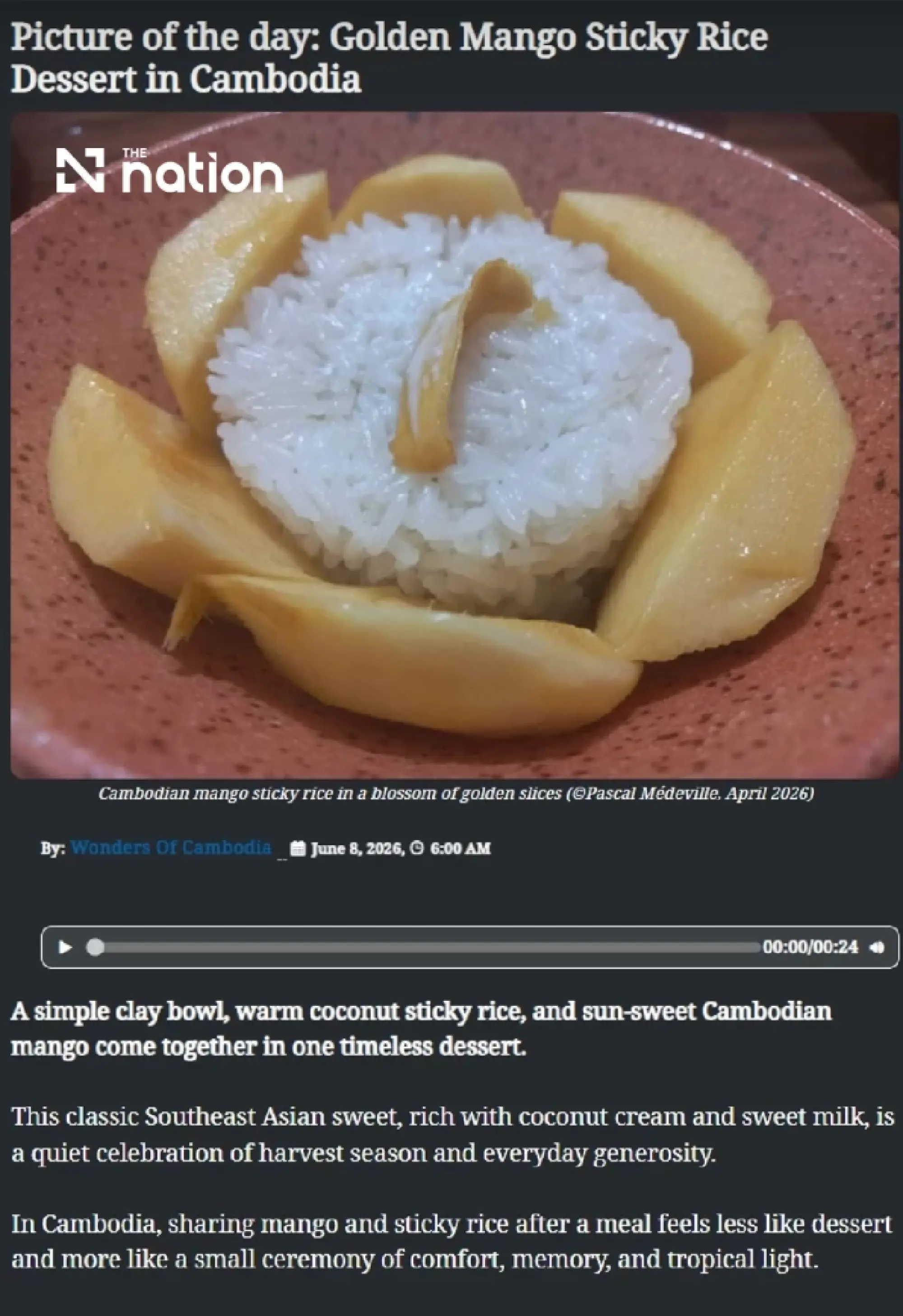
The discussion began after Cambodian pages and media outlets shared a report from the Wonders of Cambodia website, featuring a photo of mango sticky rice served in a clay bowl. The post praised the dessert as a classic Southeast Asian sweet made with coconut sticky rice and sun-sweet Cambodian mango.
It described the dish as more than a dessert, calling it a small ceremony of comfort, memory and tropical warmth.

Thai social media users react
The post quickly drew strong reactions from Thai social media users, many of whom argued that mango sticky rice is strongly associated with Thailand’s food identity and global street-food reputation.
Some users criticised what they saw as another attempt to link a well-known Thai dish to Cambodia, while others responded by mentioning other Thai desserts such as bua loy with sweet egg, lod chong, durian sticky rice and khanom mor kaeng.
Several users also commented on the presentation of the dish, joking that the plating and photo could have been made more colourful and appetising.

Shared regional roots, Thai global identity
The debate highlights a familiar issue in Southeast Asia, where neighbouring countries often share food traditions, ingredients and cooking methods.
Sticky rice eaten with seasonal fruit can be found in various parts of the region, meaning the broader idea of pairing glutinous rice with fruit is not limited to one country.
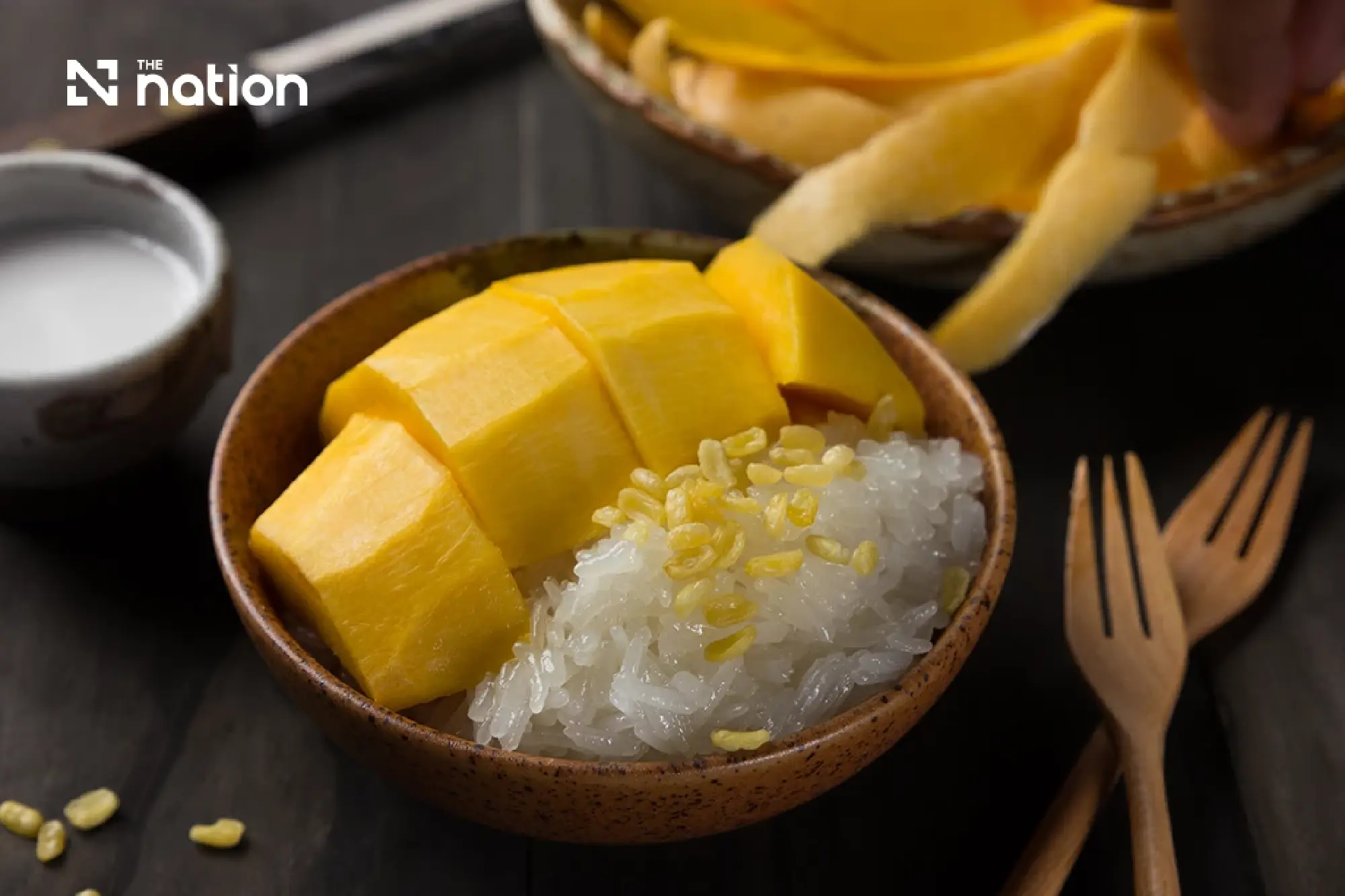
However, the version now widely known internationally as “mango sticky rice” — coconut-milk sticky rice seasoned with sugar and salt, served with ripe mango and topped with coconut cream — is strongly associated with Thailand.
Historical references cited
Thai commentators pointed to historical references supporting Thailand’s long-standing connection with coconut sticky rice desserts.
These include early Rattanakosin-era literary works such as Kap He Chom Khrueang Khao Wan, a royal poem by King Rama II, as well as the old Thai cookbook Mae Khrua Hua Pa by Than Phu Ying Plian Phasakorawong, published in 1908, which recorded a systematic recipe for coconut sticky rice.
The debate therefore centres not only on whether similar desserts exist in the region, but also on how a particular version of the dish became internationally recognised as Thai.
Mango sticky rice as Thai soft power
The row comes as mango sticky rice continues to serve as one of Thailand’s most visible culinary soft-power symbols.
Thai supporters of the dish also cited global food rankings, including TasteAtlas, which has listed Thailand’s mango sticky rice among the world’s best-rated mango dishes.
