
Thailand’s temple built from 1.5 million beer bottles turns trash into timeless beauty
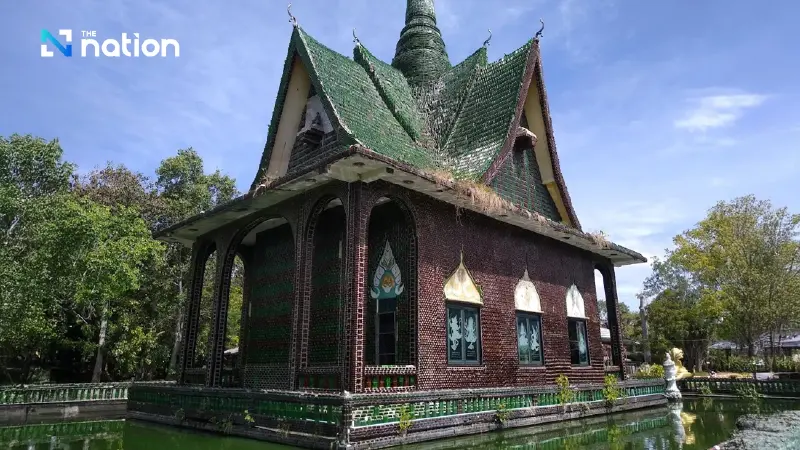


In the heart of Sisaket Province, northeastern Thailand, stands one of the world’s most remarkable temples, Wat Pa Maha Chedi Kaew, or the Temple of a Million Bottles.
This dazzling site has redefined what it means to recycle, transforming more than 1.5 million discarded beer bottles into an eco-friendly architectural wonder that glimmers under the tropical sun.
The temple’s story began in 1984 when a group of Buddhist monks sought an innovative way to clean up their community. Instead of letting empty bottles pile up as waste, they decided to turn them into building materials.
Starting with a single structure, the project quickly grew into an entire complex, complete with prayer halls, pagodas, monk quarters, and even restrooms, all meticulously built from recycled glass bottles.


The temple primarily uses green Heineken and brown Chang bottles, both popular in Thailand, arranged in intricate patterns that reflect sunlight in shades of jade and amber.
The bottle caps, too, are repurposed to form decorative mosaics across walls and pillars. Every structure, from the flooring to the spires of the chedi (stupa), showcases a balance of creativity, sustainability, and spiritual devotion.


Beyond its striking appearance, Wat Pa Maha Chedi Kaew carries a deeper message. It embodies Buddhist teachings about mindfulness, moderation, and respect for the environment.
The monks’ initiative illustrates how environmental consciousness can harmoniously coexist with faith, inspiring visitors to see beauty and purpose in what others discard as waste.


Today, the temple welcomes tourists, photographers, and eco-enthusiasts from around the world. Visitors are captivated not only by its shimmering aesthetics but also by the powerful reminder it offers: that sustainability can be both sacred and stunning.
Wat Pa Maha Chedi Kaew has since become a model of green architecture and spiritual innovation, a living testament to Thailand’s ability to blend tradition with forward-thinking environmentalism.
As the sunlight filters through thousands of glass bottles, the temple glows, a symbol of renewal, resilience, and the transformative power of faith.
