
Che Guevara: The icon of Thai trucks
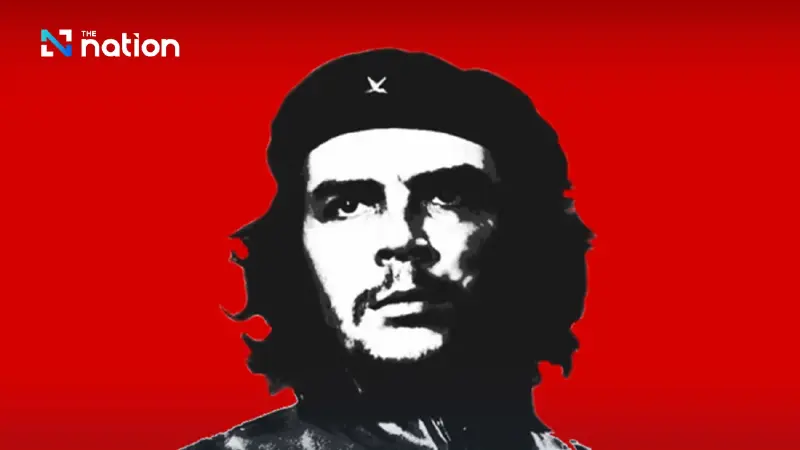


If you’ve ever travelled along Thailand’s highways, chances are you’ve seen them, towering, colour-splashed trucks roaring down the road, covered in dazzling patterns, mythical creatures, and, quite often, the unmistakable face of Che Guevara. To many Thais, Che isn’t just a symbol of revolution; he’s affectionately known as the “father of the truck.”
Che Guevara’s rugged portrait, beard, beret, and piercing stare has become a common sight on the mudguards and rear panels of Thai trucks. But why Che? What does a Latin American revolutionary have to do with truck culture in Thailand?

It’s all about symbolism. For Thai truck drivers, long hours on the road and the constant struggle to make a living demand grit, endurance, and an unbreakable spirit, qualities they see mirrored in Che. His face, often paired with slogans about strength, courage, and freedom, has become a talisman of perseverance.
Even Thailand’s legendary rock band Carabao immortalised this connection in their hit song “เชยังไม่ตาย เขาอยู่ท้ายรถบรรทุก”, “Che is not dead, he lives at the back of the truck.” The song captured how truck drivers embraced Che not as a political figure, but as a spiritual companion, a guardian of the road, and a symbol of resilience.

Who was Che Guevara?
Born Ernesto Guevara de la Serna in Rosario, Argentina, in 1928, Che Guevara was a physician, revolutionary, and writer who became one of the most recognisable figures of the 20th century.
In the early 1950s, his motorcycle journey across South America opened his eyes to widespread poverty and inequality, transforming him into a committed Marxist. He later joined Fidel Castro’s guerrilla movement that overthrew the Batista regime in Cuba in 1959.
As a key figure in the Cuban Revolution, Che served as a government minister, diplomat, and military strategist before leaving Cuba to support liberation movements in Africa and Latin America.
In 1967, while leading a guerrilla campaign in Bolivia, he was captured and executed by the Bolivian army with CIA assistance. His death turned him into a global icon of rebellion, a face immortalised in Alberto Korda’s famous photograph, “Guerrillero Heroico.”
For many, Che represents idealism, courage, and the fight for justice, values that transcend politics and resonate with those who face daily struggles, including Thailand’s truckers on their endless roads.
Enter Al Pacino’s Serpico
But Che isn’t the only unlikely hero on the road. Look closely, and you might spot another familiar face, Al Pacino, in his 1973 role as Serpico, a fearless New York cop who fought corruption from within the system. His scruffy beard and determined eyes bear an uncanny resemblance to Che, and for Thai drivers, he represents honesty, bravery, and rebellion against injustice, values that resonate deeply with working-class pride.


Mysterious admiration
What’s most fascinating is that no one in Thailand can quite explain why Che and Serpico, two foreign figures with no direct link to the country, became fixtures of Thai truck culture. Ask around, and you’ll get a shrug, a smile, and perhaps the simple answer: “Because they look strong.”
Over time, their faces have transcended meaning, becoming part of the folklore of Thailand’s roads. For Thai truckers, the reason hardly matters anymore. What counts is the feeling these faces evoke: strength, rebellion, and endurance.
