
The Walkable City: Global Urbanism Returns the Streets to the People
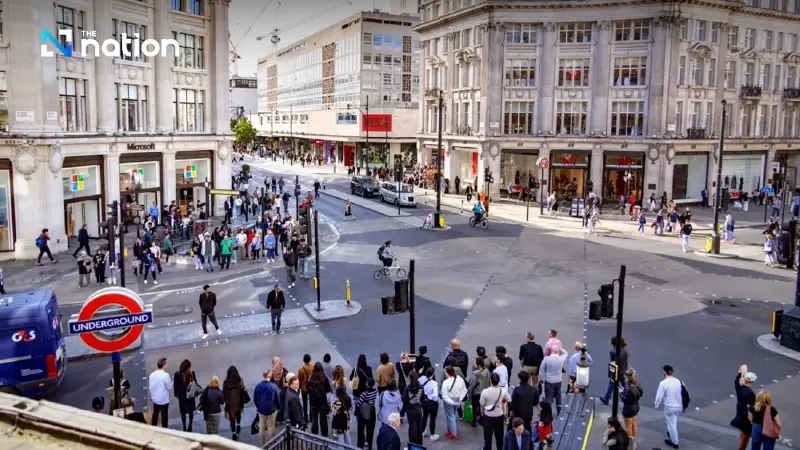


Global cities from London to Shanghai are ditching cars for cobbles, transforming polluted thoroughfares into vibrant, pedestrian-led public spaces
- Cities worldwide are shifting from car-centric design to creating pedestrian-led public spaces, a trend driven by climate concerns and a desire for community.
- Major urban centers like London, Copenhagen, Shanghai, and New York are implementing large-scale pedestrianization projects, converting busy streets into vibrant, car-free zones.
- This return to walkable urbanism is proven to provide economic benefits, such as increased footfall and consumer spending in retail and hospitality sectors.
- Beyond economics, creating walkable streets reduces pollution and noise while fostering social interaction and creating safer, more people-friendly environments.
Global cities from London to Shanghai are ditching cars for cobbles, transforming polluted thoroughfares into vibrant, pedestrian-led public spaces.
For nearly a century, the blueprint of the modern metropolis was drawn with the motor vehicle at its centre.
Wide boulevards, multi-lane junctions, and sprawling car parks became the hallmarks of urban progress.
However, a quiet revolution is currently unfolding across the world’s most iconic skylines, as planners move to "de-car" the city and return the pavement to the pedestrian.
This shift represents a fundamental change in the urban paradigm: a transition from "cities for cars" to "cities for people".
Driven by the dual pressures of the climate crisis and a post-pandemic desire for community, major hubs are transforming once-choked transit routes into what urbanists call the "city’s living room."

London’s Grand Ambition
At the heart of this trend is the bold plan to pedestrianise Oxford Street.
As one of the world’s most famous retail stretches, it has long been plagued by a "wall of buses" and deteriorating air quality. Sadiq Khan, the Mayor of London, has championed a vision to strip away the traffic in favour of a two-kilometre oasis of greenery, seating, and outdoor activity.
The goal is not merely aesthetic. By creating a safer and more inviting environment, London aims to future-proof its retail sector against the digital shift, proving that people-centric spaces naturally encourage longer "dwell times" and higher consumer spending.

A Global Blueprint
While London’s plans have seized the headlines, the concept of the car-free zone has deep roots in Europe and Asia:
The Nordic Pioneer: Copenhagen’s Strøget was one of the first major experiments in pedestrianisation. Since 1962, it has transformed from a congested road into a vibrant cultural artery, proving that removing cars does not kill commerce—it cultivates it.

The Asian Giant: In Shanghai, Nanjing Road serves as a masterclass in high-density pedestrian management. Its East Nanjing section attracts millions annually, blending global luxury brands with traditional Chinese heritage in a space that feels both historic and futuristic.

The New York Landmark: The success of Times Square’s 2009 conversion from a traffic-clogged "bowtie" to a permanent pedestrian plaza showed that even the world’s busiest cities can find room for public seating and open-air performances.

The Economic and Social Dividend
The arguments for pedestrianisation are increasingly backed by data. Removing vehicles does more than just lower carbon emissions and noise pollution; it fosters "social infrastructure."
From the historic La Rambla in Barcelona to the post-war Lijnbaan in Rotterdam, walkable streets act as social levellers where residents and tourists interact freely.
Furthermore, the "green economy" benefits are tangible. Research consistently indicates that walkable districts see a marked increase in footfall and a revitalisation of local restaurants and boutiques.

The 21st-Century Vision
As we move further into the century, the trend suggests that the most desirable cities will not be those with the fastest motorways, but those with the most accessible pavements. The transformation of these streets is a clear signal that the era of urban design dictated by the internal combustion engine is coming to a close.
In its place, a new urbanity is rising—one that is quieter, cleaner, and, above all, designed for the human pace.
