
Audit blames budget cuts and unsafe airport design in Jeju Air tragedy
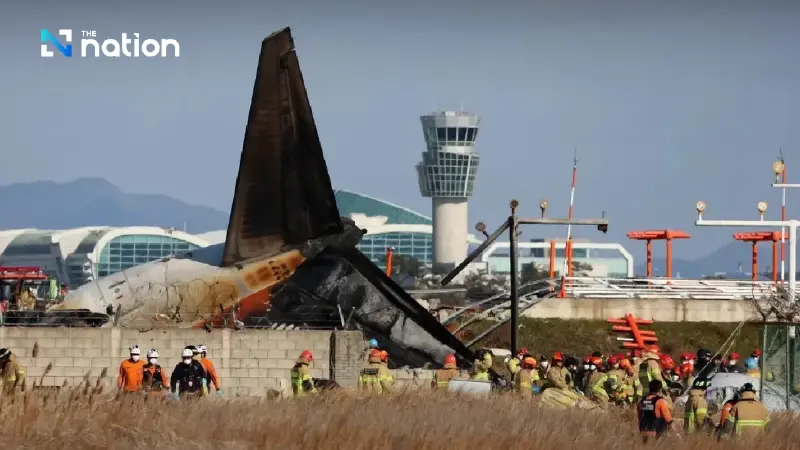


A South Korean audit found long-running safety failures, budget cuts and non-compliant airport structures behind the deadly Jeju Air disaster.
A South Korean state audit has found that the country’s transport ministry cut construction costs and approved unsafe airport safety structures for more than two decades, in findings released after the Jeju Air crash that killed 179 people.

Reuters reported on March 11, 2026 that the Board of Audit and Inspection said in its aviation safety management report that the Ministry of Land, Infrastructure and Transport had approved unsuitable airport safety structures for over 20 years, a disclosure that came after the Jeju Air disaster claimed 179 lives.
The December 2024 tragedy involved a Boeing 737-800 that suffered a bird strike, made a belly landing and overshot the runway at Muan International Airport. Almost everyone on board was killed after the aircraft slammed into a concrete support for a localiser antenna, with only two cabin crew members in the rear surviving.
The audit said the ministry had built a 2.4-metre-high concrete embankment to support the localiser system at Muan airport in order to reduce earthwork costs, without properly reviewing the relevant rules. Under international standards, localiser structures should be designed to break apart easily when struck by an aircraft.
Auditors said the ministry had wrongly approved 14 non-compliant localiser installations at eight airports, including Muan, Gimhae and Jeju. They also found that for as long as 22 years, the ministry had issued operating permits and approved regular inspections that incorrectly stated the structures met frangibility standards.

The report also highlighted broader failings in bird-strike prevention and other aspects of aviation safety management, and notified the ministry of 30 cases of wrongdoing or procedural failure.
The Ministry of Land, Infrastructure and Transport said it “humbly accepted” the audit findings and would take strict follow-up action, including improving localiser structures and strengthening bird-strike prevention. Korea Airports Corp said it was in the process of implementing the recommended improvements.
An opposition lawmaker had said in January, citing a separate government-commissioned simulation, that the crash might not have been fatal if the concrete embankment at the end of the runway had not been there. The simulation suggested all passengers might have survived if the barrier had not existed or if the structure had been breakable.
However, the full investigation report has still not been made public and has already missed the one-year deadline for the release of a progress report. Muan airport has remained closed since the accident, and there is still no clear date for reopening.
