
More than bricks and pavement
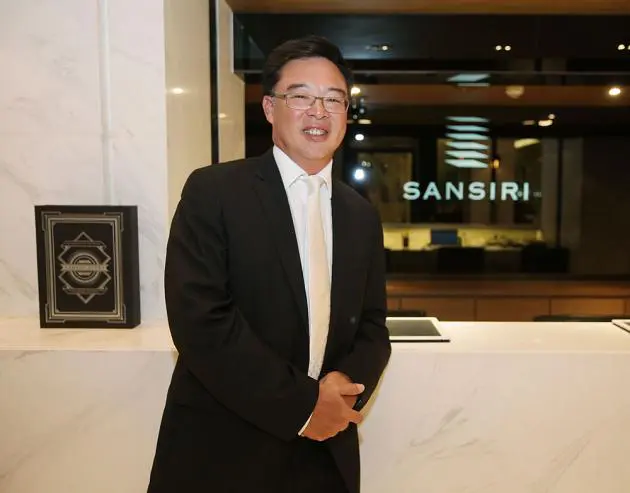


In a new book, Sansiri CEO Apichart Chutrakul stresses the human element to building homes
A lot of Thais live in the houses that Sansiri built, and they’re not the only ones who will be interested in “The Sansiri Story”, a lush, large-format history of the development company just released by its chief executive, Apichart Chutrakul.
In thoughtful words and beautiful pictures, The book extends from the first mustard-yellow mosaic tile laid at Baan Kai Muk in Hua Hin in 1988 to one of the top rankings on the Stock Exchange of Thailand, with posh properties across the country – and beyond.
“The world has change dramatically, so why settle for less?” Apichart says of the firm’s bold reach into the heart of London, with 9 Elvaston Place in Kensington, one of the British capital’s most desirable neighbourhoods.
Apichart was 25 when Baan Kai Muk was built, with a distinctive design that still signifies the company’s mission. Three decades later Sansiri has 244 properties – Bangkok, Phuket, Chiang Mai, Khon Kaen, Chonburi, almost everywhere. Its success, Apichart stresses, lies in being innovative.
“You cannot stop evolving in terms of innovation or you’ll be dead. We build three houses a day and they all might have different designs. To tackle the future is to be innovative.
“When we set out to sell a condominium, a single house or townhouses, we don’t sell bricks, rocks or cement,” he says. Design, lifestyle options, services and such are the truly “interesting applications” that Sansiri offers as part of its “software” marketing.
“To build a brand, it’s important to create trust and confidence in your customers’ hearts. We’ve invested a lot of effort into the Sansiri Family of properties, and that’s why we have so many loyal customers. We offer them a concept – ‘the good life’ – promising the highest standard of care.
“And we also offer family activities. In the end, we hope that the children born in a Sansiri home will one day buy a Sansiri house of their own.”
Apichart says the firm is constantly on the watch for fresh ideas in design, better ways of making sure a residence lives up to the promise of its concepts, whether in space utilisation, function, furnishings – and the surrounding environment, a prominent part of Sansiri’s corporate logo.
Apichart disagrees with those who say the Thai property market is saturated. There is still a lot of room for growth, he insists. Young people entering the workforce always need more condos, which in turn cannot undermine the demand for houses.
As crucial as innovation is to Apichart, he also emphasises the importance of human resources. Sansiri currently employs about 1,500 people.
“I don’t think I’m the cleverest person around,” he says, “so I have to look for excellent people to work for me. This is the key ‘software’ to a successful business. Our company encourages young executives to speak up and initiates new ideas. So almost 50 per cent of our projects are ‘bottom-up’.”
The interest in enhancing people’s talents and opportunities extends beyond the company. It has a long-term goal to foment social change by helping children improve their health through sport and good nutrition. The Sansiri Academy, established in 2006, offers free football training and is a partner of Unicef Thailand in campaigns including “Iodine Please” and “Child-friendly Business Practice”.
In “The Sansiri Story”, Apichart avers that, if you want to convert bricks, rocks or cements into a marvellous edifice, money alone isn’t enough – you need effort as well. By the same token, he says, money alone can’t secure a child’s long-term wellbeing. You have to be directly, personally involved.
