
Common ground with India


Rice is central as Bangkok hosts the Festival of India, but Himalayan exotica shares the stage
You can admire an intricate sand mandala, marvel at how Buddhists sculpt in butter and sample Bollywood-dance-inspired exercise called Bollyfit at Bangkok’s own Festival of India.
Indian Ambassador Harsh Vardhan Shringla is opening the three-week event at 2.30 today at the Indian Cultural Centre on the 27th floor of the Jasmine Tower on Sukhumvit Soi 23. Segments are scheduled at other venues through April 7.
Nearly 70 artists and performers have arrived for the festival, which this year celebrates India’s rice culture in ways that Thais can appreciate and enjoy, given the similarities in heritage and continuing warm relations.
Wat Bovornnivesvihara is hosting a Buddhist Festival from Wednesday through March 25 as part of the proceedings, with examples of butter sculptures and mandalas – aesthetic graphic aids to meditation – created in beds of sand. It will have Himalayan Buddhist lamas chanting – and also dancing for the first time in Thailand.
It’s these priests who mould sand and butter into ornate sculptures of the Lord Buddha and scenes and symbols from his various lives. Their performances at the festival are dedicated to the memory of His Holiness Somdej Phra Nyanasamvara, Thailand’s late Supreme Patriarch.
As well as meditation devices, mandalas are used in initiation rituals and to purify the environment and its inhabitants. Their consciousness-focusing designs are believed to draw healing energy and promote harmony.
The holy lamas typically chant before beginning work on a new mandala. A blueprint of the intended design is outlined and the varicoloured sand is poured atop through a metal funnel called a chakpu, then “sculpted” from the centre outward.
The most remarkable aspect of sand mandalas is that they quickly vanish. They’re created in the spirit of impermanence and non-attachment and are ritually dismantled soon after completion. The blessed sand is offered to a river, lake or sea for the benefit of the marine life, the environment and, ultimately, all sentient beings.
Watching the lamas sculpt in butter is almost as fascinating. This too is a traditional ceremony in Tibetan/Himalayan Buddhist art, dating to the 15th century. Coloured butter is shaped into beautiful sculptures as offerings to enlightened beings, edible and decorative yet deeply spiritual. Practitioners believe the creators accumulate merit in mass by fostering peace, prosperity and good fortune, both for individuals and society as a whole.
A craft passed down through the generations, butter sculpting can involve dozens of monks working for months on a single piece. The sculptures are presented on the 15th or full-moon day of the first lunar month, known as Losar, the New Year.
Siam Paragon and Srinakharinwrot University will hold a Buddhist exhibition, “Dharam Darshan”, examining the religion’s most sacred sites in India and the lives and teachings of the Buddha, including events depicted in legend. Some of the Jataka tales will be retold in paintings and illustrated write-ups.
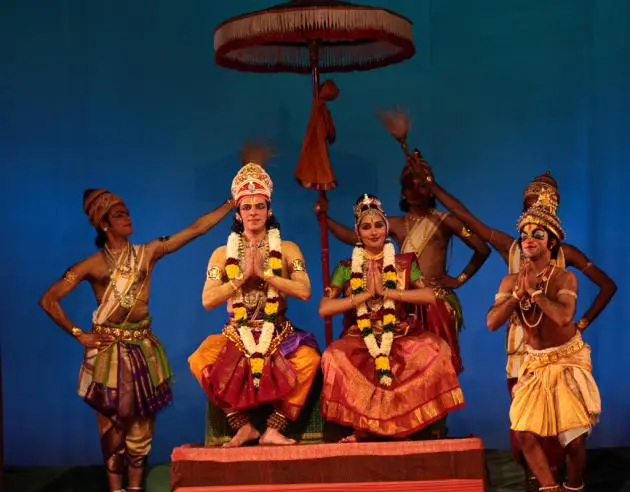
Another visual treat will be performances of Indian classical dance – an episode from the Ramayana (known here as the Ramakien) by none other than the celebrated Kalakshetra Foundation of Chennai. Twenty members of the troupe will present “Mahakumbabishekam” (“Becoming a King”).
And from Nagaland, folk dancers will perform the Sumi Naga Warrior Dance, which depicts the might and power of victorious warriors through the ages,.
Naturally there’s a food festival amid the fun, too, with chefs from the Chettinad region of Tamil Nadu in southern India flying in. Chettinad cuisine has similarities to Thailand’s but has its own unique appeal. The invariably spicy, aromatic dishes are made with freshly ground masala and topped with a boiled egg.
Sun-dried meat – mainly chicken and goat – and salted vegetables reflect the region’s dryness, but there is also fish, prawns, lobster and crab. Most dishes are eaten with rice and rice-based accompaniments like dosa, appam, idyppam noodles and adai – thick crepes made with Bengal flour.
Yoga will be demonstrated and taught by experts alongside a recent innovation: Bollywood music is the engine for “Bollyfit” workouts that increase the heart rate and really get you pumped up.
ART AND DANCE
Here’s the full programme for the Festival of India:
Today, 2.30pm: Meet the artists and performers at the Indian Cultural Centre in Jasmine Tower.
Wednesday through March 25: Buddhist Festival at at Wat Bovornnivesvihara, with sand mandala, butter sculpture, lama dances and chants.
Friday to March 25: Food festival at the Sheraton Royal Orchid River Side Hotel with folk-dancing by a troupe from Nagaland.
Saturday, 10.30am: “Bollyfit” yoga workshop and Nagaland folk performances at Srinakharinwirot University.
Saturday to March 26: Yoga workshop and demonstration at the Indian Cultural Centre and at Divine Yoga.
Sunday, 5pm: Lama dancing and chanting and Nagaland folk dancing at the Buddhadas Indapanno Archives.
March 28 to 31: Buddhist exhibition at Srinakharinwirot University.
April 3 to 7: Buddhist exhibition at Siam Paragon.
