
Japan Warns Cambodia Over Border Closures as 'Thailand Plus One' Strategy Stalls
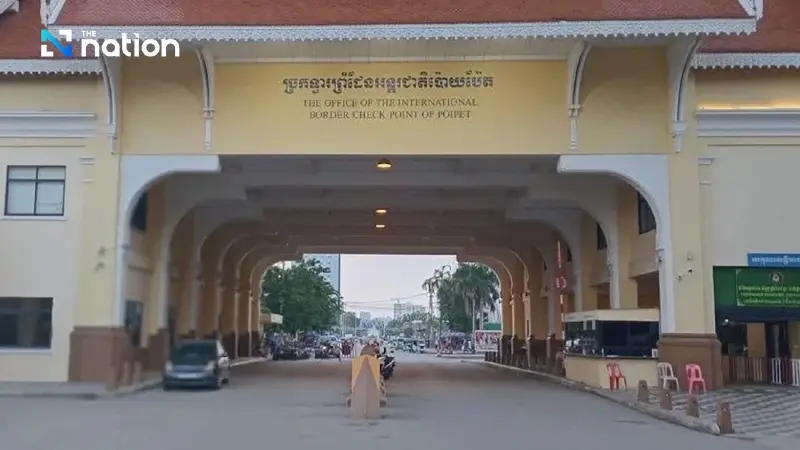


JETRO warns that continued closure of crossings is undermining investment appeal and disrupting supply chains, urging action on tax and trade issues
The Japan External Trade Organisation (JETRO) has warned that the ongoing closure of border crossings between Thailand and Cambodia is jeopardising Cambodia’s attractiveness as an investment destination.
The warning was made in a report following the 30th Japan-Cambodia Public-Private Sector Meeting in Phnom Penh on 3 September.
According to the report, the border closures are placing significant pressure on logistics and threatening the 'Thailand Plus One' strategy, where Japanese firms use Thailand as a central production hub before expanding investment into neighbouring ASEAN countries.
Atsushi Ueno, Japan's Ambassador to Cambodia, stated that a prolonged shutdown could cause Cambodia to lose investment appeal as logistics costs and transit times have increased dramatically.
Koji Fukuhara, Chairman of the Japan Business Association in Cambodia (JBAC), noted that Japanese joint ventures are being directly hit, leading to delayed expansion plans and economic losses that also affect Cambodian workers.
In response, Cambodian Deputy Prime Minister Sun Chanthol acknowledged the damage.
He affirmed that the government would do its best to restore logistics routes and reopen the border crossings, recognising that the issue is undermining both economic stability and the country's image among investors.
The meeting also highlighted four other key obstacles for Japanese investors: delays in issuing tax exemption letters for ODA projects, a lack of transparency in environmental regulations, poor progress in tackling the illegal cigarette trade, and weak enforcement of laws on trademark protection and unfair competition.
Ambassador Ueno specifically questioned whether environmental regulations requiring company contributions were applied universally, arguing that uneven enforcement unfairly disadvantages compliant Japanese firms.
He also pointed out that the flourishing illegal cigarette market not only hurts Japanese companies but also reduces government tax revenue.
Sun Chanthol concluded the meeting by stressing that if Cambodia wants to become a high-income nation by 2050, it must address these issues seriously.
He urged all government ministries to listen to the demands of Japanese investors and act in the country’s overall best interest to create a transparent and stable investment environment.
