
Vietnam Unveils National Retail Strategy, Targeting 11.5% Annual Growth Rate
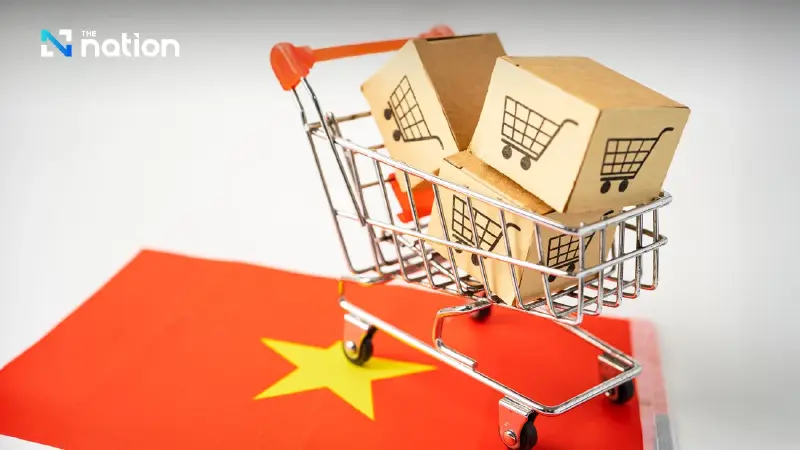


Hanoi commits to modernising its distribution network by 2030, leveraging e-commerce and ‘Green Logistics’ to secure its position as an ASEAN retail hub
- Vietnam has launched a National Retail Market Development Strategy aiming for an 11-11.5% average annual growth rate in total retail sales by 2030.
- The strategy heavily relies on accelerating e-commerce, targeting 15-20% annual growth in the sector and integrating 40-45% of SMEs onto online platforms.
- Key initiatives to support this growth include modernizing the distribution network, developing infrastructure with a focus on 'Green Logistics', and aligning laws with international standards.
- The overall goal is to transform Vietnam into a modern, sustainable ASEAN retail hub by boosting domestic competitiveness and attracting investment.
Hanoi commits to modernising its distribution network by 2030, leveraging e-commerce and ‘Green Logistics’ to secure its position as an ASEAN retail hub.
The Vietnamese government has launched an ambitious National Retail Market Development Strategy running until 2030, with a vision extending to 2050, aiming to transform its retail sector into a modern, sustainable engine of economic growth.
The strategy targets an average annual growth rate of 11 to 11.5 per cent for total retail sales of goods and services, aligning the sector with the country’s rapidly expanding digital economy.
The government views this as fundamental to building an efficient and lasting domestic distribution system.
Vietnam’s retail market is already attracting significant regional investment, and the government’s open approach to modern distribution methods has encouraged continuous expansion by foreign retail groups, underscoring long-term confidence in the economy.
Official figures reflect this momentum. Data from the General Statistics Office of Vietnam shows that retail sales of goods and services reached 6,391 trillion Vietnamese Dong in 2024, marking a 9.0 per cent increase year-on-year. This expansion in domestic consumption is projected to continue.
E-commerce is proving to be a key driver. The Ministry of Industry and Trade reported that the Business-to-Consumer (B2C) market soared by 25 to 27 per cent during the first eight months of 2025, exceeding forecasts.
Strong performers included Fast-Moving Consumer Goods (FMCG), consumer electronics, and fashion.
Consequently, the government has raised its 2025 e-commerce growth target to 25.5 per cent. The new national strategy sets an even higher long-term goal, aiming for average annual e-commerce growth of 15 to 20 per cent by 2030.
Furthermore, it seeks to integrate Small and Medium Enterprises (SMEs) onto online platforms, targeting a participation rate of 40 to 45 per cent.
To support its goals, Hanoi has set out seven key areas of focus, including:
Legal Alignment: Harmonising laws and policies with international commitments.
Infrastructure: Developing retail infrastructure and promoting environmentally friendly ‘Green Logistics’.
Capacity Building: Enhancing the capabilities of enterprises, particularly SMEs.
Governance: Improving product quality governance and establishing national e-commerce platforms.
The plan is expected to foster a high-quality consumption economy, driven by innovation, which will boost domestic retail competitiveness and support both internal and cross-border e-commerce expansion.
The commitment to green logistics and quality standards is intended to bolster consumer and investor confidence.
The Department of International Trade Promotion (DITP) in Thailand has already identified significant opportunities for Thai businesses, particularly in the high-growth FMCG, electronics, and fashion categories, encouraging them to leverage Vietnam’s modern retail channels and e-commerce platforms.
