
Thailand to review ceasefire over 72 hours; will resume self-defence measures if deal is breached
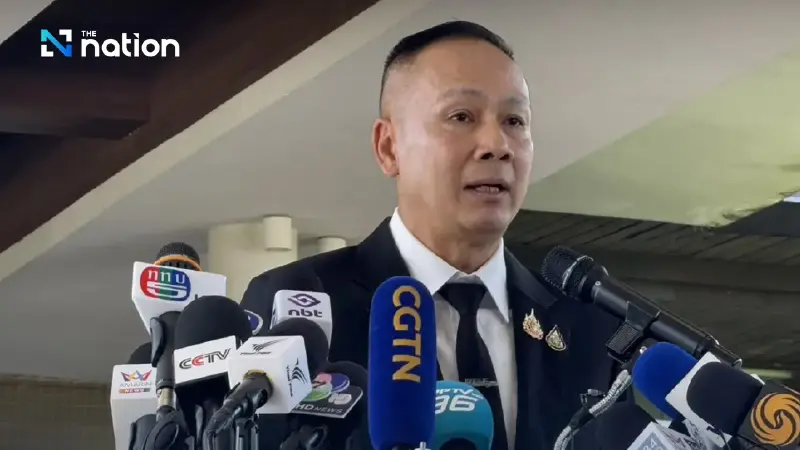


Air Chief Marshal Prapas Sonjaidee says Thailand will monitor the Thai-Cambodian ceasefire for 72 hours after it took effect at noon on December 27, warning that if it is not sustained Thailand will continue self-defence measures, while using AOT monitoring and defence hotlines to manage incidents.
Air Chief Marshal Prapas Sonjaidee, director of the Joint Information Centre on the Thai-Cambodian Border Situation, said on Saturday that Thailand will give the ceasefire agreement 72 hours to prove it is genuine and sustained.
He said the ceasefire took effect at 12.00pm on December 27, and will be assessed for a further 72 hours. “If it is still not stable during those 72 hours, we will continue with our existing measures and maintain our capability to defend ourselves,” he said. If incidents occur, he said mechanisms are in place to resolve them, including the ASEAN Observer Team (AOT) and a hotline between the defence ministers and the commanders-in-chief.
Prapas said Thailand wants to communicate to the international community that it did not start the conflict or fire first, adding that Thailand has evidence and has acted in line with international standards and international law. He said Thailand is acting as a professional military and a civilised country, and is ready to demonstrate that it is sincere and does not want the conflict to escalate.
He said that if the ceasefire is properly maintained in line with the Joint Statement for 72 hours, Thailand will return 18 Cambodian soldiers. However, if hostilities resume after that, Thailand would have legitimate grounds to defend itself under Article 51—in any form necessary—so long as Thai people are affected or suffer damage.
“Today is another arena. If the international arena cannot manage or resolve this properly, our communication efforts will try to keep the situation under control, while the Thai armed forces will continue protecting the public on the battlefield. If there is no sincerity, everything will continue—firmly and seriously,” he said.
Prapas urged Thais to understand and trust the armed forces, saying the process is necessary to maintain legitimacy on the international stage. He said Thailand must respect international rules even when facing an adversary that does not, and that Thailand “fights with facts, not drama or provocation”. He added that while some people may be unhappy with the time this takes, the military remains fully prepared and “will not take a New Year holiday”, staying on standby at all times.
Asked how evacuees in shelters can be confident the ceasefire will hold, Prapas said Thailand places humanitarian concerns first and has plans to protect rear areas involving the Interior Ministry, public health agencies and the agriculture sector. He said the government has measures in place to assist those affected.
He stressed that the conflict is limited to roughly 700-800 kilometres along the border, while the rest of the country remains open and safe for visitors. “Chiang Mai, Phuket—everything is normal,” he said, adding that tourists can still travel to Thailand with confidence, as long as they avoid risk zones and follow officials’ instructions.
On residents returning home, he said it would depend on assessments by military units in each area. Where conditions are safe and there is no threat, returns can proceed, noting that some people have already begun going back. He said troops will continue to secure and protect the area.
Separately, the First Army Area reported that along parts of the Thai-Cambodian border in Sa Kaeo province, both sides have implemented the ceasefire in line with the GBC Joint Statement.
