
Triple Alliance: Thailand, Laos, and Myanmar Unite to Combat Transboundary ‘Smoke Without Borders’
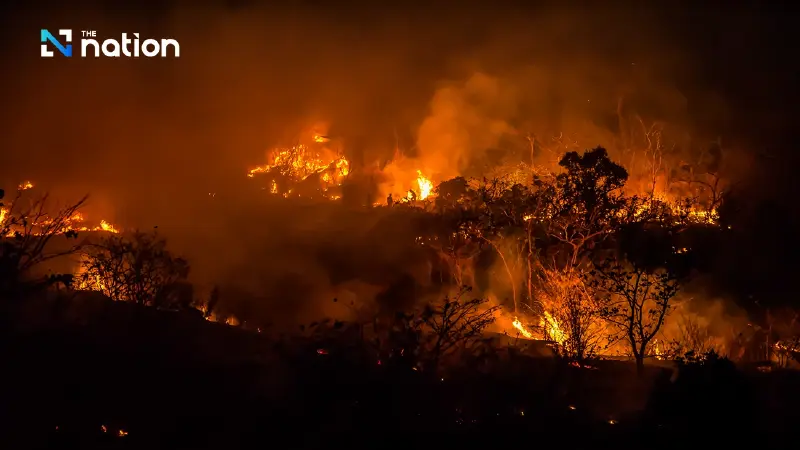


A new 2026–2027 strategic roadmap introduces satellite-linked fire mapping and sustainable farming to tackle the region’s persistent PM2.5 crisis
- Thailand, Laos, and Myanmar have formed a trilateral alliance with a unified 2026–2027 action plan to combat transboundary air pollution.
- The strategy employs satellite technology for shared, real-time fire hotspot mapping and a synchronized air quality monitoring system across the three nations.
- A key focus is tackling the root causes of haze by promoting sustainable agricultural practices to reduce traditional slash-and-burn farming.
- The initiative is supported by a joint technical working group for science-based policy and a public awareness campaign to engage local communities.
A new 2026–2027 strategic roadmap introduces satellite-linked fire mapping and sustainable farming to tackle the region’s persistent PM2.5 crisis.
Recognising that toxic haze carries no passport, Thailand, Laos, and Myanmar have formalised a trilateral defensive pact to address the perennial crisis of transboundary air pollution.
The move marks a shift from isolated national policies to a unified regional "Action Plan" for the 2026–2027 period, aimed at dismantling the root causes of the "grey shroud" that plagues Southeast Asia every dry season.
Representing the Thai government, Thananchai Wannasuk, deputy director-general of the Pollution Control Department (PCD), led a multi-agency delegation to the Lao capital, Vientiane, to coordinate with counterparts.
The summit signals a new era of "Satellite Diplomacy," utilising space technology and real-time data sharing to track wildfire hotspots across shared frontiers.
Unlike previous attempts that focused solely on emergency response, this new roadmap targets the entire ecosystem of pollution.

The collaboration involves a sophisticated chain of detection and prevention.
Key pillars of the agreement include:
Fire-Risk Mapping: Developing a predictive shared database to identify high-risk zones before the burning season begins.
Unified Reporting: Establishing a synchronised air quality monitoring system across the three nations to provide transparent, real-time data.
Agricultural Reform: Incentivising sustainable farming practices to reduce the traditional "slash-and-burn" methods that contribute heavily to regional haze.
The delegation—which included experts from the Ministry of Foreign Affairs, the Ministry of Defence, and GISTDA (Thailand’s space and geo-informatics agency)—emphasised that the plan is built on a rigorous "Joint Action Plan" (JAP) framework.

This includes the establishment of a Technical Working Group to ensure that policy decisions are backed by scientific evidence rather than political expediency.
"The haze is a shared wound for our region," the delegation noted. "This is not about one country’s survival, but a collective effort to ensure that clean air is no longer a seasonal luxury, but a permanent right for all citizens in the Mekong sub-region."
A cornerstone of the 2026–2027 strategy is a high-profile public awareness campaign.
By engaging local communities and the private agricultural sector, the three nations hope to reduce transboundary pollution through education and the promotion of sustainable alternatives to open-air burning.
As the meeting concluded, the three countries reaffirmed their commitment to the new Terms of Reference (TOR), paving the way for a more breathable future and a more resilient regional environment.
