
Government reports 3% growth in Thai agricultural economy in Q1 2025
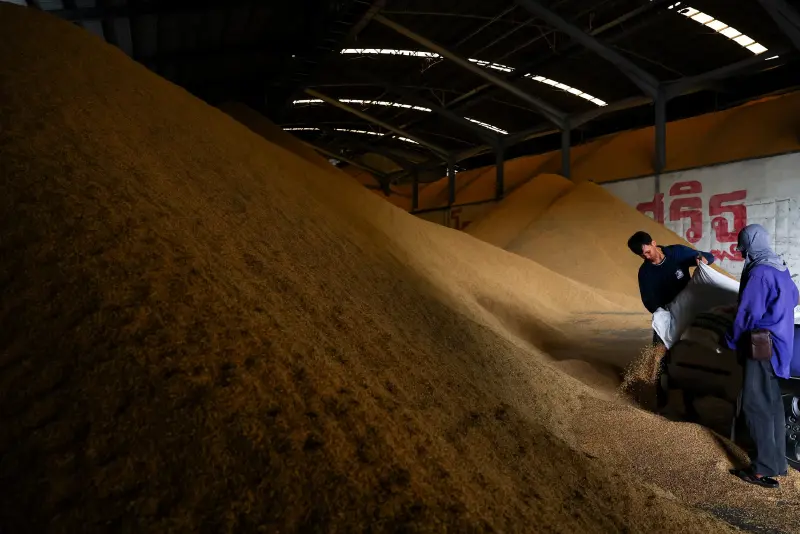


Thailand’s agricultural economy is projected to expand by 1.8–2.8% in 2025, driven by proactive government measures aimed at boosting crop, livestock, fisheries, and forestry production. The government is committed to promoting sustainable growth in the agricultural sector through targeted support and long-term development initiatives.
Anukool Pruksanusak, Deputy Spokesperson for the Office of the Prime Minister, revealed that the Ministry of Agriculture and Cooperatives reported a 3.0% growth in Thailand’s agricultural economy for the first quarter of 2025 (January–March) compared to the same period last year.
The growth was attributed to La Niña conditions, which began in September 2024, bringing consistent rainfall. As a result, water levels in reservoirs and natural sources rose, creating favorable weather for farming and boosting crop and livestock growth.
Farmers expanded cultivation areas and improved farm management and disease prevention. Rising domestic consumption, fueled by economic recovery, also supported growth across all agricultural sectors.
Crop Production expanded by 4.2% year-on-year, driven by increased water availability and favorable weather, resulting in higher yields for key crops such as main-season rice, off-season rice, sugarcane, rubber, and longan.
Livestock Production grew marginally by 0.1%, with increased output of broiler chickens, eggs, and raw milk. Cooler temperatures enhanced egg production, while efficient farm management improved dairy farming productivity.
Fisheries rose by 0.4%, mainly from higher production of whiteleg shrimp, supported by better farm management and higher farmgate prices, encouraging greater shrimp larvae releases.
Agricultural Services expanded by 3.7%, thanks to increased rainfall improving conditions for planting and harvesting, particularly for main-season rice, off-season rice, and sugarcane.
Forestry grew by 1.2%, with higher outputs of eucalyptus wood, charcoal, and edible bird’s nests. Eucalyptus production rose in response to greater demand from domestic and international pulp and biomass fuel industries, while charcoal exports to China, Japan, and South Korea also increased.
Looking ahead, Thailand’s agricultural economy in 2025 is forecast to grow between 1.8% and 2.8%, supported by abundant water supplies and favourable weather conditions, along with continued implementation of agricultural development policies.
However, risks remain, including weather volatility, high production costs, global economic slowdown, trade barriers, and ongoing US-China trade tensions, all of which could impact global supply chains and Thai agricultural exports.
To strengthen the sector, the government, through the Ministry of Agriculture and Cooperatives, is pursuing both short- and long-term strategies. These include preparing for natural disasters and crop diseases, reducing production costs, tackling illegal agricultural goods, allocating farmland to farmers, improving agricultural insurance systems, promoting eco-friendly farming, enhancing water management, upgrading agricultural product quality, fostering high-value agriculture, strengthening production and market linkages, and driving agricultural soft power to boost Thailand’s global competitiveness.
