
Thai Social Security Fund Faces Scrutiny Over 'Inflated' Skyy9 Building Purchase
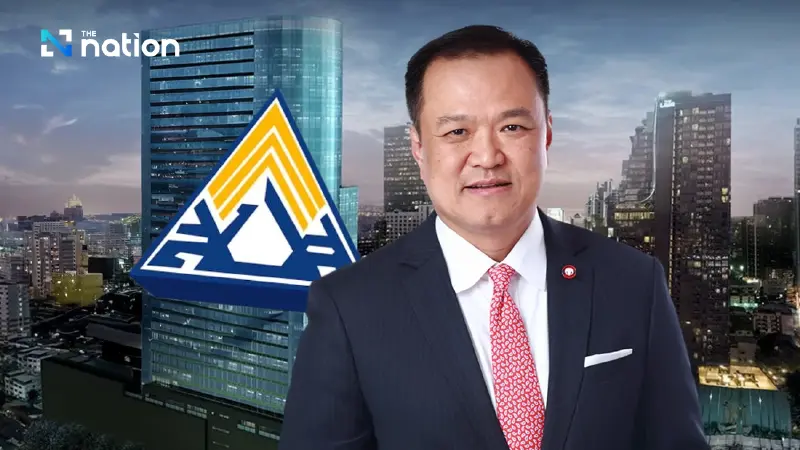


A probe initiated by the Deputy Prime Minister reveals Thailand's Social Security Fund may have paid double the market value for a Bangkok office block, prompting a parliamentary committee to flag legal ramifications and call for further action
Thailand's Social Security Fund (SSF) is under intense scrutiny following a high-level investigation that concluded its acquisition of the Skyy9 building in Bangkok was significantly overpriced, potentially costing the state fund billions of baht more than its true market value.
Reports from the Ministry of Interior confirm that Deputy Prime Minister and Minister of Interior Anutin Charnvirakul personally signed an order earlier this month.
This directive formally notified Phiphat Ratchakitprakarn, the Minister of Labour, of the investigative findings, which suggest the SSF's purchase of the Skyy9 building for over 6.9 billion baht was excessively expensive.
In a handwritten instruction, Anutin commanded the Labour Minister to proceed rigorously according to regulations and laws, demanding step-by-step progress reports.
He also established a committee, chaired by Unsit Sampuntharat, Permanent Secretary for Interior, to audit the Social Security Office’s (SSO) budget expenditure concerning the controversial acquisition.
The completed audit of the SSO's investment in the Skyy9 building concluded that its market value at the time of transaction should have fallen within the range of approximately 3.428 billion to 3.863 billion baht.
Given the SSF’s purchase price of over 6.9 billion baht, the report unequivocally states the building was overpriced. The Permanent Secretary for Interior subsequently submitted an urgent report on these findings to Deputy Prime Minister Anutin on 30th May.
Parliamentary Committee Echoes Concerns, Cites Irregularities
Concurrently, at Parliament, Senator Alongkot Worakee, Chairman of the Senate's Committee on Budget Administration Monitoring, unveiled the findings of his committee’s independent study into the matter.
Referencing a confidential, urgent report dated 20th May 2025, from the Thai Valuers Association (TVA), the study highlighted several critical points:
The 36-storey SKYY9 building boasts a total area of 93,000 sq.m., comprising 39,000 sq.m. of leasable office space, 9,400 sq.m. of retail space, and 46,600 sq.m. of common areas. It stands on a single land plot spanning 3 rai, 1 ngan, 92 sq.wah (approximately 1,392 sq.wah).
While valuation firms Edmund Tie & Company (Thailand) and CPM Capital Co., Ltd. assessed the building’s value, they failed to provide essential data and documents, severely limiting the committee’s in-depth analysis. The study was thus compelled to rely on publicly available secondary data and general market information.
The TVA report noted that both valuation companies assessed the property at above market value, neglecting to consider comparable properties in the same locality. Furthermore, the absence of crucial surrounding roads for fire safety was highlighted as a risk to life and property for building users. The building also does not conform to newer safety standards, and its larger-than-normal floor area did not appropriately reflect in the sale price.
Both valuation firms estimated the building’s worth at 61,000 – 68,000 baht per sq.m., a figure significantly higher than the valuation rates set by the Thai Valuers Association and the Thai Real Estate Valuers Foundation.
EDMOND's projection of increasing occupancy rates (from 30% to 85.83% annually over four years) was found to contradict the applied discount rate of 9%. Given the inherent risks in the office building market regarding occupancy, the study suggests a more appropriate discount rate should have been higher.
The committee identified "unusual haste" in the process that potentially caused damage to the SSF. This included accelerated approval of the investment framework, rapid investment in the trust fund, and convening board meetings prior to the official gazette announcement of the joint venture. Moreover, the investment in the target venture was made at a value exceeding its true worth.
The Social Security Office's decision to channel funds from insured persons, employers, and the government into the Prime Asset Joint Venture Trust Fund and subsequently invest in the Prime Asset Joint Venture Trust was deemed to have been made at an inflated value. This conduct, described as "without due care," led to the SSF incurring damages.
The committee concluded that the SKYY9 building’s market value at the time of purchase should have been between 3.428 billion and 3.863 billion baht, based on the study’s assumptions and limitations. It recommended that a more detailed and accurate valuation would necessitate a physical survey and full access to data from both the Land Department and the building itself, adhering to professional valuation standards.
"There is an observation that this appears to be an expenditure of public and government funds to purchase the SKYY9 building beyond its real value," Senator Alongkot stated. "All individuals involved in the valuation process and approval of this building purchase may be held liable under Section 157 of the Criminal Code."
Senator Alongkot further indicated that the findings would be submitted to the Minister of Labour for appropriate action. Additionally, the observations will be forwarded to the Office of the National Anti-Corruption Commission (NACC), the Central Investigation Bureau (CIB), and the Office of the Auditor General of Thailand (OAG) for their respective investigations and actions.
