
DOF promotes conversion of abandoned shrimp ponds for sea crab farming
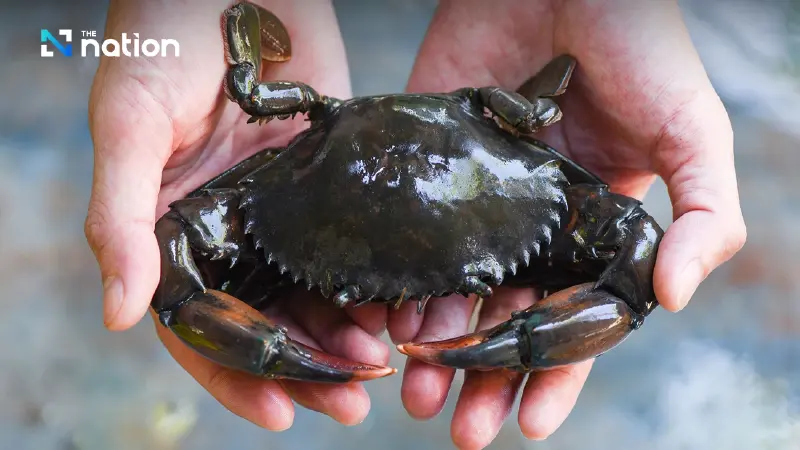


The Department of Fisheries (DOF) is encouraging the use of abandoned shrimp ponds for sea crab cultivation as part of an initiative to revitalise aquatic production areas and provide new career and income opportunities for farmers.
Bancha Sukkaew, Director-General of the DOF, explained that Thailand’s marine shrimp farming industry had previously faced several challenges—including disease outbreaks, falling prices, and rising production costs—which forced many farmers to abandon their operations, leaving numerous ponds unused.
To address this issue, Deputy Agriculture and Cooperatives Minister Akara Prompao has advocated for the rehabilitation of abandoned shrimp ponds. He has encouraged farmers to shift their focus towards raising other economically viable aquatic species suitable for their existing land.
Among these alternatives, sea crabs are particularly promising, as they are easy to raise, grow quickly, tolerate environmental conditions well, and command high prices due to strong domestic and international demand.
Notably, sea crabs can be raised in the same ponds once used for shrimp without requiring significant renovations. This approach not only enhances income opportunities for coastal farmers


"The DOF's promotion of alternative livelihoods not only helps stabilise farmers’ incomes, but also improves their overall quality of life," Bancha said. "This aligns with the Ministry of Agriculture and Cooperatives’ principle: ‘Farmers must live well, with high-value agricultural products and sustainable resources.’"
Wirat Sanitmajjaro, Fisheries Officer for Samut Songkhram province, said the area is one of the DOF’s key targets for promoting sea crab farming in abandoned shrimp ponds. Over 1,000 rai of ponds remain unused in the province. The objective is to repurpose these areas, reduce costs, and increase income. With abundant natural water sources and a favourable environment, the province offers ideal conditions for sea crab farming in natural, semi-natural, and commercial systems.
At present, Samut Songkhram has 1,873 coastal aquaculture farmers operating over 45,700 rai (7,312 hectare) out of a total aquaculture area of more than 50,100 rai (8,016 hectare). Most farmers prefer semi-naturalfarming systems, which are easier to manage, less labour-intensive, and cost-effective.
The Provincial Fisheries Office provides farmers with guidance on species selection, land conversion, sourcing of aquatic animals, and marketing. It also promotes the adoption of DOF-researched innovations and technologies tailored to local conditions.
Currently, more than 234 farmers in Samut Songkhram are registered for sea crab farming, covering an area exceeding 9,780 rai (1,564.8 hectare).
Chaiwud Sudthongkong, a coastal aquaculture expert at the DOF, stated that sea crab juveniles can be sourced either through foraging or by purchasing them from DOF breeding units.

The DOF supplies green mud crab juveniles known for their strength, rapid growth, and adaptability to fluctuating environmental conditions, making them ideal for cultivation in previously abandoned shrimp ponds. This contributes to building sustainable livelihoods and reliable incomes.
The DOF also supports the development of pond rehabilitation technologies, such as the use of PM.1 and PM.2 microorganisms and photosynthetic bacteria. These help improve soil and water quality and reduce the risk of disease outbreaks.
Additionally, the department promotes co-cultivation with milkfish, which helps prevent the accumulation of organic waste and supports the pond ecosystem.

Thanathorn Limsakul, a pioneering brackish water farmer in Samut Songkhram, shared his success in transforming an abandoned shrimp pond into a thriving sea crab farm. Initially, he faced high costs during solo experimentation, but after consulting local officials, he adopted the use of natural feed, which significantly increased his yields and profits. This method also lowered costs and reduced dependence on chemical treatments. He sources natural feed, such as surf clams (หอยกะพัง) and blackchin tilapia (ปลาหมอคางดำ), from nearby water bodies, ensuring freshness and healthy, disease-free sea crabs.
After six months of cultivation, male crabs are sold as meat crabs at 350 baht per kilogram, while female crabs fetch up to 500 baht per kilogram as egg crabs.
The enterprise has become profitable and self-sustaining, enabling him to support his family through a stable livelihood.
