
Thaksin denies family conflict sparked Thai-Cambodian war, insists on non-interference in military operations
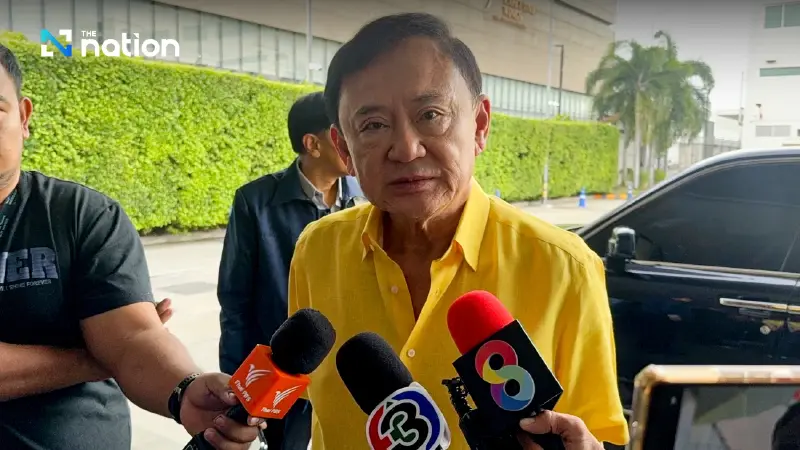


Thaksin Shinawatra denies personal conflicts led to the Thai-Cambodian war, stressing non-interference and supporting military efforts to resolve the crisis.
Former Prime Minister Thaksin Shinawatra on Saturday addressed the ongoing Thai-Cambodian border clashes ahead of his visit to Ubon Ratchathani to offer support to those affected. He rejected suggestions that a family conflict between the Shinawatra and Hun clans had triggered the violence, stating that Cambodia's use of weapons against civilians and hospitals was unacceptable and a violation of humanitarian principles.
“Cambodia’s attack on civilian homes and hospitals shows no regard for human rights, which is universally condemned. Even with our use of F-16 jets, we’ve been cautious, targeting only military objectives,” Thaksin said.

When asked if he had used personal connections to communicate with other countries, Thaksin acknowledged that several nations had offered to mediate. However, he reiterated that the matter should remain between the two countries, and any third-party mediation would be ineffective if direct talks fail. He also remarked that the initial tensions arose from Cambodia's internal nationalist rhetoric, which he believed escalated the situation unnecessarily.
As for the ongoing military action, Thaksin expressed confidence that the conflict would not be prolonged, explaining that the disputed area had once been under Thai control and that Cambodia’s military advances were an attempt to reclaim it.
Regarding Cambodia’s recent military actions in Trat Province, Thaksin confirmed that Cambodian forces were active in the area, but assured that Thailand was fully prepared to respond.

In a statement made the previous day, Thaksin had posted on social media thanking countries offering mediation assistance but insisted on allowing the Thai military to "teach a lesson" to Cambodian strongman Hun Sen. This statement drew heavy criticism, to which Thaksin responded, explaining that the situation stemmed from Hun Sen’s paranoia and aggressive nationalism, not personal animosity. Thaksin emphasised that the conflict had nothing to do with personal disputes and that the escalation was solely due to Cambodia's actions.
When asked if the recent Thai-Cambodian conflict was a result of tensions between two families, Thaksin firmly denied the claim, stating it was not a personal dispute and there was no conflict between the two families involved. He explained that the conflict arose due to Cambodia's dissatisfaction with Thailand.
"Let me explain—there was a day when Cambodia moved 12,000 troops to our border. I was furious and called (Hun Sen) to ask why they were doing this. With both of our children being leaders in the two countries, why would we go to war? He asked what should be done, and I said we must open a dialogue. We agreed to discuss things from the border level up to the JBC (Joint Boundary Commission). That Sunday, they withdrew their troops without informing us, and then we decided to close the border. It wasn’t a drastic measure, but it happened because they withdrew their forces," Thaksin said.
He continued, "Cambodia felt aggrieved because we closed the border after they withdrew their troops, which made them angry. They then began to take action, which led to the escalation. But this is not about personal conflict, it’s about their own suspicions and their desire to pursue their own plans. The issue with the call centre operations is also about protecting Thai interests, which I had mentioned earlier regarding the 25-storey building."
Thaksin reaffirmed that the situation was not about personal grievances but rather about a national issue, noting that the Cambodian leader’s actions were driven by internal political motives and excessive nationalism, which created unnecessary tension.

He also discussed the military’s role in the conflict, emphasising that the Thai military was working professionally and should be allowed to carry out operations without interference. "The military must act on the strategy they believe is correct, and our government has not intervened. We support them in their efforts, and we have not stopped them, even when other countries have called for a ceasefire. The military operation is not finished, and it must be completed,” he said.
When asked about the potential for ceasefire talks, Thaksin acknowledged that several countries had expressed concern and offered to mediate, but he insisted that any discussions must take place at the National Security Council (NSC) level, not through external lobbying.
Regarding Thailand’s military capabilities, Thaksin stated that Thailand's military is well-equipped and progressing steadily. He mentioned that drones were being used for surveillance to detect landmines and plan operations, with the technology expected to arrive in the coming week. "We need to protect our soldiers' lives. Two of them have already been injured," he added.
