
La Niña Returns, Bringing Heavy Rain But Little Relief from Heat
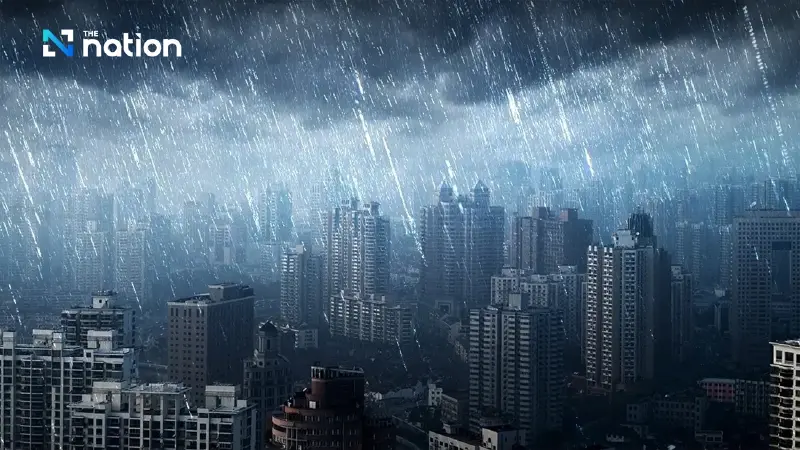


The World Meteorological Organization forecasts the return of the La Niña weather pattern, warning it will bring heavy rainfall but will not cool a planet still overheating due to climate change
- The World Meteorological Organization (WMO) forecasts the return of the La Niña climate phenomenon between September and November.
- The event is expected to bring heavy rainfall to many regions, with patterns similar to what is typically seen during a moderate La Niña.
- Despite being a natural cooling event, La Niña will not provide significant relief from extreme global heat, as its effects are overwhelmed by long-term, human-induced climate change.
The World Meteorological Organization (WMO) has forecast the return of the La Niña climate phenomenon between September and November, a development that is expected to bring heavy rainfall to many regions but will not provide a significant reprieve from the extreme global heat.
The WMO's latest prediction confirms that while La Niña is a natural cooling event, its effects will be overwhelmed by the long-term impacts of human-induced climate change, which continues to drive up global temperatures and intensify extreme weather events.
The organisation noted that even with La Niña's return, global temperatures are expected to remain above average.
The world briefly entered a La Niña phase in early 2025, but it faded quickly within just three months, according to the US National Oceanic and Atmospheric Administration (NOAA), leaving the climate in a neutral state.
However, from September to November 2025, there is a roughly 55% chance that sea surface temperatures in the central equatorial Pacific will cool to La Niña levels, with that probability increasing to about 60% for the October-December period.
The WMO stated there is a very low probability of the El Niño pattern returning this year.
"Seasonal forecasts for El Niño and La Niña, and their associated impacts on our climate, are vital climate analysis tools," said WMO Secretary-General Celeste Saulo. "These forecasts save millions of dollars in key sectors such as agriculture, energy, health and transport, and save thousands of lives when used to guide preparedness and response actions."
La Niña is a natural climate pattern that causes the surface water temperatures in the central and eastern equatorial Pacific Ocean to cool. This leads to changes in winds, pressure, and rainfall patterns in many parts of the world.
While the effects vary, it can cause both droughts and heavy rainfall in different tropical regions.
The WMO expects rainfall to be similar to what is typically seen during a moderate La Niña event.
Despite a prolonged "triple-dip" La Niña event from 2020 to 2023 – the first in the 21st century – global temperatures remained at or near record highs.
The WMO noted that 2024 was the hottest year on record, with exceptionally high land and sea surface temperatures and unprecedented ocean heat.
The global average surface temperature was 1.55°C above the 1850-1900 average.
The WMO reiterated that natural climate events like La Niña and El Niño are occurring amidst human-caused climate change, which continues to warm the planet and intensify extreme weather.
The latest report forecasts that temperatures from September to November will be warmer than normal across most areas of both the Northern and Southern Hemispheres.
