
$30bn agricultural drone project draws scrutiny over military connections
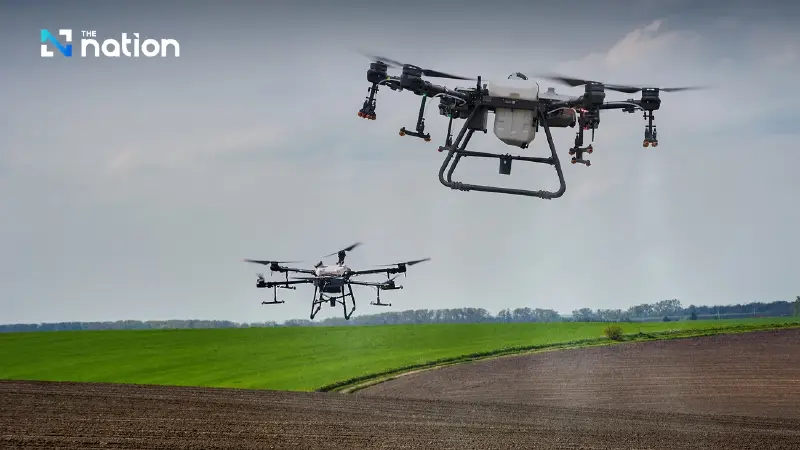


A $30bn private initiative to supply 1m agricultural drones raises questions about feasibility, transparency and military involvement in Thailand.
A private-sector project proposing to raise US$30 billion through digital bonds to supply 1 million agricultural drones and train military personnel has become a hot topic in Thailand. The plan, which claims to combine drone training with agricultural skill-building for the army, has drawn attention due to mentions of the Second Army Area and Lt Gen Boonsin Padklang, raising public questions about transparency, feasibility, and real benefits.
Although the initiative is appealing from a technology and innovation standpoint, it is clouded by doubts over financial, operational, and practical impacts for Thai farmers, as well as the appropriateness of using the names of state agencies to bolster credibility.
Project background
The project was proposed by Capital Trust Group (CTG), a private company operating in finance and agricultural technology across Asia and Africa. CTG’s promotional materials indicate the company aims to procure 1 million smart agricultural drones and train 100,000 advanced drone operators, with potential applications including crop spraying, harvesting, crop and livestock monitoring, and even disaster management.

PR documents reference several military figures as honorary advisers, including current and former commanders of the Second Army Region, suggesting a link to Thai state institutions.
Feasibility concerns
Financial and legal aspects:
- Raising US$30 billion via digital bonds is unprecedented for Thailand’s agricultural technology sector.
- Issuance of digital bonds in Thailand must comply with regulations from the Securities and Exchange Commission and the Bank of Thailand. Currently, there is no official confirmation that this project has received any government approvals.
Technological and operational aspects:
- Procuring 1 million drones presents major logistical challenges in production, transport, maintenance, and training.
- Training 100,000 operators requires enormous human resources, expertise, and infrastructure. Integrating drones into traditional agriculture remains a complex issue requiring careful study.
Reputational and social risks:
- Invoking the names of military units could trigger concerns over conflicts of interest or misuse of state authority.
- Failure to deliver as claimed could damage public and investor trust.
Potential benefits for farmers:
- If realised, the project could reduce labour costs, improve productivity, optimise crop management, and develop digital skills among both soldiers and farmers.
- However, smallholder farmers with limited income or access to technology may be unable to benefit without structured support and equitable distribution of resources.
Official clarification:
The Second Army Area commander Lt Gen Boonsin Padklang, and the Royal Thai Army have confirmed that they were only briefed on the proposal and did not formally approve or participate in the project. The army emphasised that no contracts were signed, and any use of its name for credibility may have been misleading. Posts and documents linking the project to the Second Army Region have since been removed from official channels.
